Tag Archives: walking

Summer of sundials

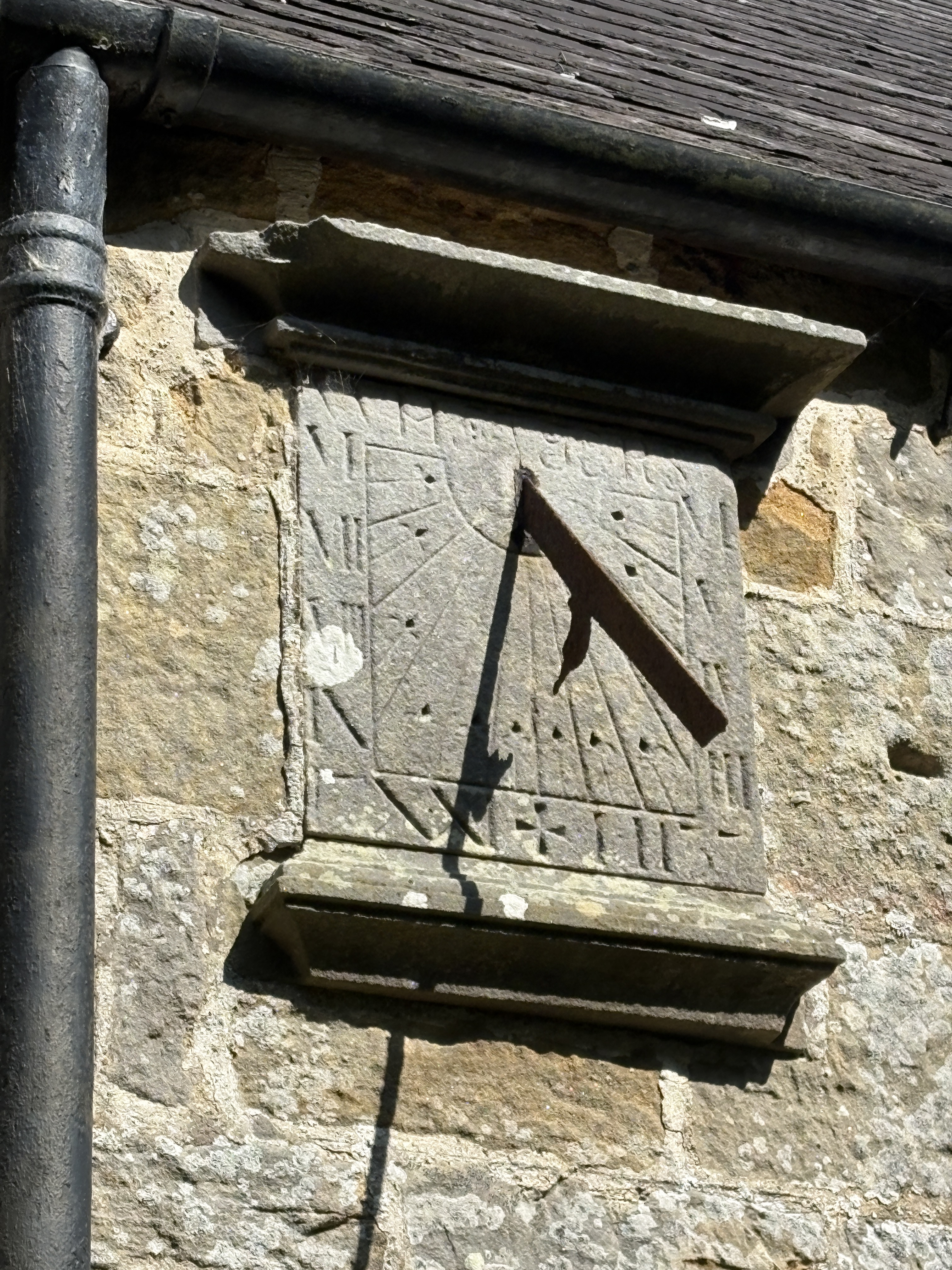
This isn’t really about sundials, but this summer has been. We’ve seen a few, and like weathervanes I’ve come to notice and appreciate the complexity and craft going into them, how with quiet churchyards, old cottages and greens they still define English (and Scottish) villages, and how I find all of these things comforting, which is probably the point.
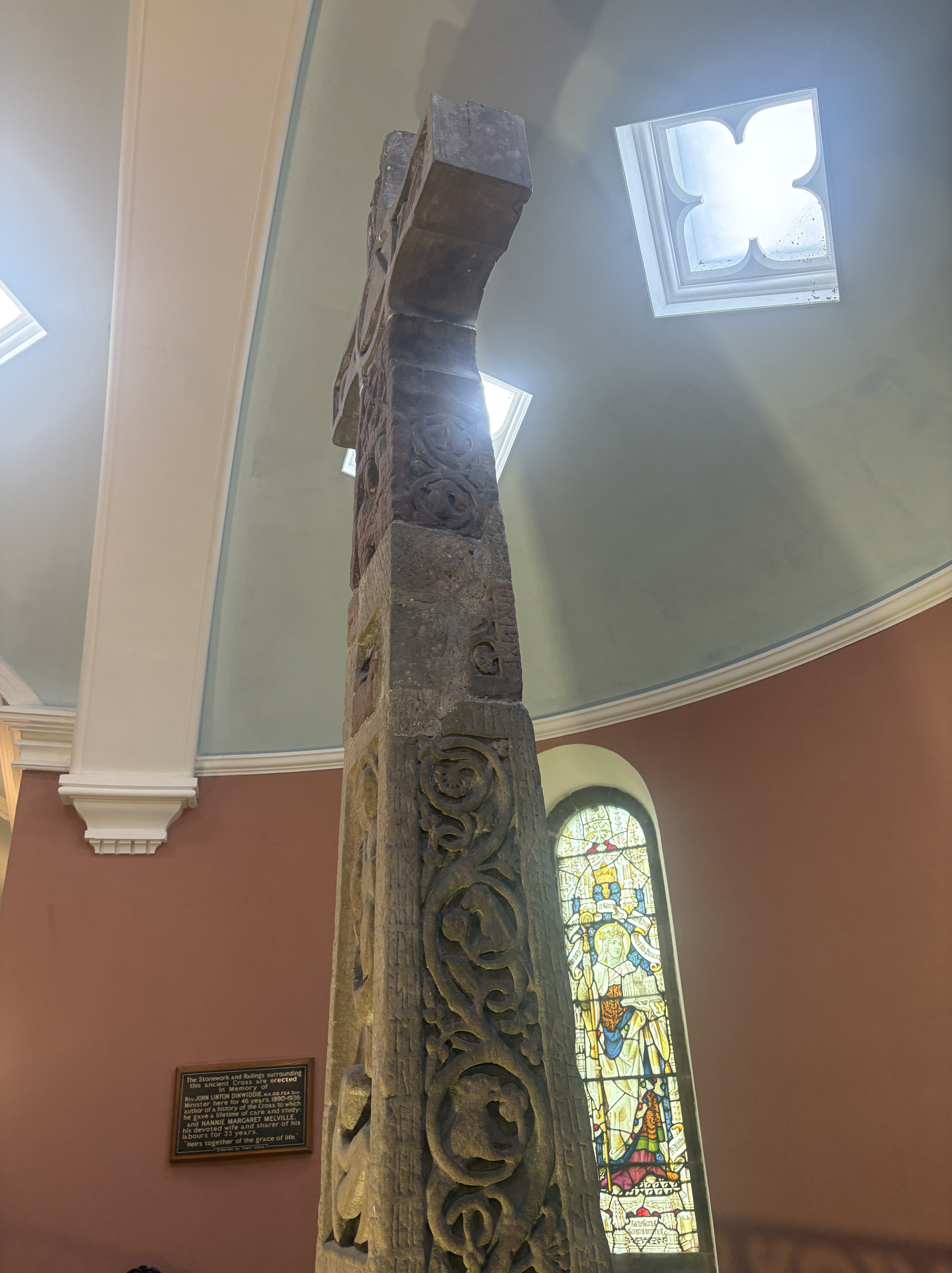
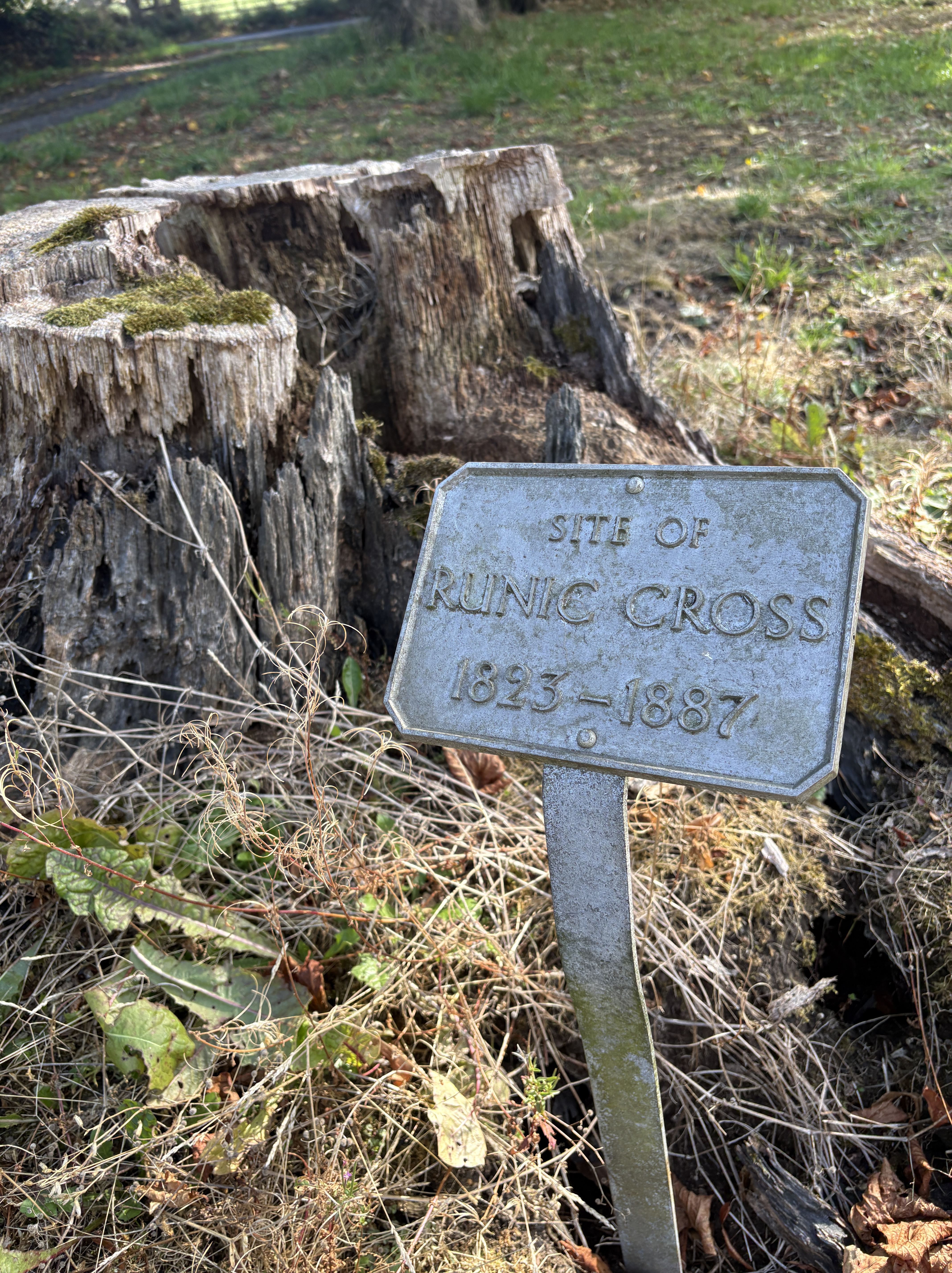
A few days ago I took an unusual drive with my sons from Yorkshire to Edinburgh. Truthfully, we didn’t go the quickest way. And having set off up the west side of England and reached the border, we then turned left instead of right. Bless them, they didn’t complain as to took a while to reach the village of Ruthwell in Dumfriesshire, but really not somewhere that felt like anywhere. But this was evidently a place important enough once to stand up a vast, 5.2m high sandstone cross, some time around 700, and then at a later point (probably) augment it with lines from The Dream of the Rood, and Old English poem, in Anglo-Saxon runes.
When put like that, it doesn’t seem so silly that given that the Ruthwell Cross exists, and that a lot of people made a lot of effort to make it, look after it, and then put it back together after a few centuries in the churchyard, that we should go and have a look at it.

A man and a woman were trying to fix the church organ when we arrived, but paused to talk to us about the cross. I was very happy. The grounds of the building and surrounding countryside felt free of today’s world, as did the jumble of lanes leading eventually back to the fast road to Glasgow and Edinburgh. 

Then we went to see The Cure, which was very different and an excellent evening. I thought Robert Smith was a superb frontman. 

After the concert we sat in the car park for an hour, the endless day rolling on into the night, escaping by a dusty track against the airport fence with Ryanair and easyJet plans blazing their lights at us. The boys nodded off, and I drove through the silence of the southbound A1, marvelling at the quiet, and trying to stay alert. Duns, Dunbar, Athelstaneford, if it was daytime I’d have been off having a closer look, but it nearing 1am on Monday morning and our car was approaching the border, quickly crossed with the only fanfare in your head. Familiar roads from here, Berwick, Ancroft, then arriving in darkness to an incredible night sky. Before bed, picking the letters out saying ‘Arsenal Champions 26.’
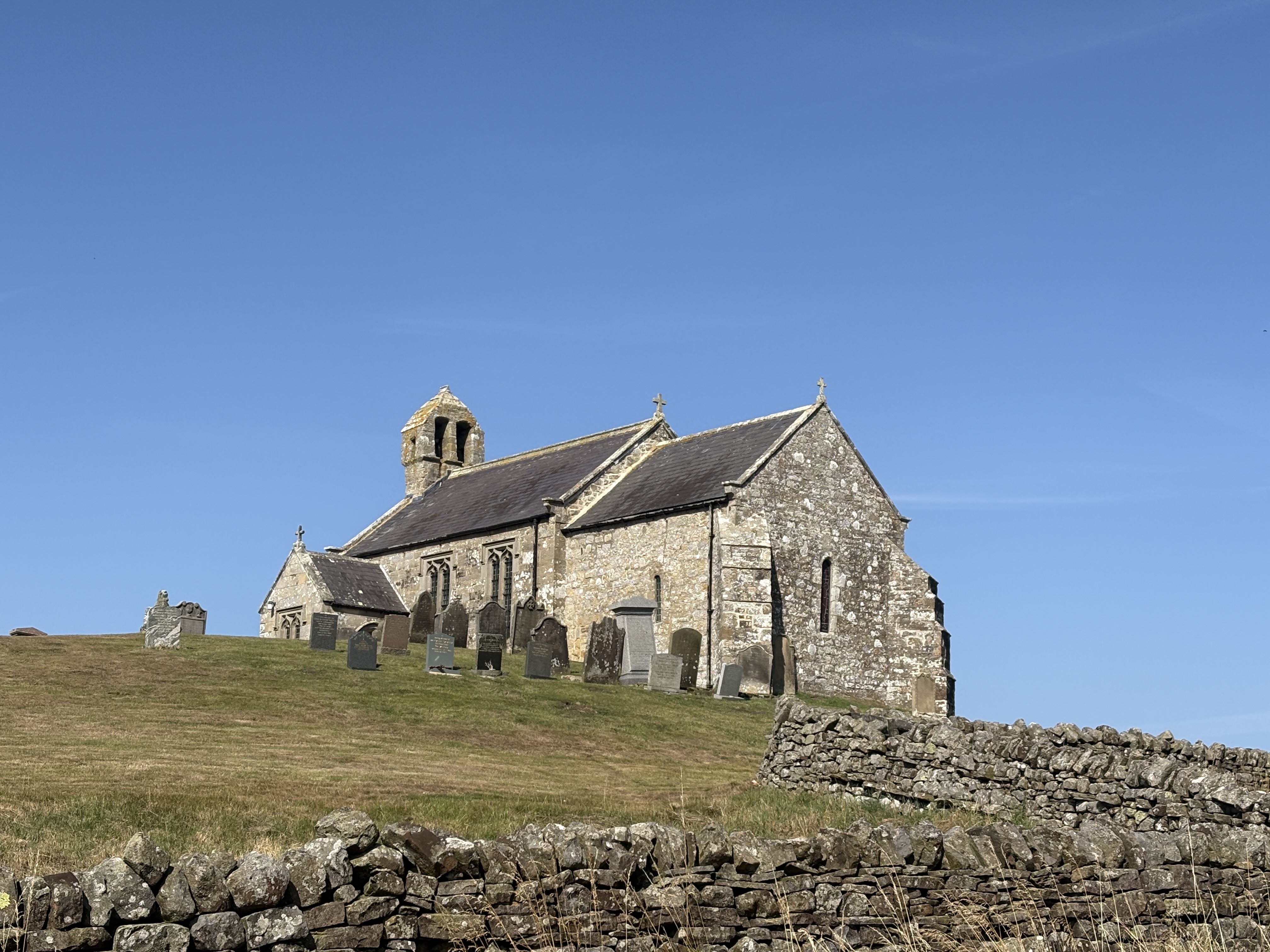
After a few hours sleep it was off again towards Newcastle to return the car. But kind of, sort of, apologetically towards Newcastle, more by the way of some other points of interest. South of the Cheviot valleys the landscape changed, with purple-covered moorland and long, steep roads empty of people and places. I followed a straight, single-track road that felt miles from its turn off, winding past a farm to St Aidan’s Thockrington. The church is all that survives of a village that fell victim to Cholera, and sleeps like a beached whale on a lumpy hill, enclosed by dry-stone walls. It was perfect. 
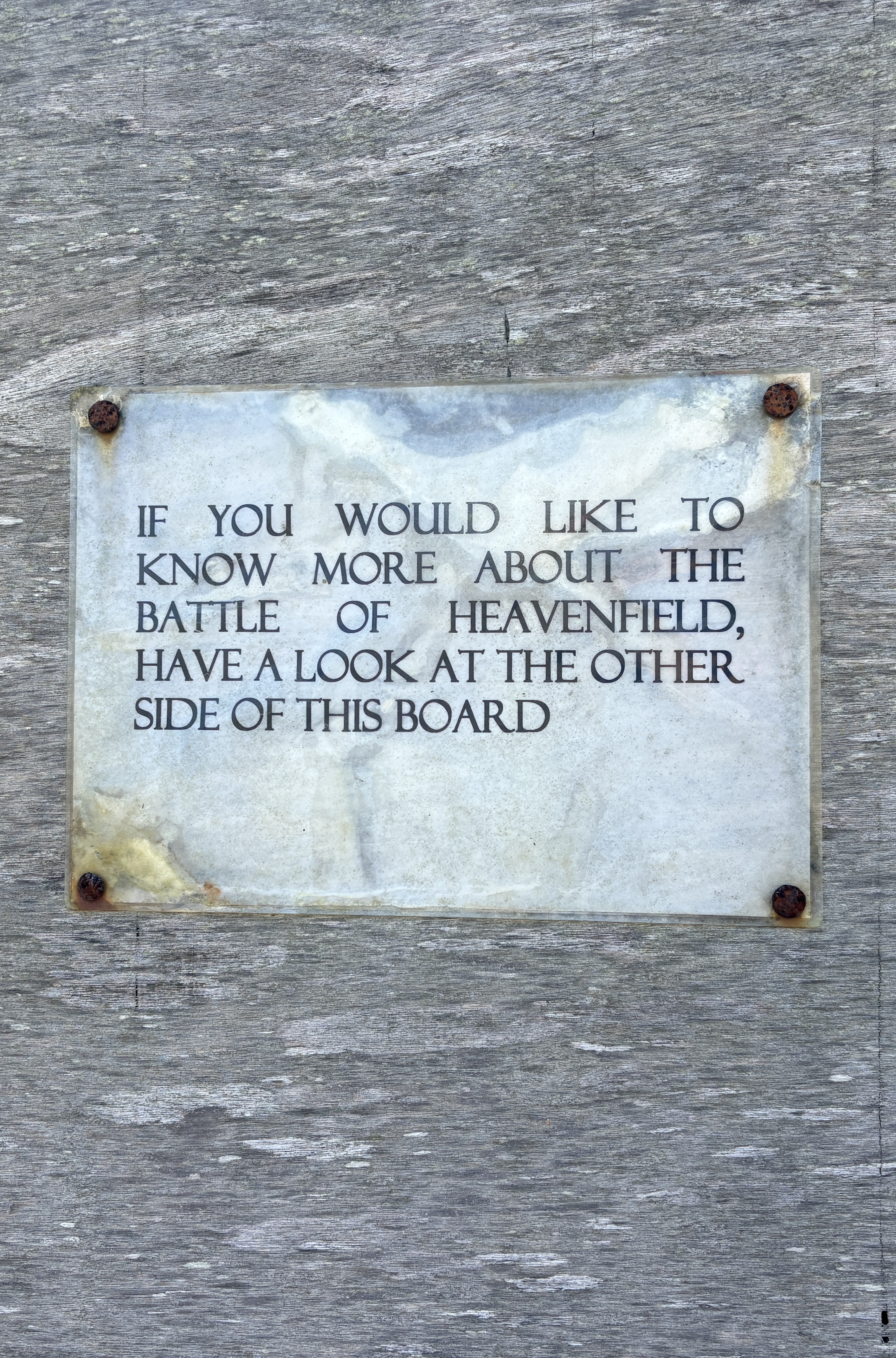
Fifteen minutes away and the profusion of brown signs announced Hadrian’s Wall type stuff everywhere. There was no wall left at the site of the Battle of Heavenfield (635AD), where Oswald socked it to his British rival Cadwallon, but there was in his time. All I could see was a beautiful view, a church in a grove of trees, a sense of some things long gone, ancient struggles around faith, power and ancestry. As with almost everywhere there was a war grave, a more recent reminder of it all. Quite a lot to contemplate when I had to get the car back to Newcastle railway station so I’ll forgive myself mucking up parking a bit. The last part of this adventure was a train back to Berwick full of holidaymakers returning, or arriving, I wasn’t quite sure which. I walked back into town quite tired, down quiet streets with shadows starting to rival the afternoon glare.
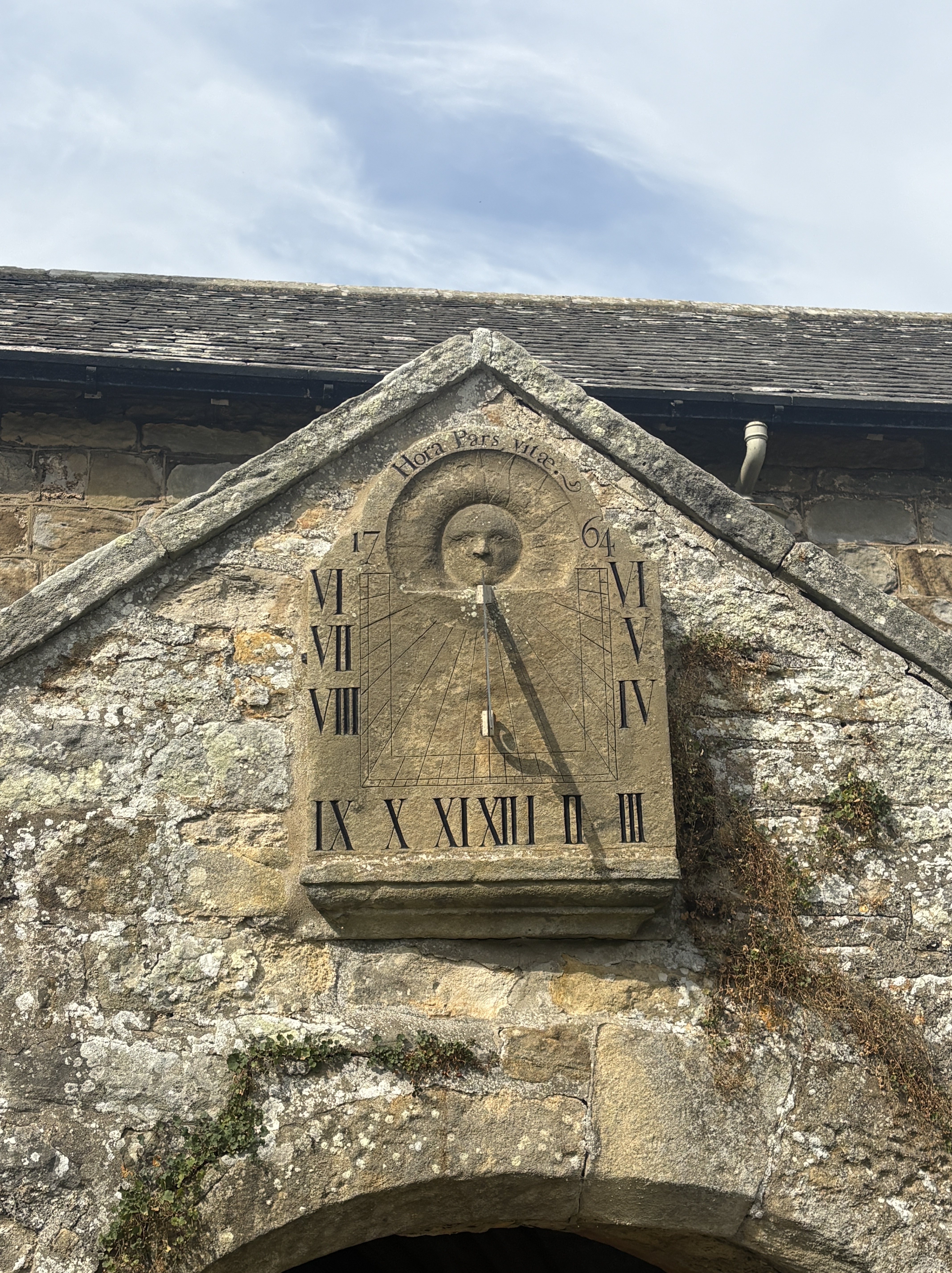
We found another sundial while on the trail of the whelp in Kirkwhelpington. It was right at the time, not adjusted for the modern seasons. Kirkwhelpington – The town of the followers of Whelp – a puppy or a baby – with a church. The Kirk probably came later.
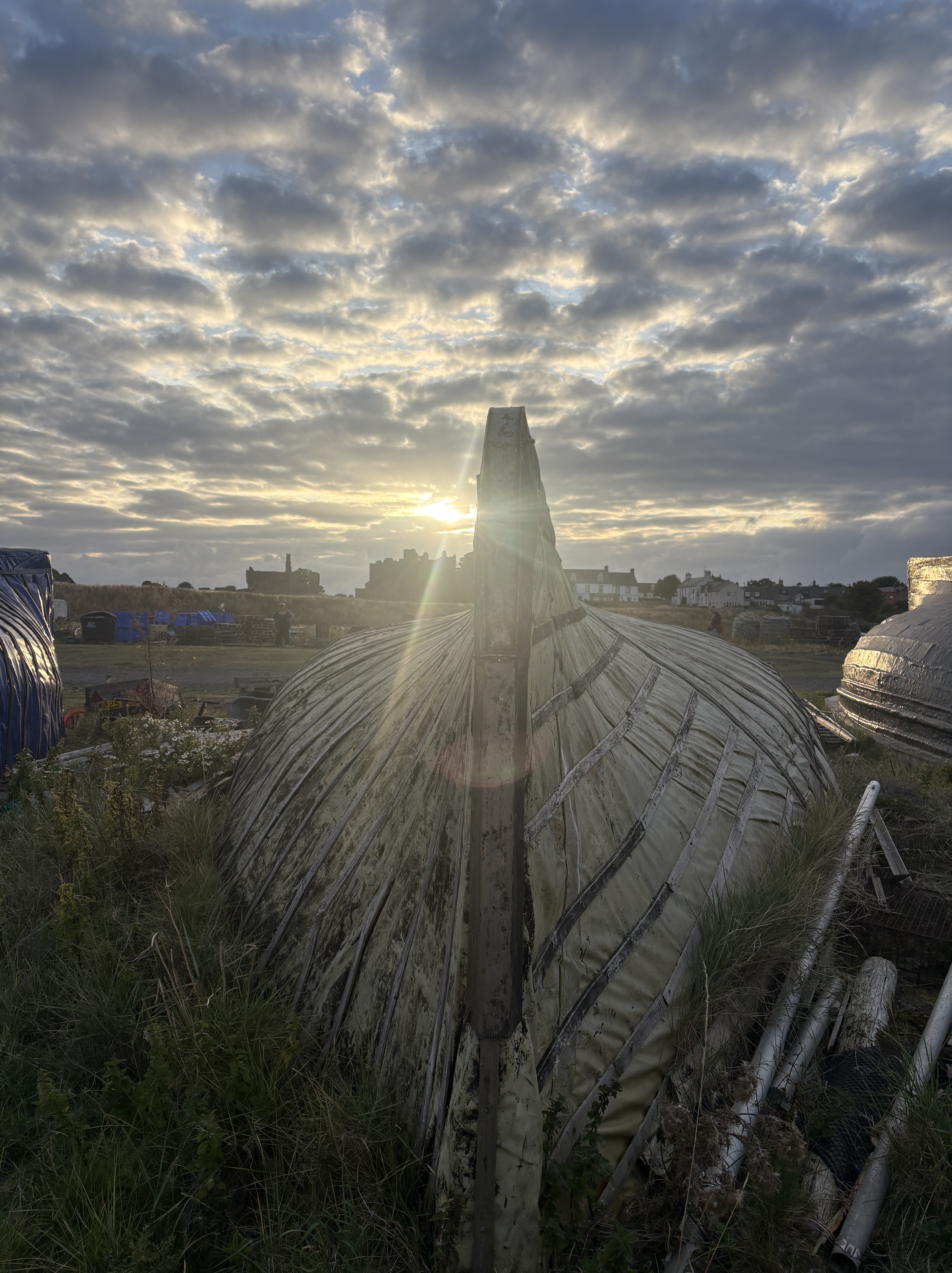
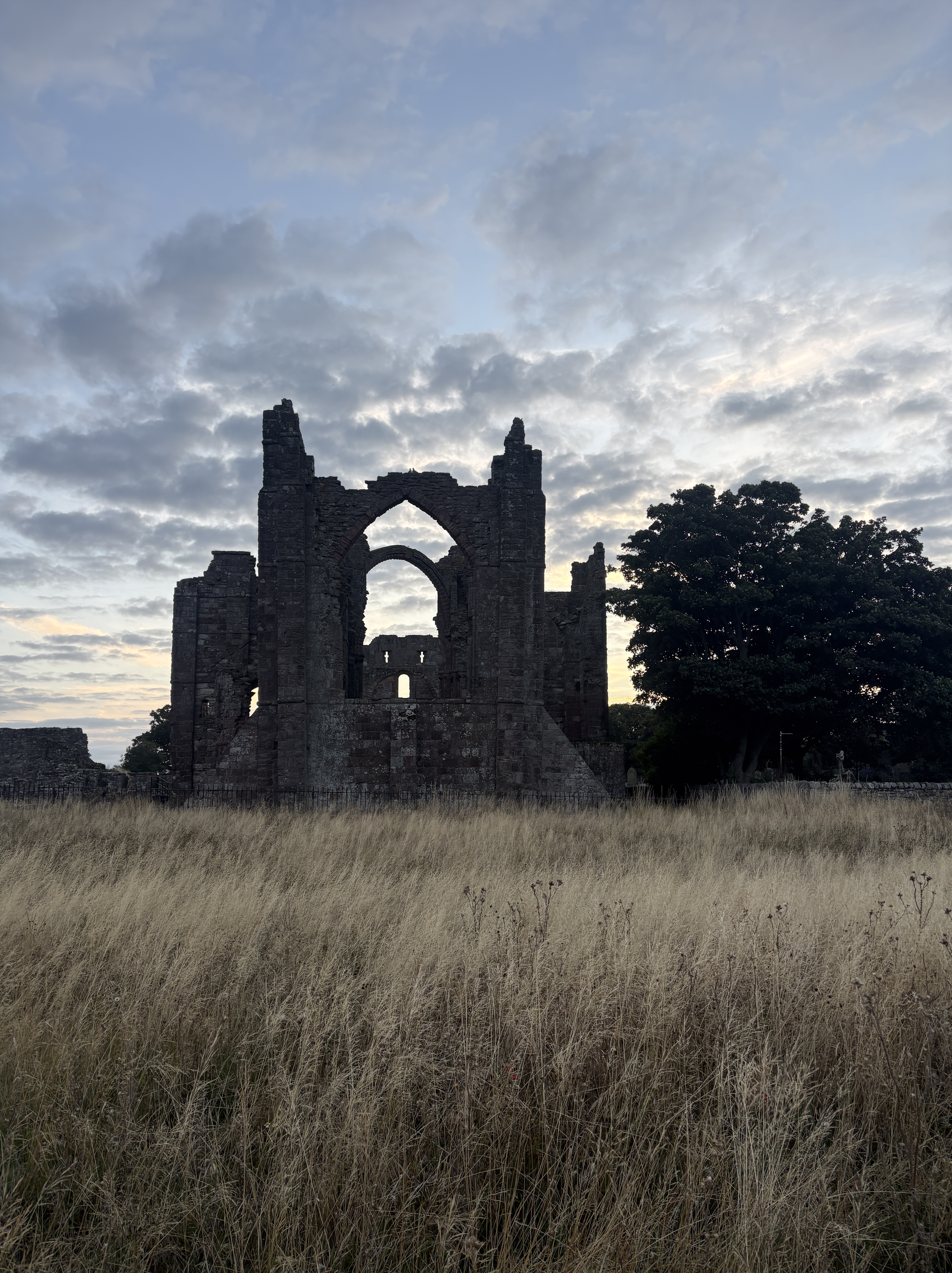
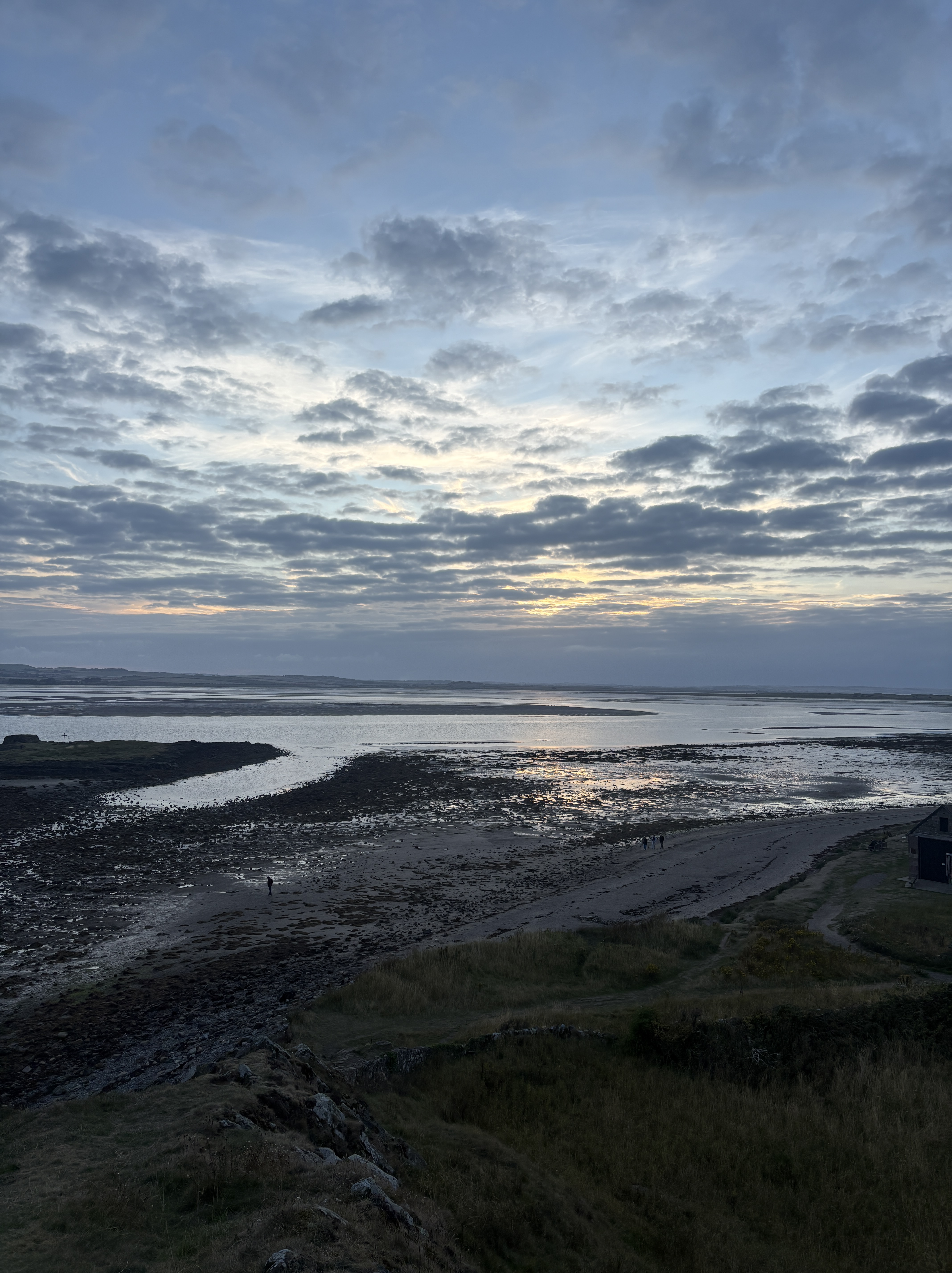
The next day we went over to Holy Island, not with the day-tripping crowds, but for a quiet evening picnic. It was a little cold sitting on a blanket watching the water from the harbour, with the whale-like upturned boats behind us, and hard to imagine in such a tranquil place there had once been the uproar of marauding Norsemen. A long time ago. But if so, a lot of Lindsfarne is the same. The tide still cuts it from the mainland twice a day, pilgrims arrive barefooted and the shifting waters provide makeshift homes for colonies of seals. Swimming off Bamburgh after a storm flew through the island castle appeared just a little darker than the sky a few miles north. There’s always a sense I’m missing something, further than I can see. 
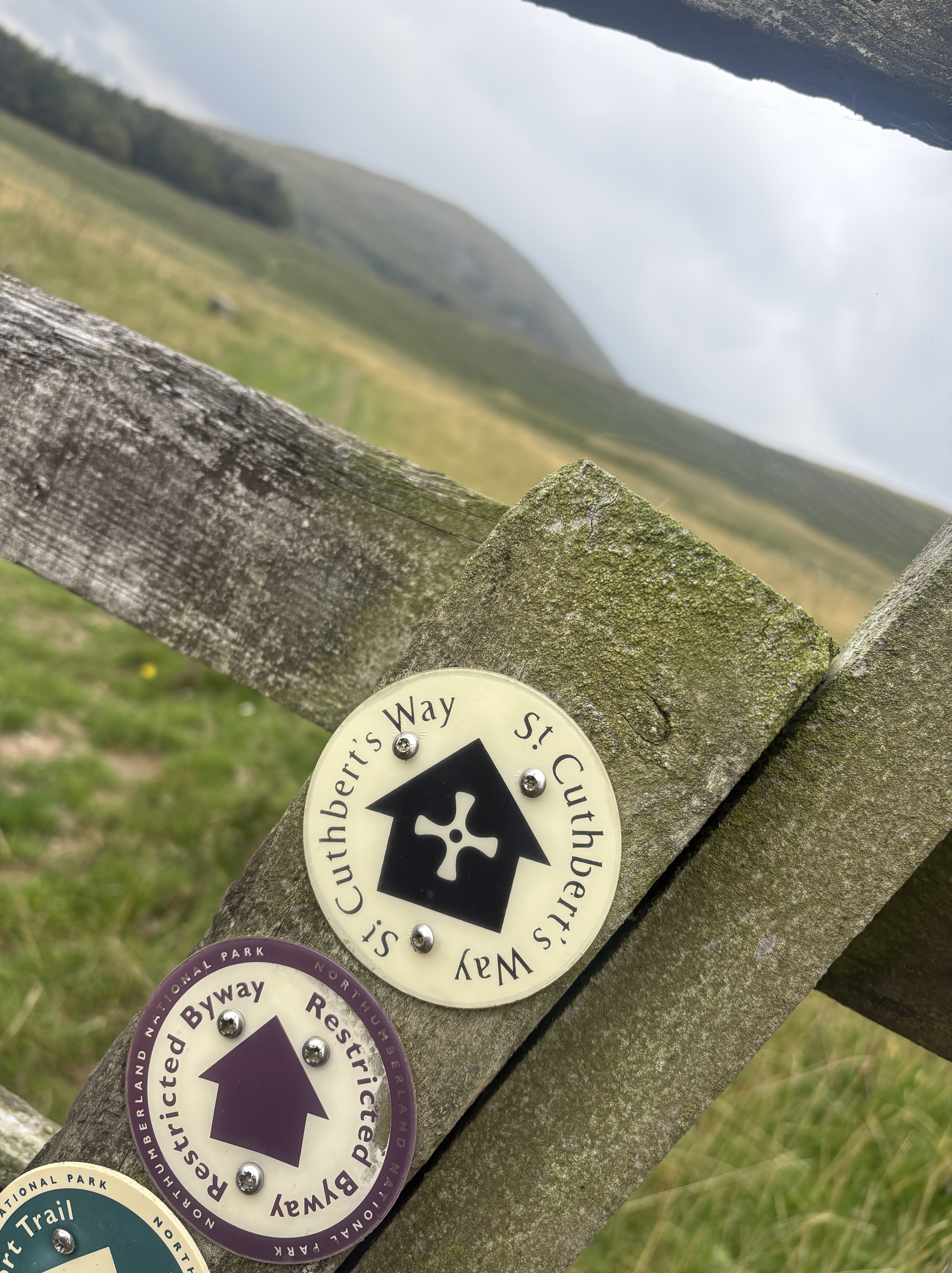
Later in the week on a route mapped through the Cheviots we followed the eastern flank of College Valley, over three tops, then looped back along St Cuthbert’s Way for a stretch. I had been reading a short book which had gruesome details of the fate of Cuthbert’s corpse over the centuries (clue: he decomposed), and enjoyed more the thought I was walking in footsteps from his time, when Northumberland went much further north and south. 
The back door to the Lakes

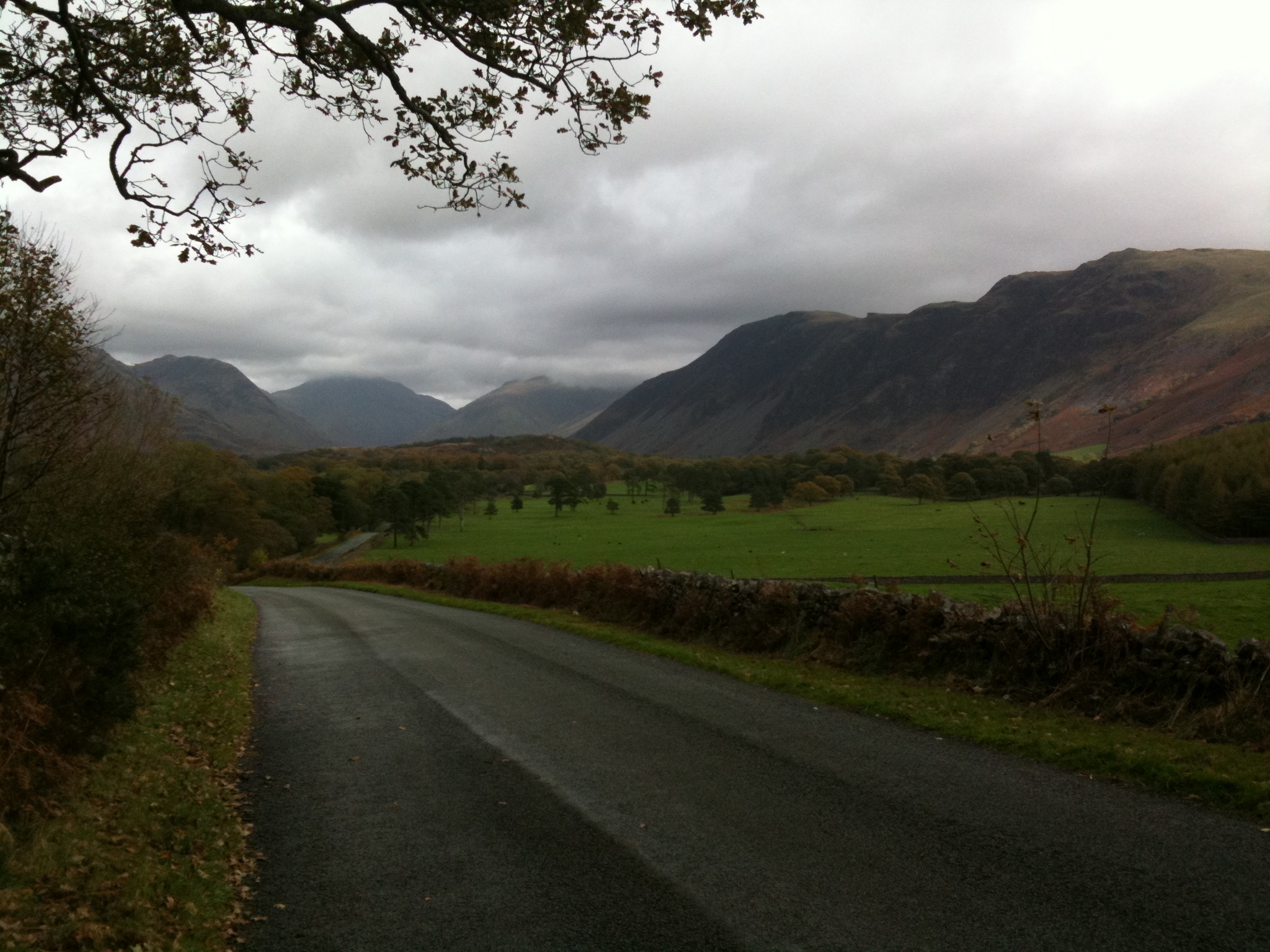
Distant Wasdale

The best way to reach the lakes? The snaking, traffic-trodden M6? Crammed up against a beer-bellied chap with a large bag on a west coast mainline train to Oxenholme or Penrith, then begging a lift? How about none of the above?

Lost in the world of modern railways is the Cumbria Coast Line, a two-coach throwback to another era, complete with request stops, signal-box attendants who double as gate-keepers for level crossings and an abundance of wonderful scenery. You’re probably not surprised by the looming, brooding fells – though Cumbrians are a no-nonsense bunch and you won’t see poets scribbling lines in awe of the hills on board – but the delicate wetlands, estuaries and tidal flats of the coast are less celebrated. Yet this is a journey to savour.

In fact, the Cumbria Coast line may save you time too. The south-western fells around Wasdale are notoriously time-consuming to get to from the motorway. If Langdale and Borrowdale are an hour from the big roads, Wasdale can be close to double that. Ravenglass, Drigg and Seascale are all ten miles or so from the western tip of Wasdale, and can be reached from London, with kind connections, in four and a half hours.

The lakes unfold slowly and deliberately. Just north of Lancaster station, where you’ll leave the main line unless bound to do so at Preston by a service running fewer options, you’ll get your first view if the mountains glowering at Morecambe Bay. Though this is the best known of the tidal flats n the Lancashire and Cumbria coasts it is by no means the only one. Carnforth, famous as the setting for Brief Encounter, is next, with rusting boilers from steam engines sitting alongside mighty diesels at Steamtown, an open-air museum dedicated to locos from the past. At Barrow-in-Furness, where the Royal Navy’s submarines are built you change from the zippy sprinters services to the Cumbria  Coast line proper.

There’s more for rail-buffs of all ages at Ravenglass, close to my one journeys end. Here L’al Ratty, a narrow-gauge railway, climbs up to eskdale on a very scenic journey. Muncaster Castle next door offers tamer appeal, with gardens alive with colour year round.

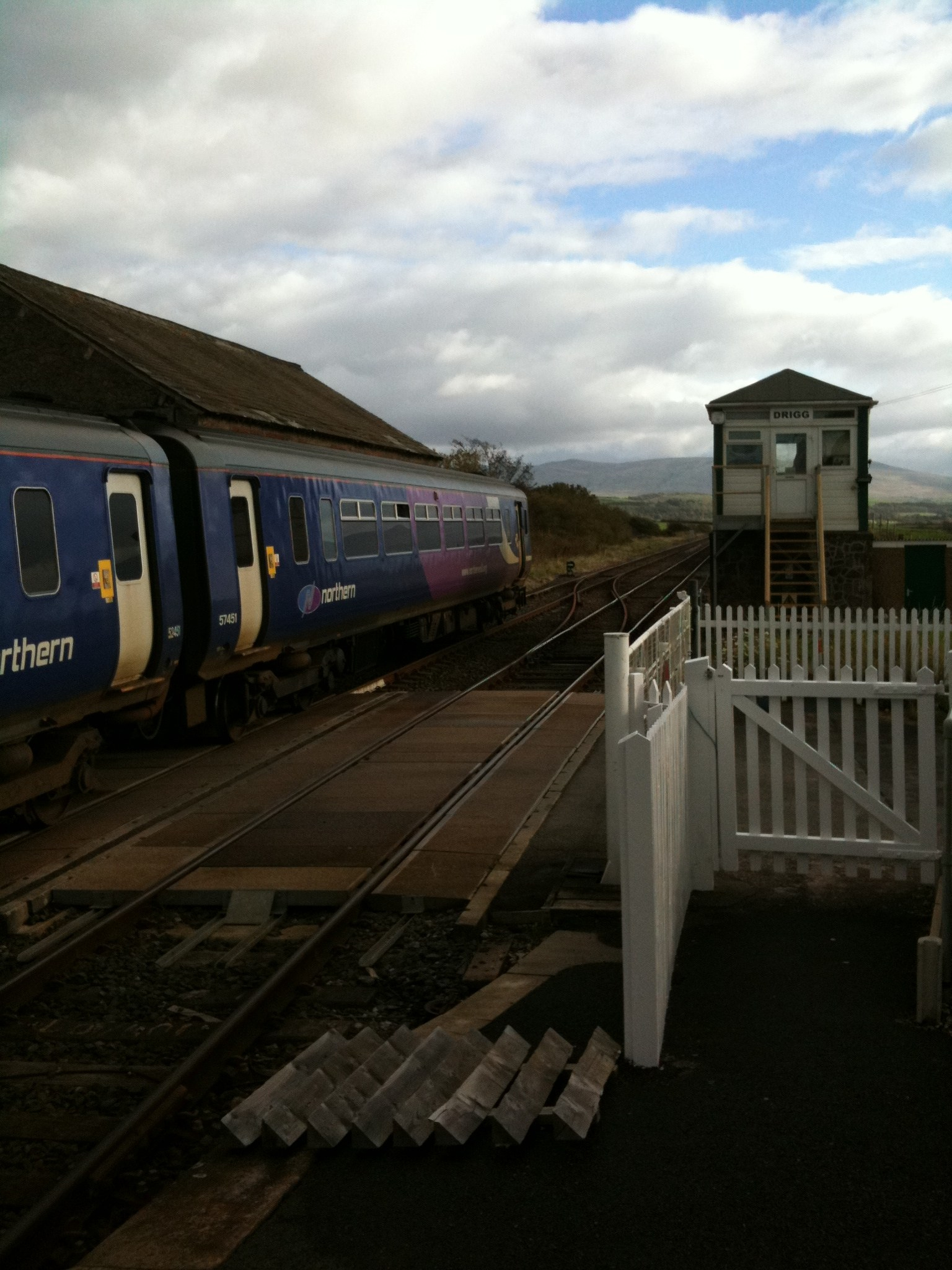
drigg.jpg

Request a stop at Drigg and have the station to yourself

The route crosses some of England’s most isolated spots, hiding amidst the folds of assorted Lakeland river estuaries, the North Sea and the cloud-covered Fells. The sun is intermittently blinding with the kind of fresh, sharp light that rain and breeze puts into sharpest focus.  Who needs to travel this beautiful stretch of the Cumbrian coast on a Thursday afternoon, bound for Ravenglass, Seascale and Carlisle? No-one except me it seems. So I have the train to myself until I get off at Drigg, a request stop. Requesting it seemed to surprise the Guard, whose tone of replying ‘really?’ to my request lends me to think that either no-one ever does or that it’s really not my kind of town. To my right, the bracken is a bright orangey-brown on steep, hummocky hills.

eskdale.jpg

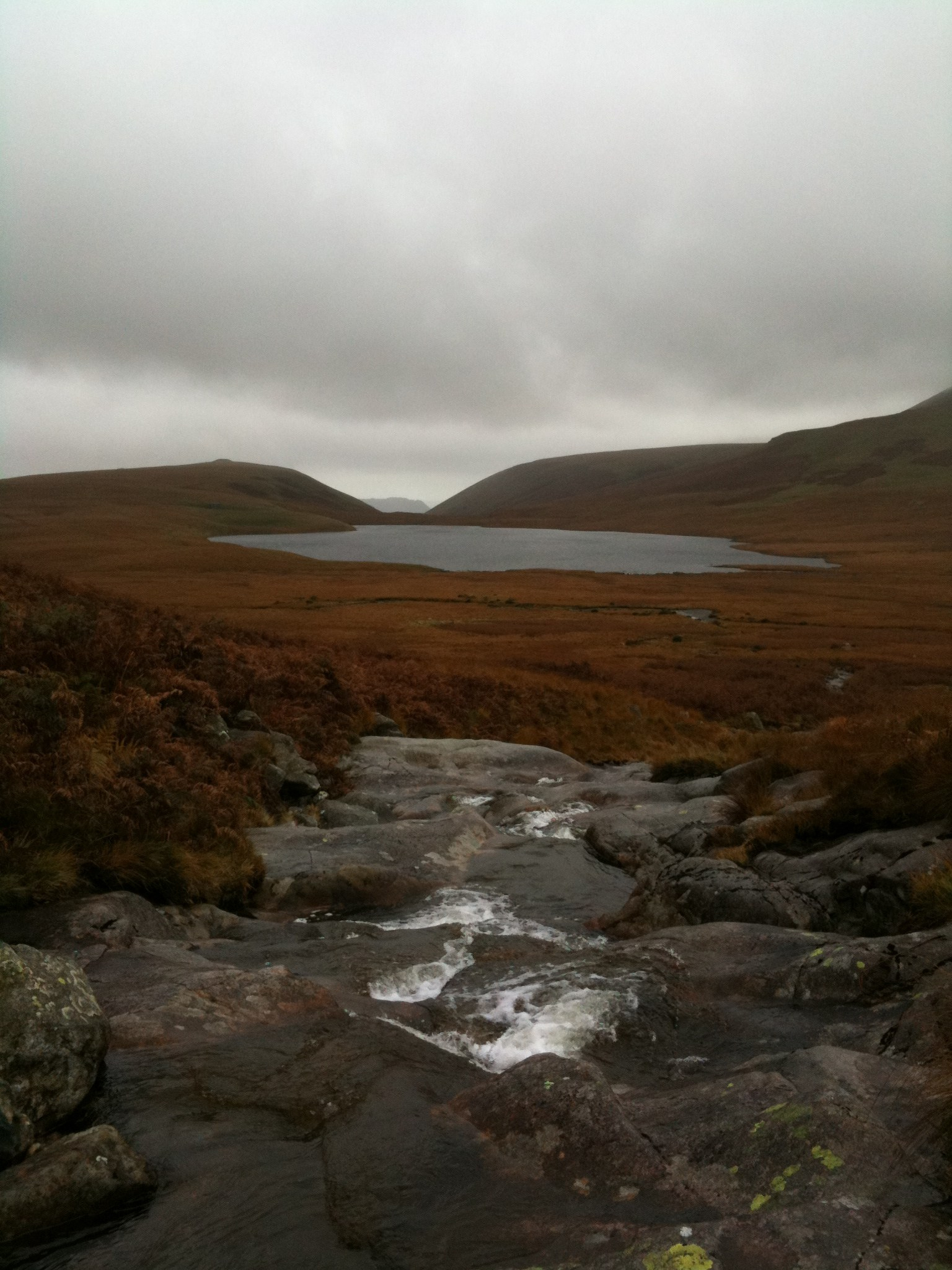
Burnmoor Tarn, reached via the Old Corpse Road from Wasdale

The highlights of this journey are many. On the first leg to Barrow in Furness, the crossings of the Kent and Leven viaducts are astonishing, ever-changing vistas. Water and mountains are everywhere yet the train appears suspended, almost floating above it all. It looks more like the north-west of Scotland than the Lakes. A golf course with links on rocky promontories looms into view, then quickly passes. Wading birds find safe havens in the oxbows and inlets, the seagrass and sands out the window.

olivers-gill.jpg

Oliver’s Gill: good scrambling

As I get off at Drigg, I wait while the train pulls away bound for distant Sellafield, Whitehaven and Carlisle. There’s much more to explore on the coast, but I’m headed inland via a wonderful road where the mountains reveal themselves through folds of foothills. And then there it is: Wastwater. Not the biggest, not the most spectacular of the lakes but for me, the one that takes the prize as the biggest classic. As I slowly cycle its length to journeys end, the calm of England’s greatest landscape is already working its magic. If I were to stay forever would anyone mind?

Wasdale sunset

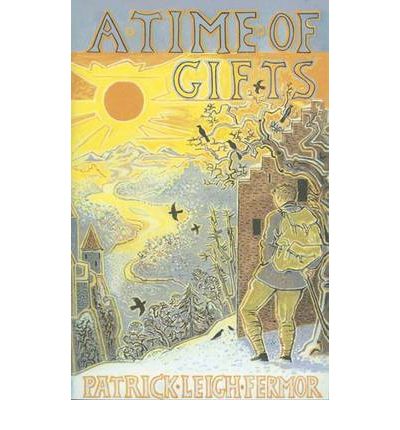
Classic Travel: A Time of Gifts

A Time of Gifts is everything a travel book should be: brilliantly written, educational, inspiring and full of memorable anecdotes that, once read, appear like ghosts in the reader’s own journeys.

It begins with a simple decision. It is December 1933. 18 year old Patrick Leigh Fermor can’t decide what to do with this life, so he decides to go for a walk. Full of the vim of youth, he decides that Constantinople is his destination. Resolved to this gently eccentric trip, Leigh Fermor proceeds to carry it off, armed with a stick, a few possessions and occasional pickups of money from home.

As the story progresses his naive charm works a magic spell, turning a trip that promised months of freezing nights in hedgerows into being put up in castles and fine apartments. Leigh Fermor never loses his edge though, and once back on the road returns to the traveller’s life with endless enthusiasm.

Two features of A Time of Gifts jump out and linger long in the memory. The first is Leigh Fermor’s prose which is rich and lively. He deserves the title of the greatest living British travel writer. While in part the lucid nature of the writing is due to the author writing – in 1978 – as an older man looking back on an adventure rather than scribbling in the moment, and therefore being able to weave in the astonishing knowledge he possesses, it is also the obvious thrill of discovery and the simple delights of an utterly free life that makes the book special.

Once read, I’d defy anyone to not recall the noise of the ice skiff charging along frozen Dutch canals or share the joy of rummaging around a ruined castle on the banks of the Danube, when considering a journey to the areas visited today. The Europe the book describes disappeared forever in 1939, and the lands travelled through in A Time of Gifts feel foreign and distant. That said, it remains a richly rewarding companion on a journey to the continent.

There is a sequel, Between the Woods and the Water, which takes the journey from the Hungarian Border to the Danube gorge known as the Iron Gate in what was Yugoslavia. Leigh Fermor did make it to Constantinople fourteen months after leaving Tower Bridge, but that was not the end of the adventure. The author went on to fall in love with Greece and a Romanian noblewoman with whom he lived with in Athens and Moldavia, and serve in the Irish Guards during the Second World War. Later adventures in Greece and the Caribbean, marriage and a life divided between England and Greece followed.

There has not yet been a third volume. Patrick Leigh Fermor will celebrate his 95th birthday on 11 February.

Suggestions for your favourite travel reads are welcome. With what’s left of winter, warm yourself up with A Time of Gifts.