Monthly Archives: June 2026

Old English

After reading a biography of JRR Tolkien I was struck by his mastery of Old English and the influence of its literature and history on Lord of the Rings. I didn’t know much about the language nor really the period – though it turned out I had skirted round the subject while reading various books – and, curiosity piqued I decided I’d like to know more about it, and a bit of searching led me to the fantastic Colin Gorrie and his graded reader, Ōsweald Bera. While this hasn’t been a route to fluency, it has been a first step in this lost language. Learning it has been befuddling fun, with some genuine wonders emerging from the mist of time. And while I’m not trying to persuade anyone, I wanted to write down some of the favourite things that I have found along the way.

By all means buy the brilliant Osweald Bera here. I recommended it to a friend’s daughter who was intimidated by the prospect of studying Old English as part of her Oxford Undergraduate course and by the sounds of it, it has done the trick there.

Another excellent and reader-friendly way into Old English is to read Hana Videen’s The Wordhord: Daily Life in Old English, which will introduce you to wonderful words for all sorts of everyday things, as well as gently opening the door on more concepts you’ll encounter further down the track.

The letters Þ / þ (Thorn), Ð / ð (Eth), Æ / æ (Ash) and Ƿ / ƿ (Wynn)
These letters are among the first things anyone looking at a line of text (see Hwæt below) will notice, as they’re not present in modern English. Blame the printing press, among other things, with its continental letters. Getting my head around these letters, especlally learning to write them, has given me a real kick. My daughter’s called Winnie. Should that be Ƿinnie?

That the runic alphabet is called ‘The Anglo-Saxon Futhorc’
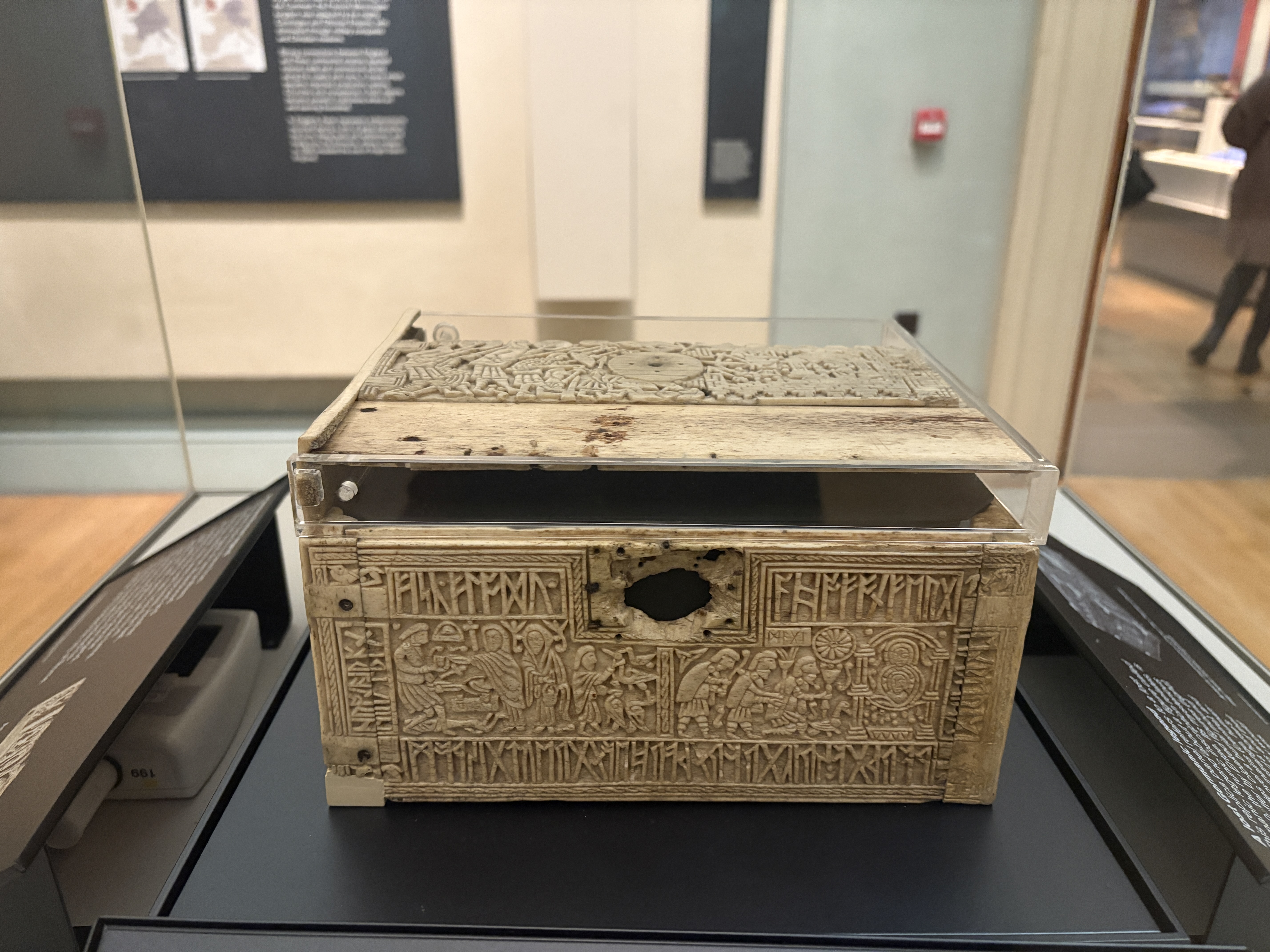

Like a typewriter keyboard’s ‘qwerty’ keys giving its name, the runes that made up the Anglo-Saxon alphabet bear the name of their first six characters: ᚠᚢᚦᚩᚱᚳ, fuþorc. We misspell fuþorc because English has lost the letter thorn (þ), inefficiently replacing it with two letters, th. I would like to learn the runes. Fuþorc. There it is again. The Franks Casket, a whale-bone chest in the British Museum, is a great place to see Anglo-Saxon runes up close, as are the casts in the Victoria & Albert Museum of the mighty crosses from northern England and southern Scotland. Having written down the full fuþorc, I was able, with a little close inspection, to pick out individual runes on both the casket and the crosses, which gave me a kick.
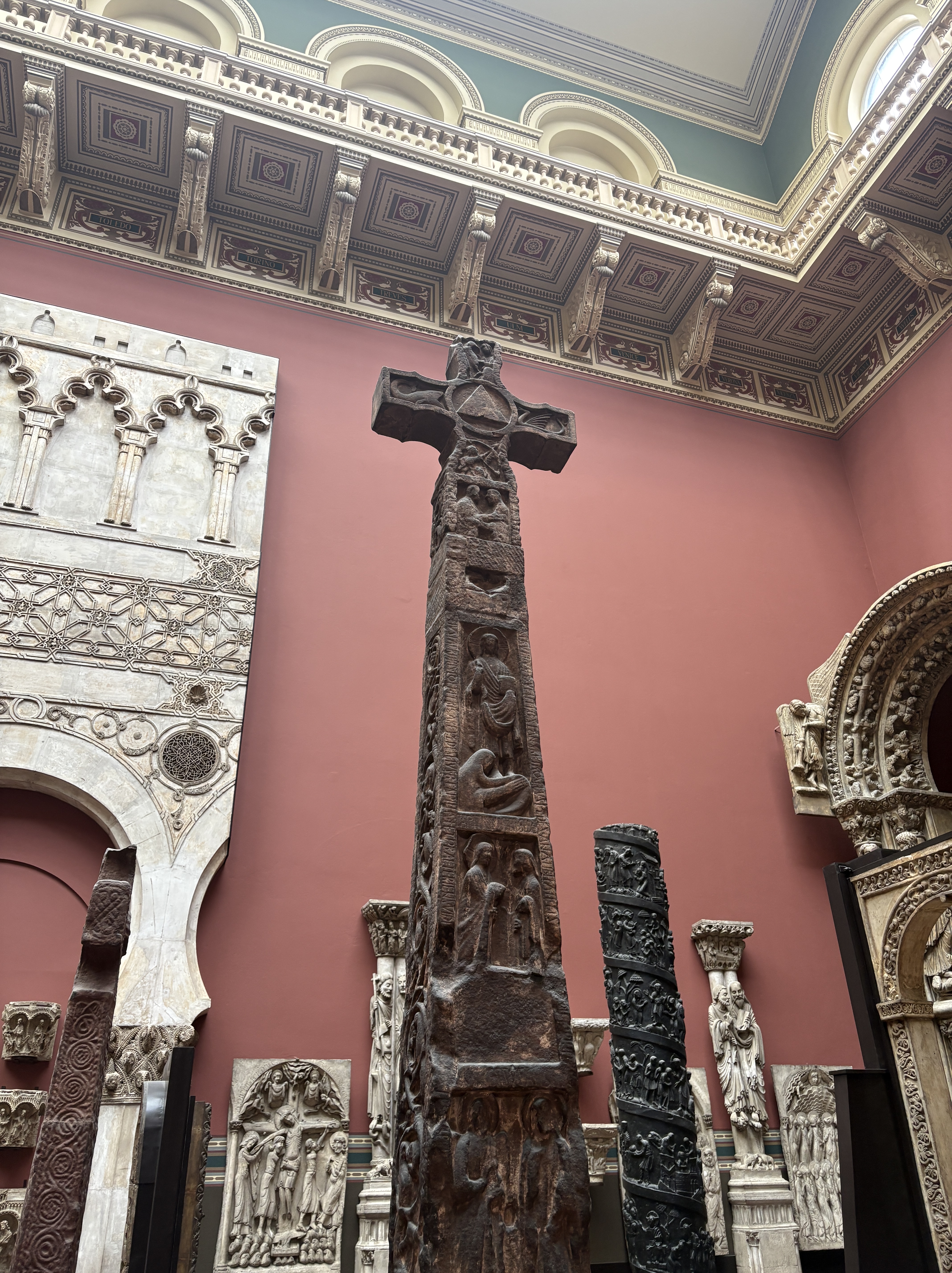
At least, that is, until you can persuade your family to take a holiday there and see the real thing in Ruthwell.

Poetry
Nothing challenges the idea that the Anglo-Saxon period was the ‘Dark Ages’ (no darkness please, Early Medieval will do just fine) than the small but fascinating body of poetry that survives in manuscripts like the Exeter Book. Richard Hamer’s Choice of Anglo-Saxon Verse has been a brilliant window onto the world of Old English poetry. The poems I have been particularly drawn to are known as The Ruin – a description of the faded, mysterious glories the Anglo-Saxons had around them as leftovers of a Roman civilistaion they could not emulate; Durham, a beautiful description of the cathedral city that could still apply today and Wulf and Eadwacer, a lament for a lost love and an imagined future that refuses to come to pass. There’s so much more to dive into.

Manuscripts
Things get even wilder and glorious when you stick your nose into a manuscript. Here’s a mention of Hroðgar (Hrothgar), King of the Geats and builder of the Great Hall of Heorot: 
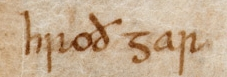
Hroðgar

So that’s an r and a g also looking considerably different as well as the different letters noted above. And Hrothgar here looks like two words. Very confusing, very cool. I feel like there’s a lifetime of pouring over individual words trying to make sense of them. By the way, Hrothgar’s queen? Ƿealhþēoƿ (Wealhtheow).
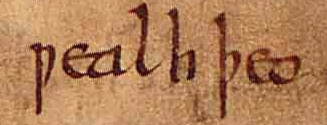
Ƿealhþēoƿ

Hwæt
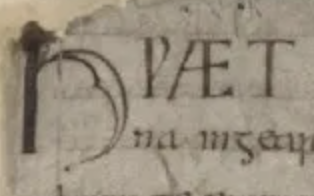
Hwæt

Hwæt (often written as Hwæt! but there was no exlamation mark in Old English, and there dispute over the use of the word in this context) is as far as most people, I think, get with Old English. It’s the first word of Beowulf, the most famous piece of Old English literature, a monumental work about Germanic inter-tribal warfare, monsters, monsters mothers, feasting, the passing of time and so much more besides. Beowulf, the name of the protagonist, wasn’t exactly a common name in Anglo-Saxon English, though a visitor to the see of Durham at some point in the 7th century went by the incredible name to our eyes anyway of Biuuulf, suggesting it was somewhat in use at that point. Anyway, ‘Hwæt’ greets new arrivals into Old English, meaning anything from ‘Lo’ ‘Hark’ ‘Listen’ to something different. It may have been given significance as a rousing attention-grabber it doesn’t fully deserve. I like this idea as it fits with my Dad’s excellent and unique suggested translation of Hwæt as ‘F*ck me!’.
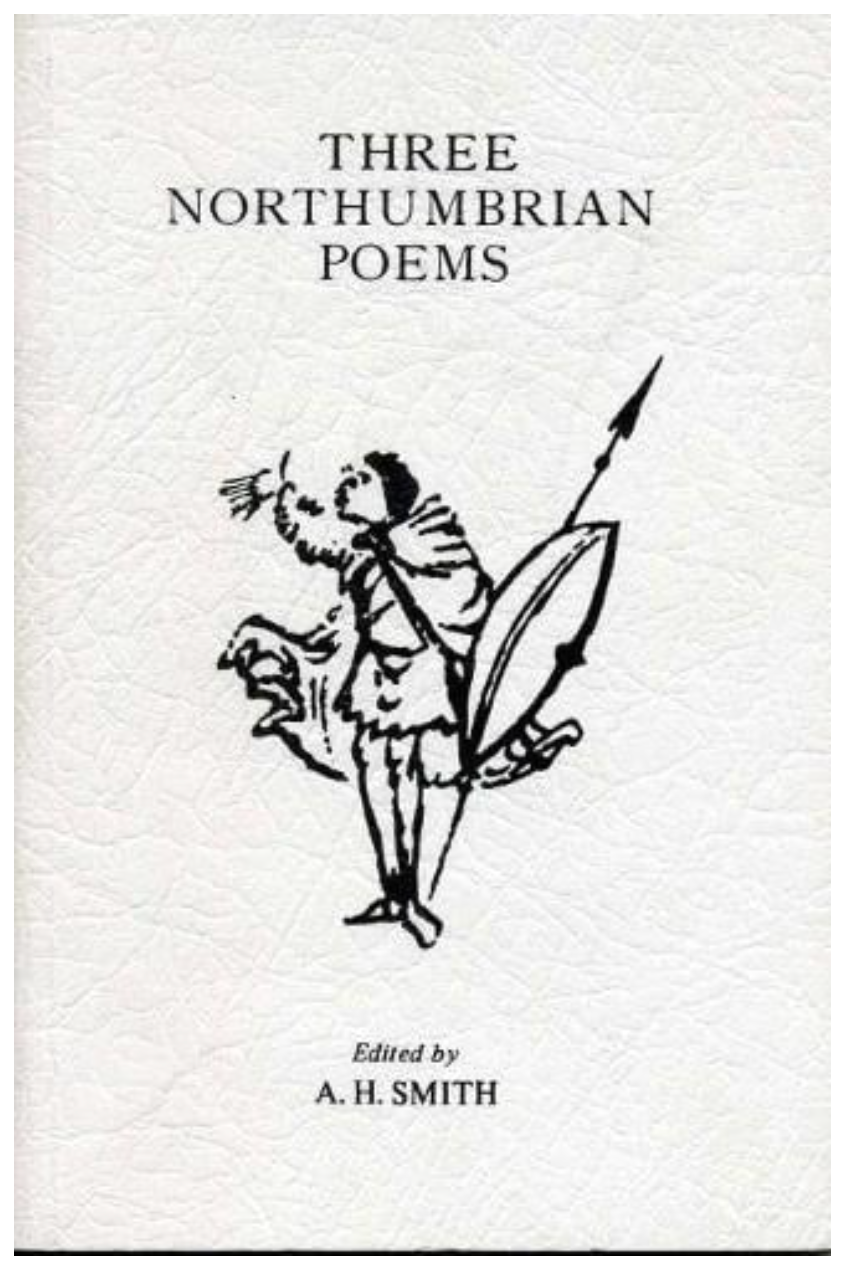

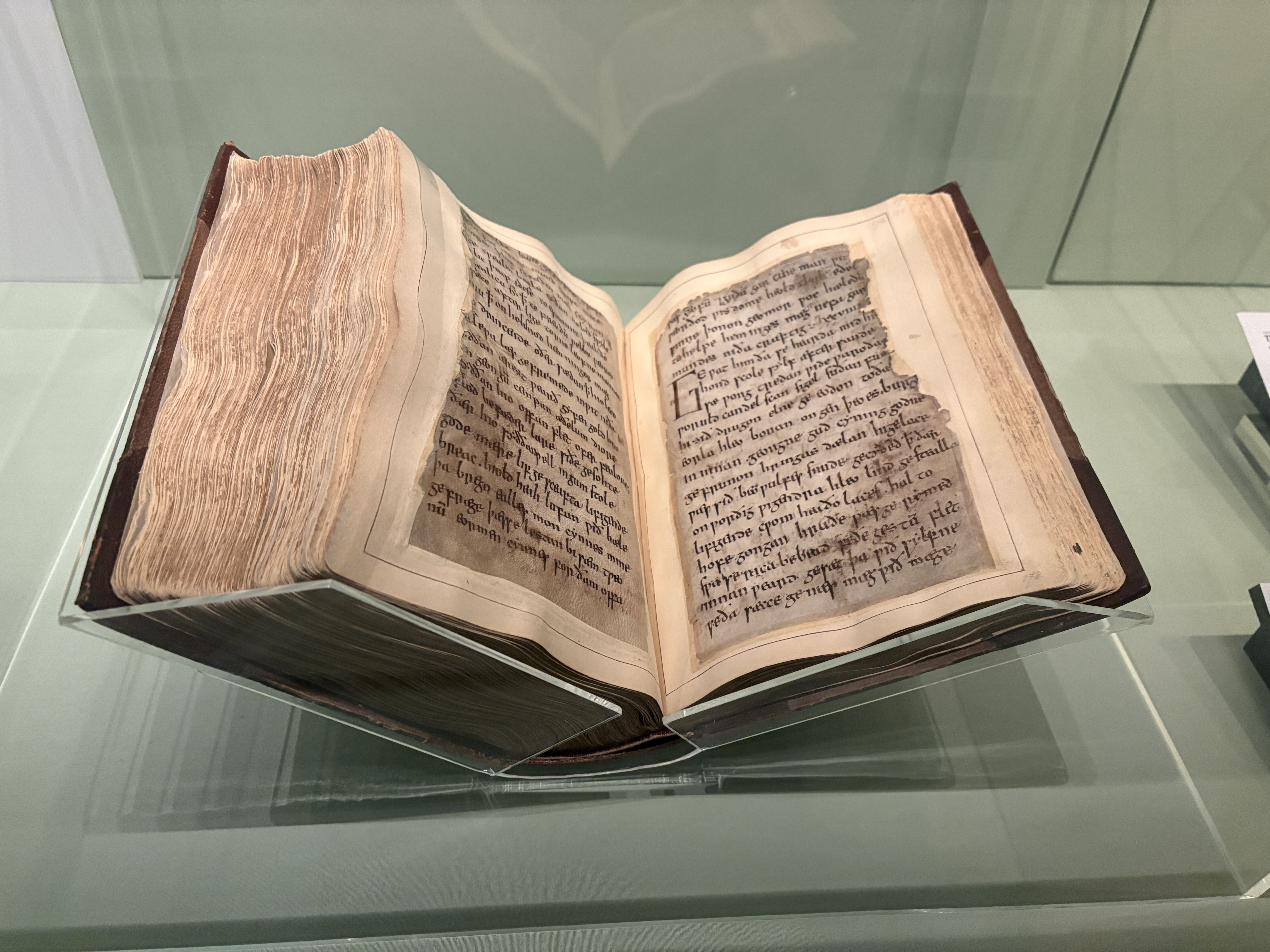
Here is a scop – a performing poet who would have recited Beowulf and many other works, pictured on the cover of the pretty hardcore Three Northumbrian Poems by A H Smith. This drawing is another thing I love about Old English. I haven’t read much of Beowulf – it’s certainly beyond my current capabilities – but I have been to gaze at the sole surviving written copy of it, also know as the Nowell Codex, in the British Library.
Grammar
Speaking of things that are very difficult to me, elements of Old English are, to me at least, really hard. It’s not so much that it’s a ‘dead language’, there’s enough of it online (Graham Scheper, take a bow) to make it feel very much alive. It’s the prospect of learning grammatical terms, how and when they apply, what things like inflections and cases even are. English speakers like me can be very lazy when it comes to languages, so there’s an irony to struggling to understand the terms and tools of the precursor of this language, let alone the language itself. The sort of brief aside on a modern languge like French or German that someone like me was given doesn’t give much of a grounding, and was long, long ago. Osweald Bera gives this challenge the swerve and looks to introduce the language in a different way, and I’m getting there with help from Peter Baker and, yes, the odd AI tutorial. Bookmark this and let’s see where we are in a few years.

Bede’s Parable of the Sparrow
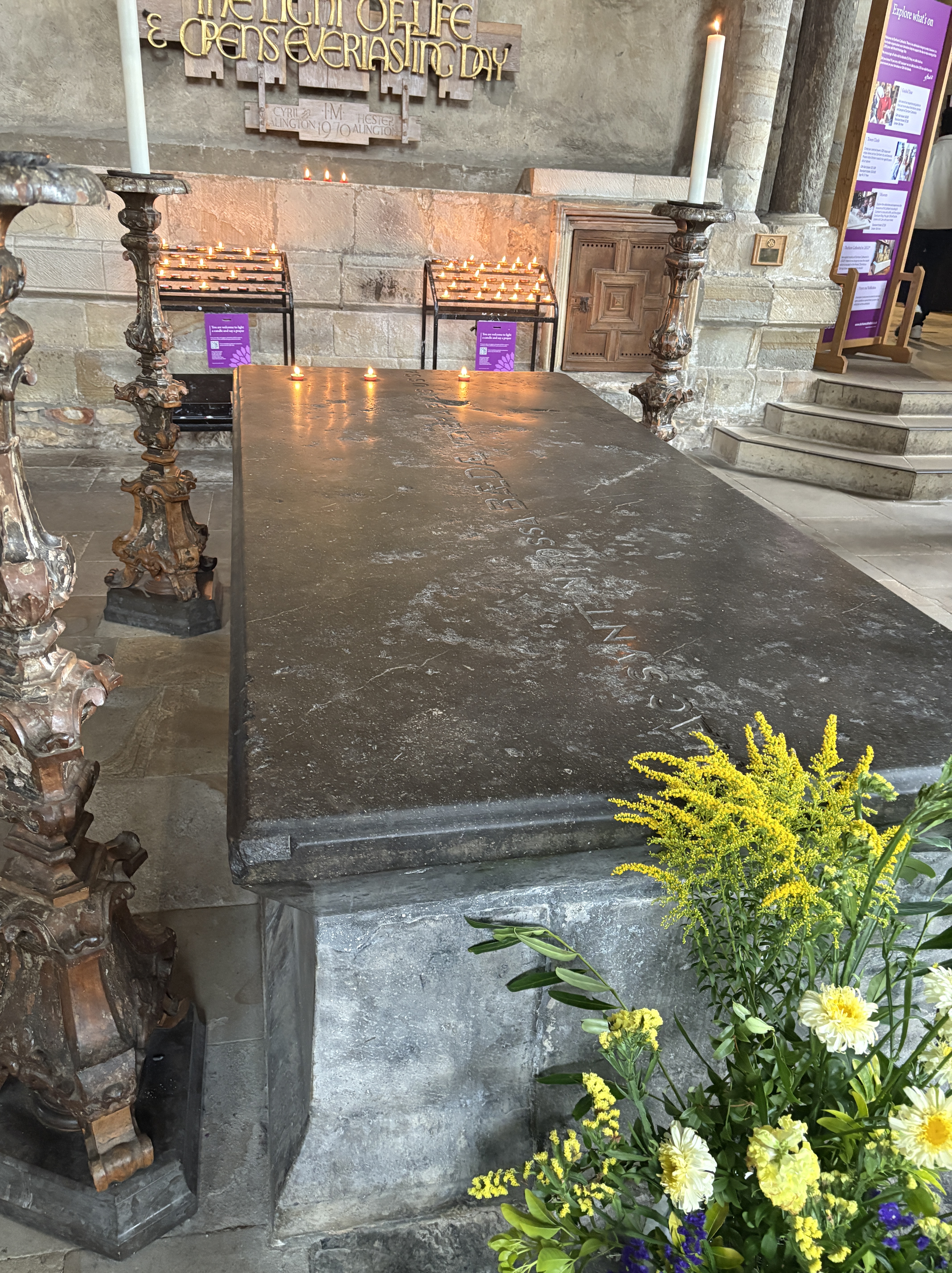
I won’t write out Bede’s Parable of the Sparrow, found in his Historia Ecclesiastica – you can read it for yourself here, for example. Not only is it a vivid analogy aimed at the dwellers of the mead-hall, but also a beautiful metaphor for the fleeting nature, and wonder of life and the mystery of faith. Bede is buried in Durham Cathedral, a most fitting place for him.

Northumbrian: even more out there
There’s so many wonderful connections between Northumberland (Norþanhymbre) and Old English. This isn’t a surprise as Northumbria was one of the ancient Anglo-Saxon Kingdoms, and home to Bede, Cuthbert, King Oswald and the humble shepherd Cædmon. As someone who has frequently visited and loves the region – and whose grandmother was born in Gateshead – this has been a fresh window on the north-east. Fleeting fragments of the Northumbrian Old English dialect survive, in scattered manuscripts found in unlikely, distant libraries like St Gallen, Switzerland and Saint Petersburg. They hold versions of texts like Cædmon’s Hymn and Bede’s Death Song, and within are some wild words. Bede’s Death Song alone brings into the twenty-first century uuiurthit (“becomes”), thoncsnotturra (“more thoughtful” or “wiser”), and ymbhycggannae (“to reflect upon” or “to consider”), the last of which I am sure I can hear with a dash of modern Geordie. Wonderful, befuddling words, constantly tempting to attempt a translation of, hard to learn, I will get there one day.
May 2026

Monday 18 May

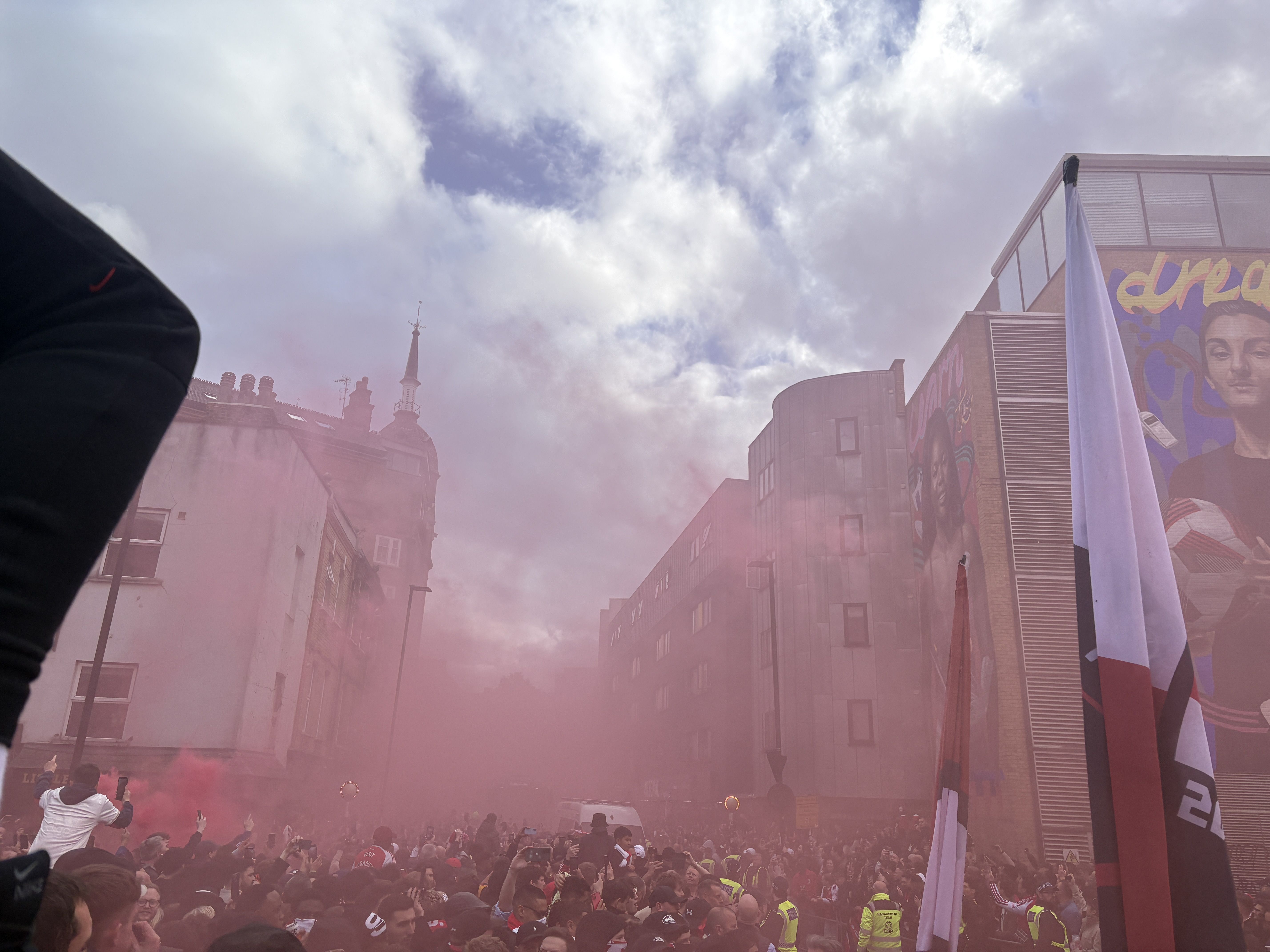
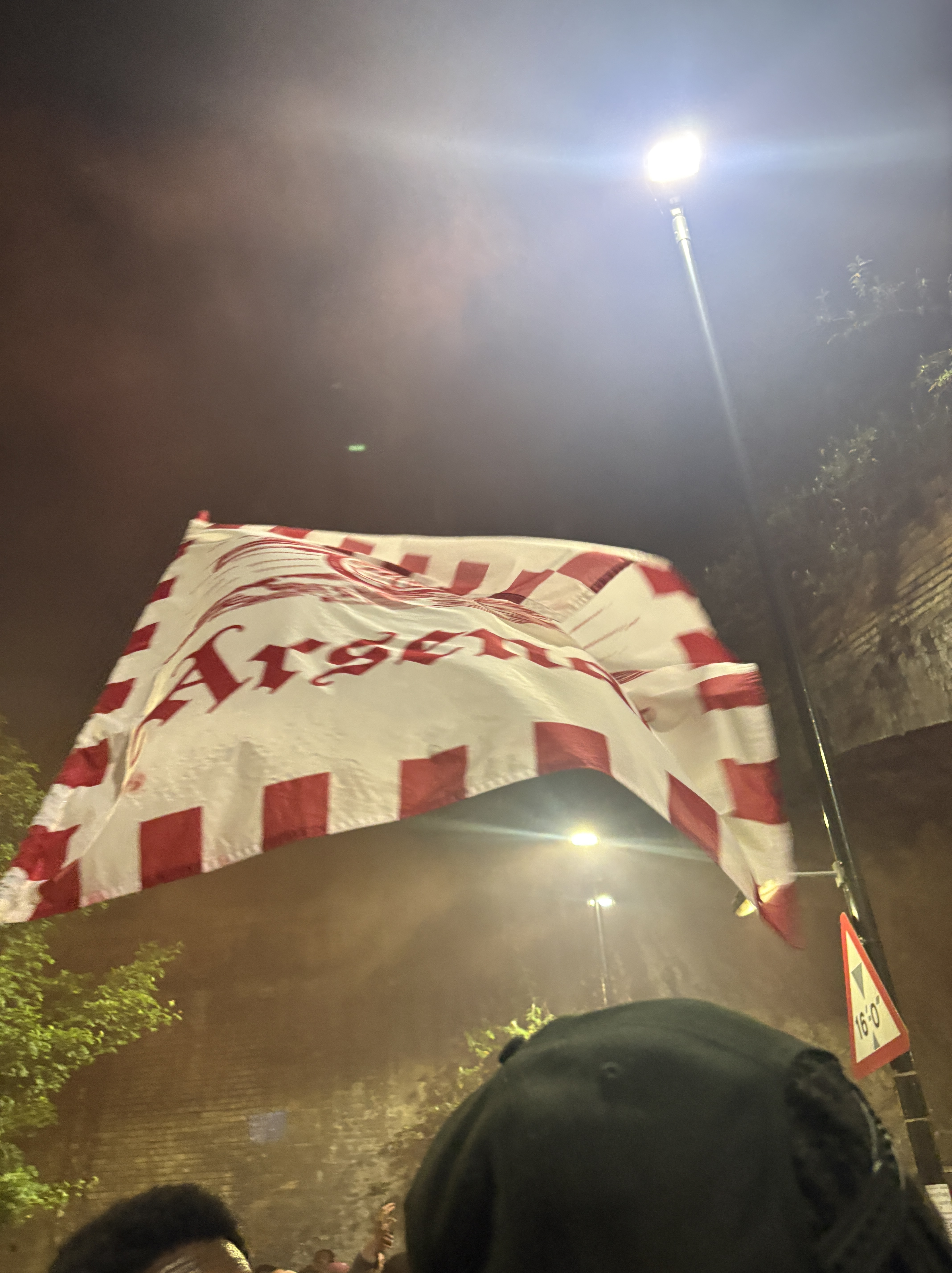
This, I said to anyone of an Arsenal persuasion who would listen, was either going to be an amazing week or a bloody awful one. Two wins were needed to finish the job and win the league, the great grail, at home to Burnley on Monday evening and away to Crystal Palace on the final day. Or Manchester City drop points against Bournemouth and, with a win against Burnley, it was done. I had no idea, I just turned up at Bear Roundabout and joined in the singing as the buses went past in a fog of red smoke. I met Ted for a beer outside the ground and we shivered in the late Spring air, before enduring a 1-0 win. It wasn’t as tense as the West Ham away game – then again, nothing will ever be – but we were still one fluke from disaster. At full time I found myself saying ‘that might be enough’ to everyone around me. In my head, it would go to the final day. News of Pep Guardiola’s imminent departure leaked during our game. On balance, probably a good thing for us. At the very least, it sounded unplanned for them.

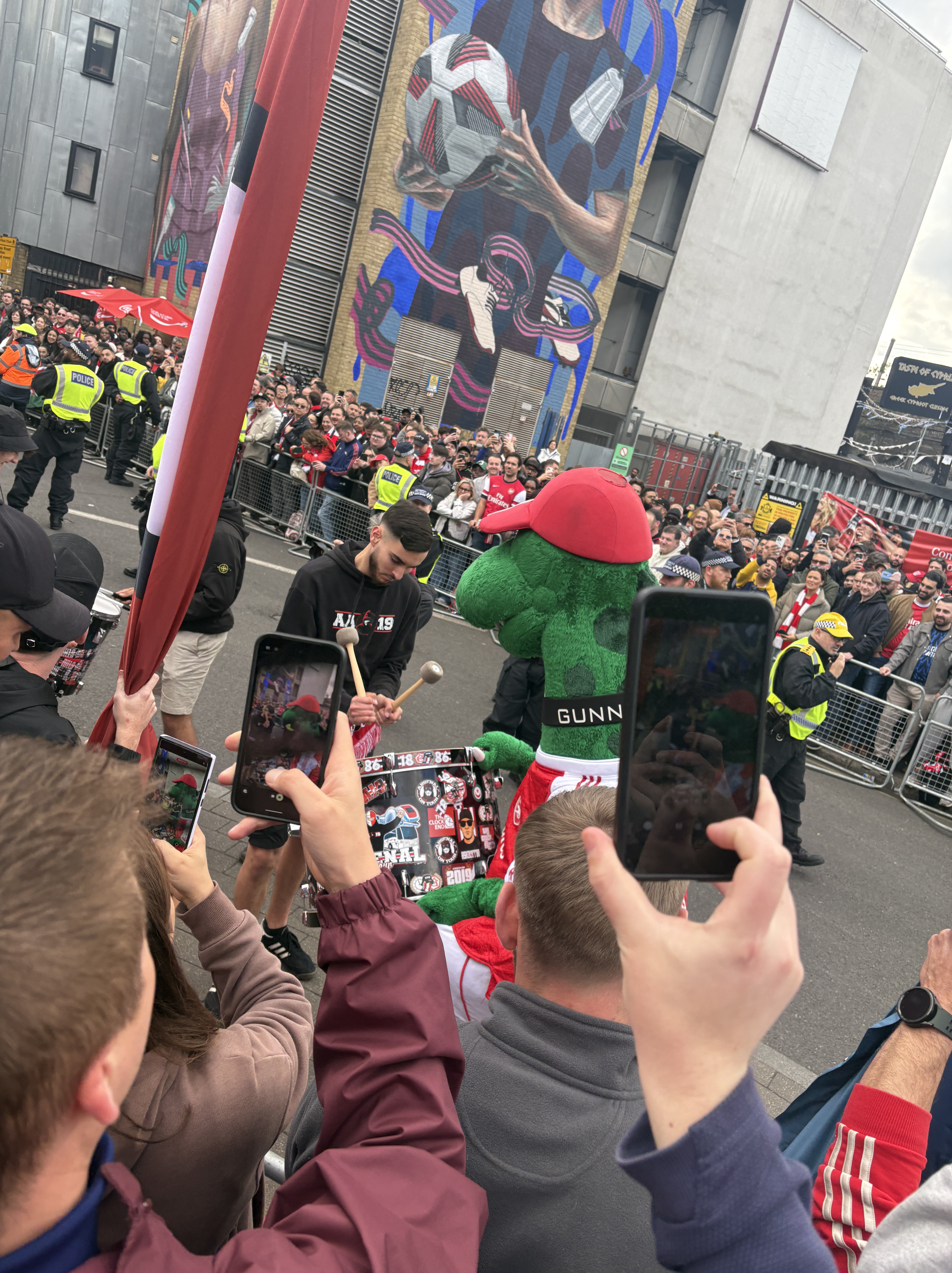
The pictures I have from this evening look very calm and restrained. Looking back they were a taste of what was to come. Though after the game everyone just went home.

Tuesday 19 May

There was no way I could bear to watch the City game. But I didn’t know what to do. First I went for a walk. Second, I got the kick off time wrong, so it turned out I’d paced around for the first half hour of the match. This was good. Then I started copying out a long passage from Beowulf. I suspect I was the only Arsenal supporter doing that. Then George shouted down that Bournemouth had scored. For a fleeting second the thought entered my head. This is it. Then I banished that and went back to Beowulf. I figured if the best happened, I’d find out via the cheers of the boys. As the game went on without further updates and we got closer I noticed Imogen tracking the game on her phone. She had suggested she might go and have a bath and I quietly asked her not to and to remain at the table. ‘What happens if it’s a draw?’ she asked, prompting a panic. Then she told me there were six minutes of stoppage time. Then City scored. There was only a minute left. I started praying out loud. Then one of the greatest sounds I have ever heard: Harry and George cheering, chairs being pushed back, Winnie running downstairs, pandemonium in the kitchen. Like thousands of other people I was sobbing as I am now again, writing this down. 

We put the TV on to see an on-screen banner proclaiming Arsenal were champions, and the City players looking downcast. I phoned Dad – who had no idea City were even playing and so was extremely delighted to hear we’d won the league, and Mum and Mick. More hugs, more tears. Bloody done it.

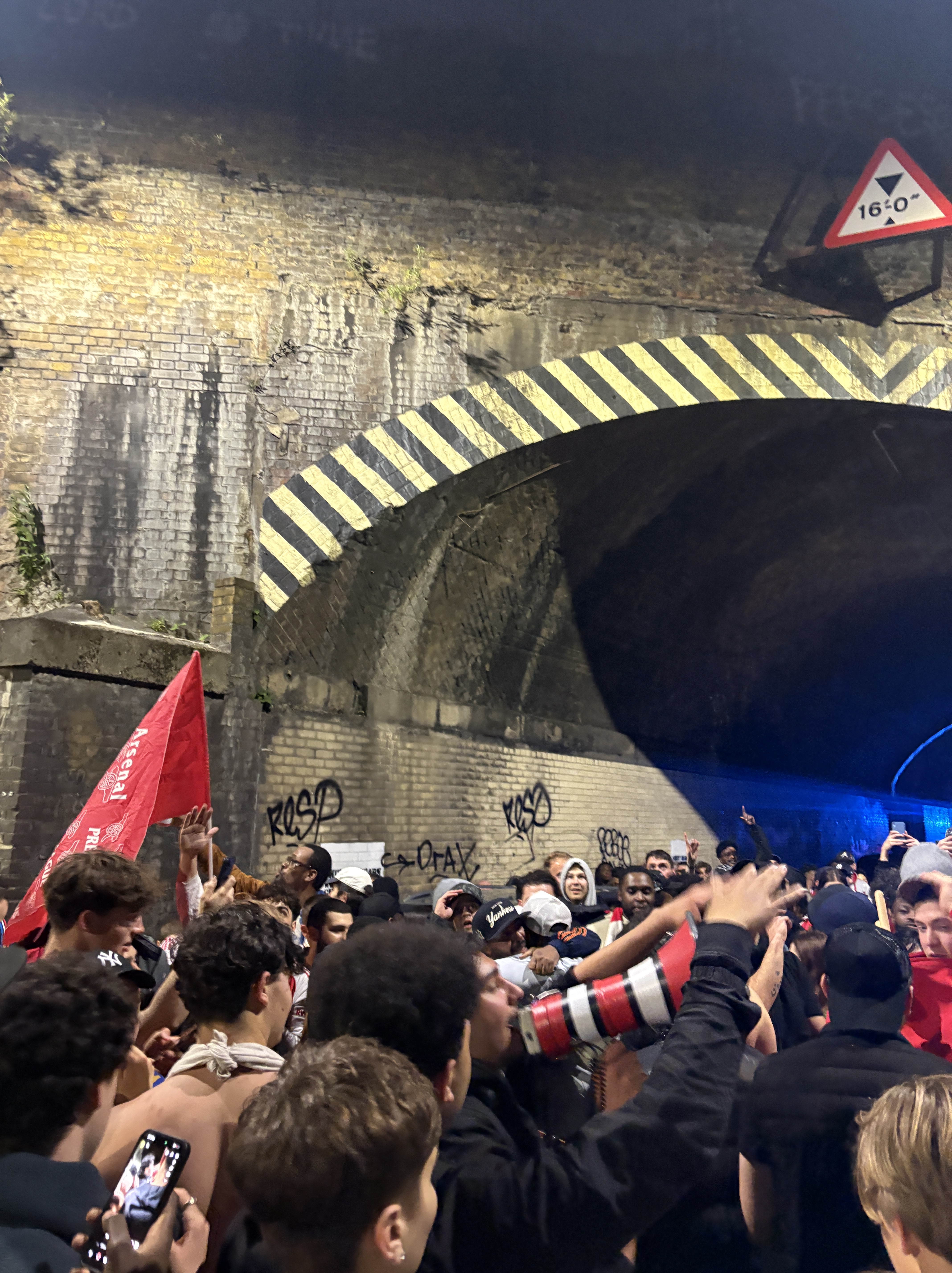
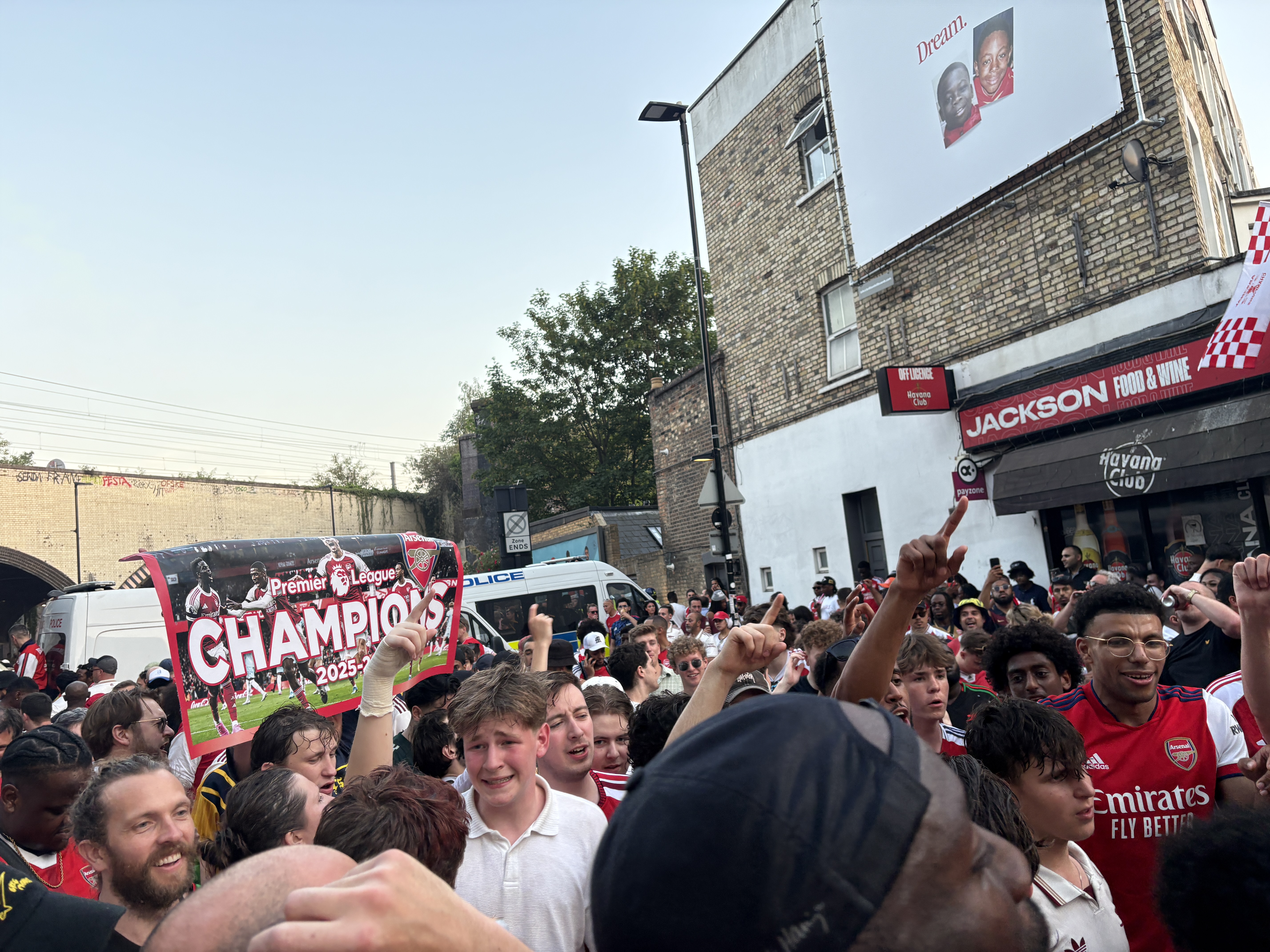
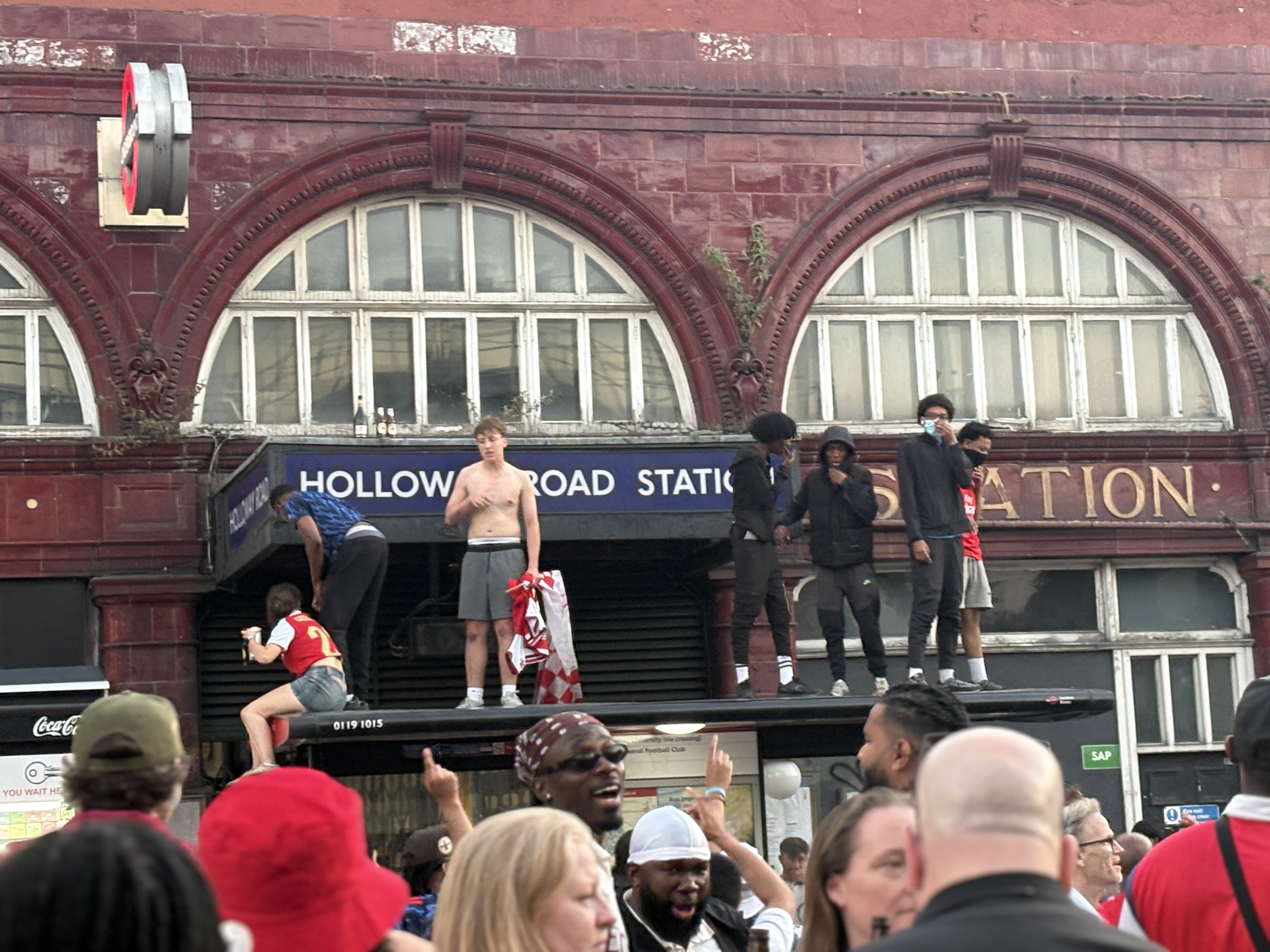
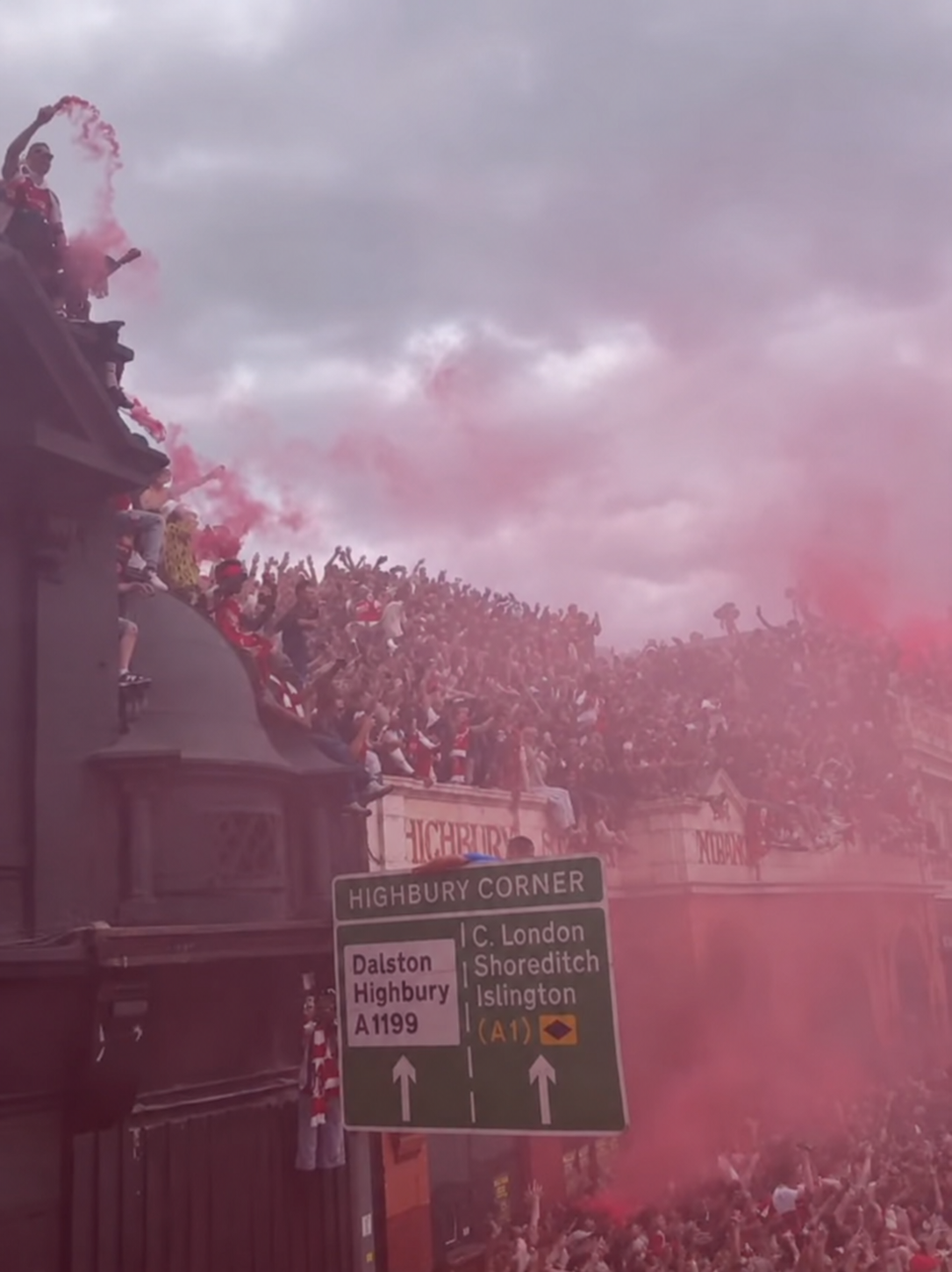
Imogen said her friend’s husband was going  to the stadium. Winnie said I had to do the same. The house needed to calm down for exams. I grabbed a scarf and ran down the street, immediately bumping into an Arsenal fan, then another group, people emerging from the night to pile onto the tube. At Archway the cars were already backed up, horns honking and people cheering. I ran down Holloway Road, twirling my scarf round my head, the noise around the ground hitting you way before you got there. For the second time in 24 hours I found myself next to the Ashburton Army drummer, the whole area around the stadium a sea of joyful people. I can’t describe it. Everyone cheering, smiling, hugging, fireworks going off into the night, thousands and thousands of people. All colours and all sorts. You couldn’t help but be proud of London that night. As the giant banner said ‘Party on the streets of London’ mocking the Manchester City attempt to requisition Panic by The Smiths. Sorry everyone but you cannot have The Smiths. 

I got the guy next to me to help me start the ‘You’ll fall in love…’ song for Big Gabi. It echoed across the crowd. The drummer started drumming along, it felt like half of Highbury was singing it. Four seasons of pressure blew away. It got more crowded, more claustrophobic, still very happy but a bit much. I know loads of people stayed for hours but I just needed an hour, then I needed to get home, to be ready for normal life on Wednesday morning. Along the way I rode a London chariot – a dented and wonky Lime bike – back up Holloway Road, more scarf-twirling and horn honking, what a laugh. Like everyone there I will never forget it.

Wednesday 20 May

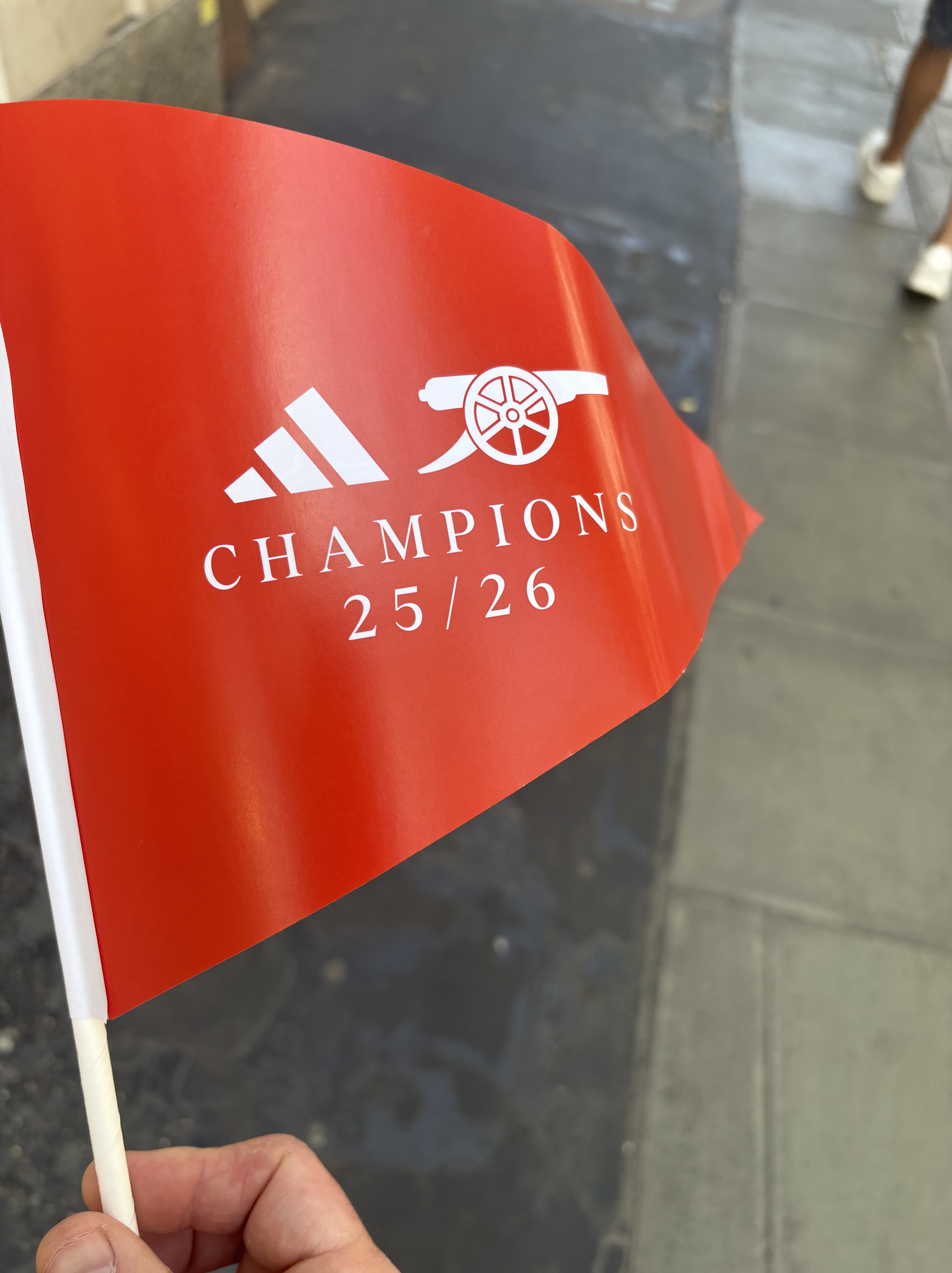
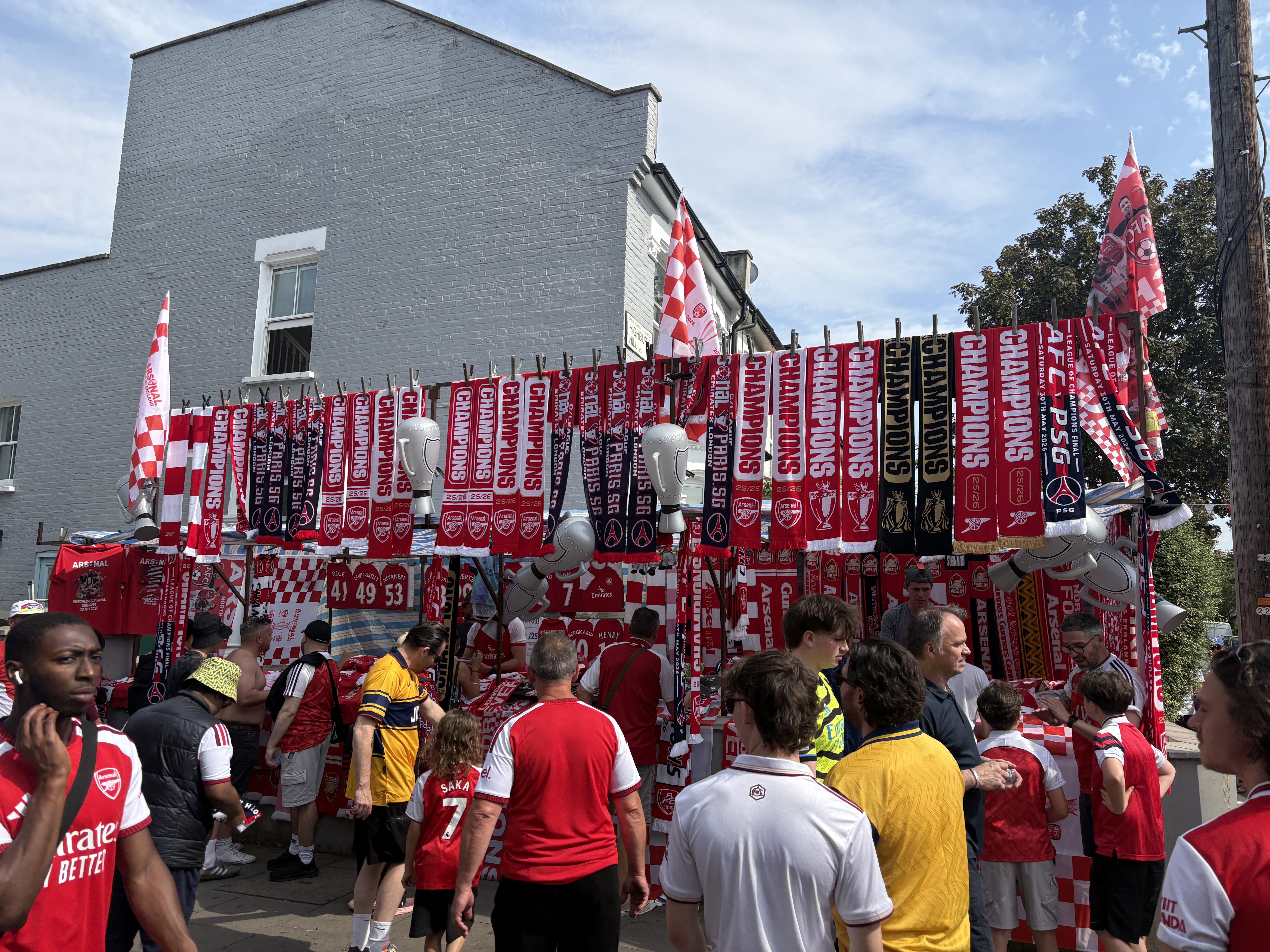
For the remainder of the week I slept terribly. I wasn’t hung over, more on some kind of high where the prospect of getting out of bed and being in the world felt irresistible and logical. Having taken George to his exam I made some more calls to talk about the night before, or really just to say over and over that it had happened and how wonderful it was. At times like this I can be a complete cliche: a weight was lifted off my shoulders, I was walking on air, all was right in the world: just pure escapism. I went down to the ground again where Champions t-shirts were inevitably on sale. The queue was enormous even early in the morning. I chatted to a young Mum who was buying a load of shirts. She told me about her long away trips in the past. Another man expressed relief we’d done it, saying he thought we’d have blown it at Palace. I don’t think I agree. None of that mattered now. What was coming through was a trickle and then an avalanche of photos and videos, most fan-made, showing the joy from the previous night and contrasting it with the tougher times from the past 22 years. I went to the pond, I cried again. I cried a lot that day and have done since. In the evening Imogen and I sat in the garden and had a nice drink under the evening sky.

Sunday 24 May

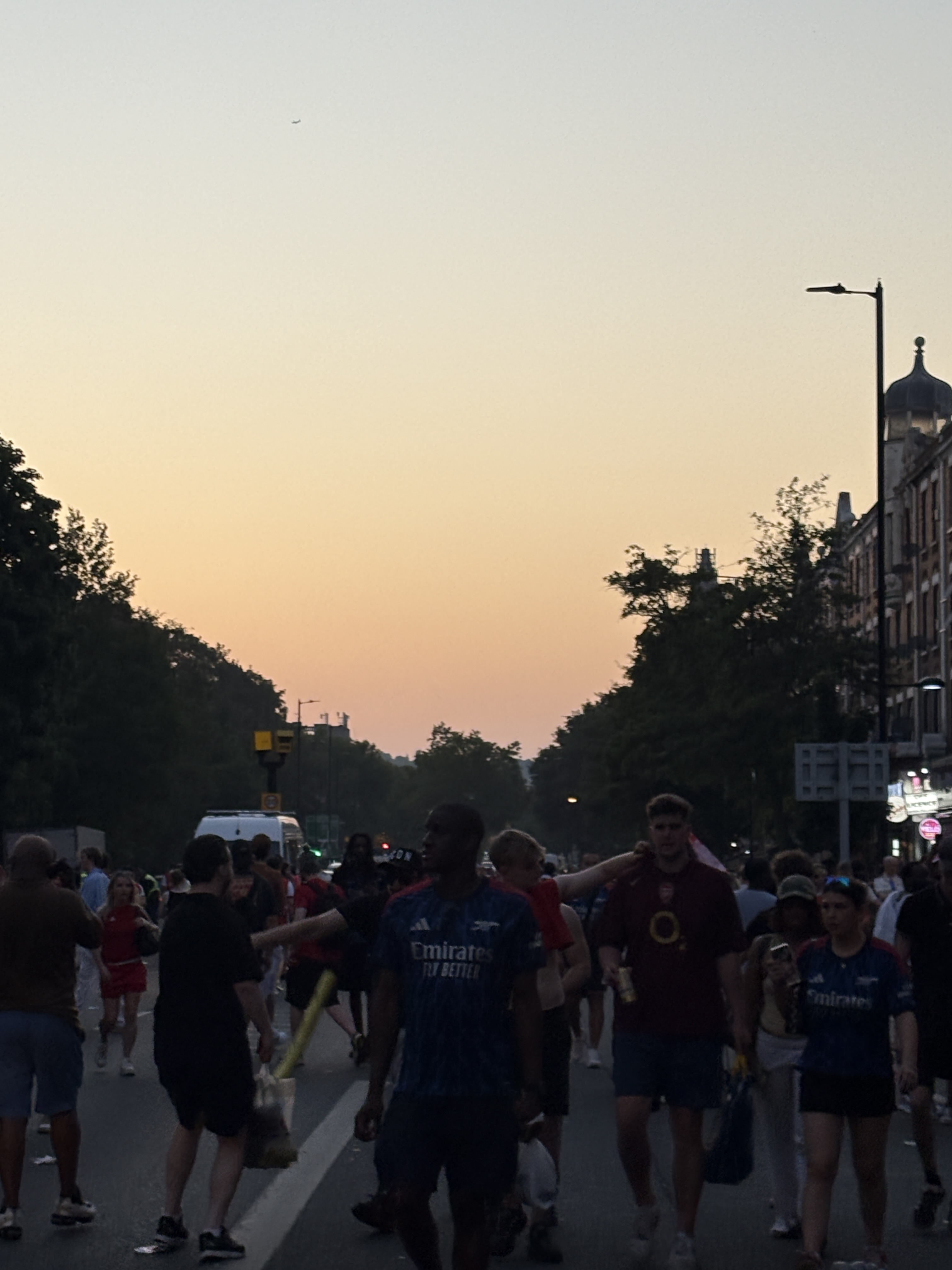
After a few days of more footage circulating on everyone’s phones, it was obvious Sunday was going to be a big day. The trophy presentation wouldn’t be until 7.00 at the earliest though, so a lot of time to pass before. I went into town on a couple of errands. Arsenal shirts everywhere. Euston, King’s Cross, completely mobbed. Tubes full of people singing. While some of these people were going to Crystal Palace and some were heading to pubs around the ground most people seemed to be out for a street party. We’d decided a while ago to watch the game at home and then go down to the stadium and Dad, breaking his general taboo of paying any attention to matches he is not attending, came round too. More toasts, then more tears and hugs, and then the boys and I headed down to the stadium. Or, more properly, a carnival walk down Holloway Road, a bounce around on Hornsey Road, and then home after an hour or so. It was intense, colourful, joyful, and exhausting. Clearly thousands of people stayed there for a long time and it looked fantastic and I am delighted for them. For me, we got it right. Astonishingly there was more to do this year, even now. The Champion’s League Final, and then win or lose that parade.

Midweek

The following week was initially a happy blur. A hot and sunny Bank Holiday Monday of nothing but basking, then the kids half term which is always disrupted when it comes to work. So football again to the fore, an ocean of videos, photos and conversations with friends in the Arsenal family. The signs of Arsenalism everywhere. Everyone wanted to know about the parade and make plans for where they’ll be. The suggestion was that a million people will attend. Barriers appear along a vast route through Islington that makes it seem possible that is an underestimate.

Towards the end of it the Champions League and Budapest started to rear its head. People travelling began their journeys, then arrived. Previous issues came back to mind. I was happy with the decision not to travel but also a bit glum not to have been there.

Saturday 30 May

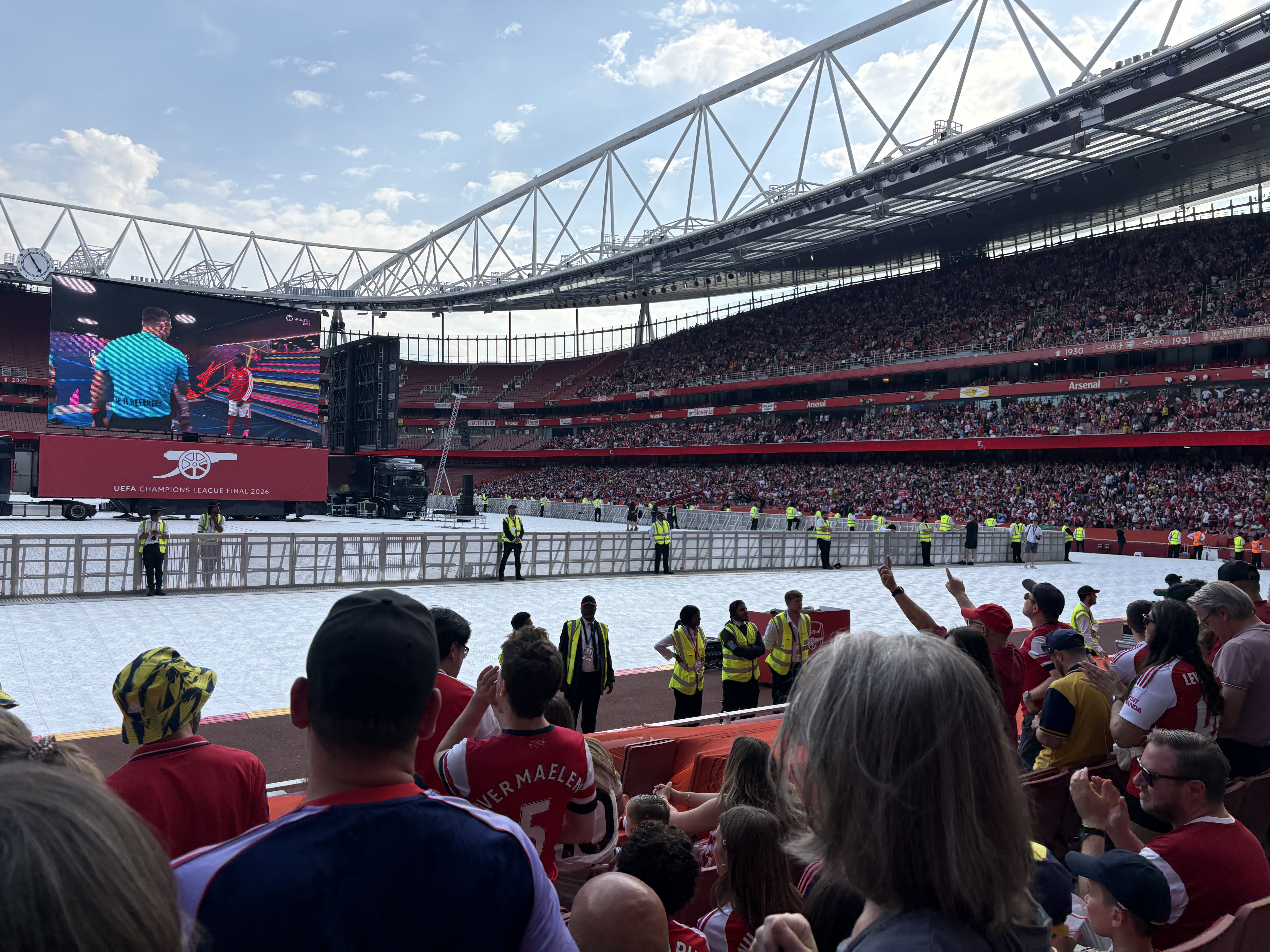
On the day of the game Dad and the boys and I headed down to the Emirates for the screening. It felt more intense than I was ready for on exiting the Arsenal tube, compounded by the poor arrangements for stadium access. In a bid to stop anyone gaining access to the concourse around the ground who doesn’t have a ticket – with more than one eye on the parade – entry points were very limited and quickly came under pressure. There was still 40,000 people with tickets. This was the one point it felt a bit too big and threatening to get out of control. 

Once inside the atmosphere was manic. The sun was hotter than I’d expected, making for a sticky evening. The match swayed our way with Kai Havertz’s early goal greeted with complete delirium. It was very early. The team didn’t seem to quite mean to sit back but did so, and while that was fine against Burnley it was far more difficult to do so here. It was one of those European games where it felt like the referee gave the other side every decision and you start to think there’s something fishy going on. Maybe there was but the other side still played fabulous possession football, some of their passing was astonishing. The guy behind me made some very silly comments and was quite annoying. The people in front of us, older Arsenal fans, were silent throughout, messaging friends about what time they’d be back in the pub. Would it have been impossible for them to try to sing, or alternatively to have just stayed there? Apart from that it was a loud and tense evening. 

Writing now it seems unreal that we had good moments towards the end of extra time and had an equal chance when it came to penalties. Noise turned to silence when poor Gabriel sent his penalty over the bar like a rugby conversion and that was suddenly that. It felt jarringly instant, like when the music stops suddenly at a party, the lights come on and you’ve got to stop dancing. I couldn’t work out what the boys needed at that moment, I realised that they weren’t six and eight, and probably weren’t going to cry. Other peoples’ faces were rueful but also more upbeat than after previous losses. ‘Tomorrow we’ll wake up and still be champions’ I said to anyone who’d listen, shaking a few people’s hands. Another terribly organised exit from the ground. When we eventually got home I sat in the garden with Imogen and drank two pints of water and then the bottle of champagne we’d got just in case and thought more about tomorrow and the days before than the day that had just been. So no discourse here about the pain of penalty shoot-outs in the past and how this one relates to it. I was very not sorry I wasn’t in Budapest facing the exit from the ground and the journey home. I thought about friends who were there. Then I made plans for the parade the following day.

Sunday 31 May

This one: not mine. A still from @kaihavertz29 on Instagram

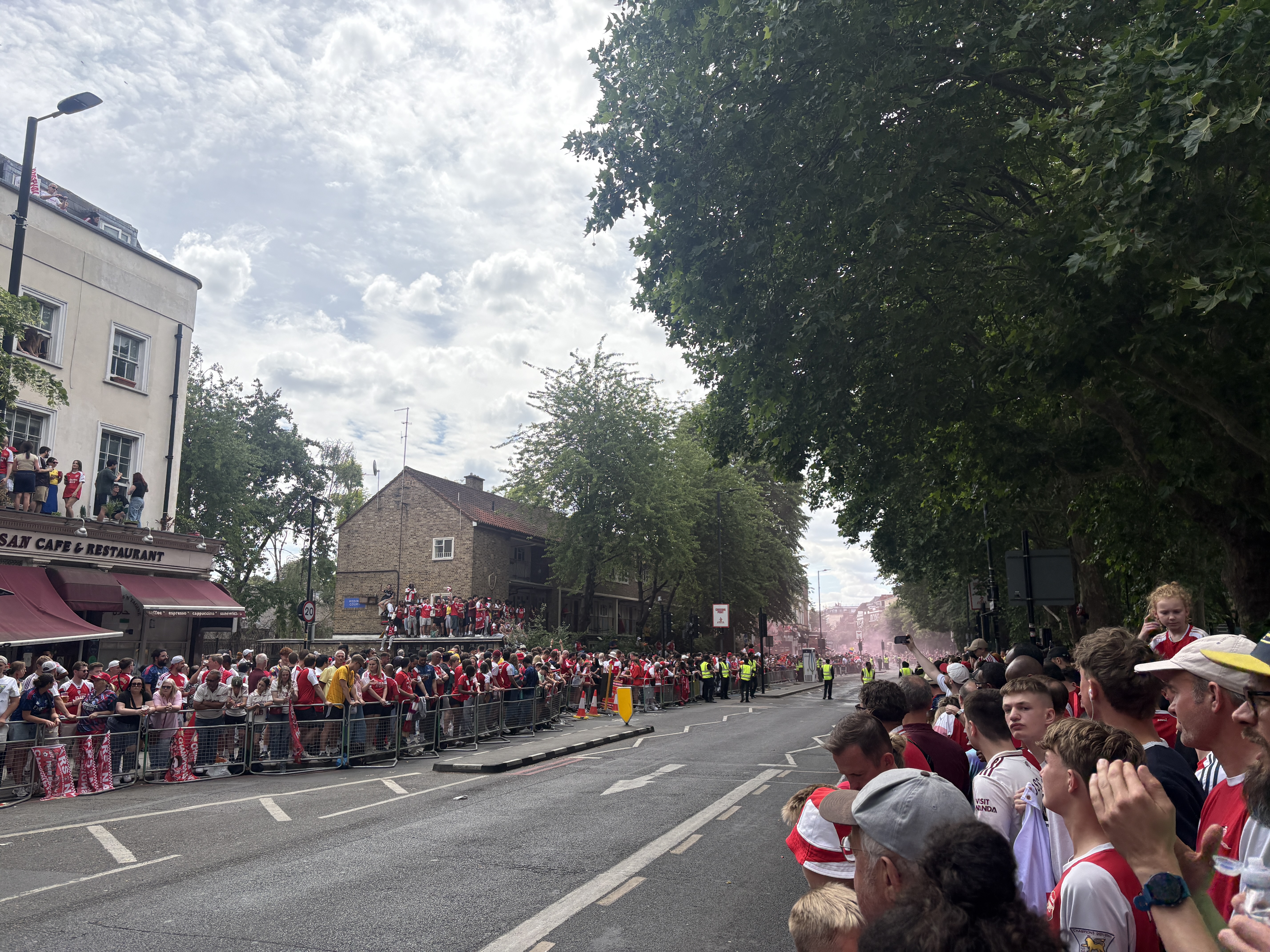
The bottle of happiness uncorked over this magical period was not going back in. So the parade was always going to be massive and joyful. It seemed like there was no other option. George and I left home three hours before and aimed for a spot on Seven Sisters Road, away from tubes, close to our route to the stadium. Getting there immediately hit a snag as the Northern Line was up the creek, so we detoured to Oakleigh Park, where a very full party train pulled in and took us towards Finsbury Park, somewhere not very suited to very full party trains and tens of thousands of people. So we got off at Harringay and walked for half an hour through relatively quiet streets, eventually getting somewhere else on Seven Sisters, where two hours before there were people waiting but it was possible to get a good spot. Peering down the road it looked like it was already very towards Holloway Road. Young and old people climbed on bus stops, balconies and rooftops nearby. A daytime rave kicked off on the opposite side of the road. Footballs were thrown back and forth. We played lots of rounds of guess the former Arsenal player which peaked at Gervinho. Lots more singing, especially the Eze and Gabriel songs. 

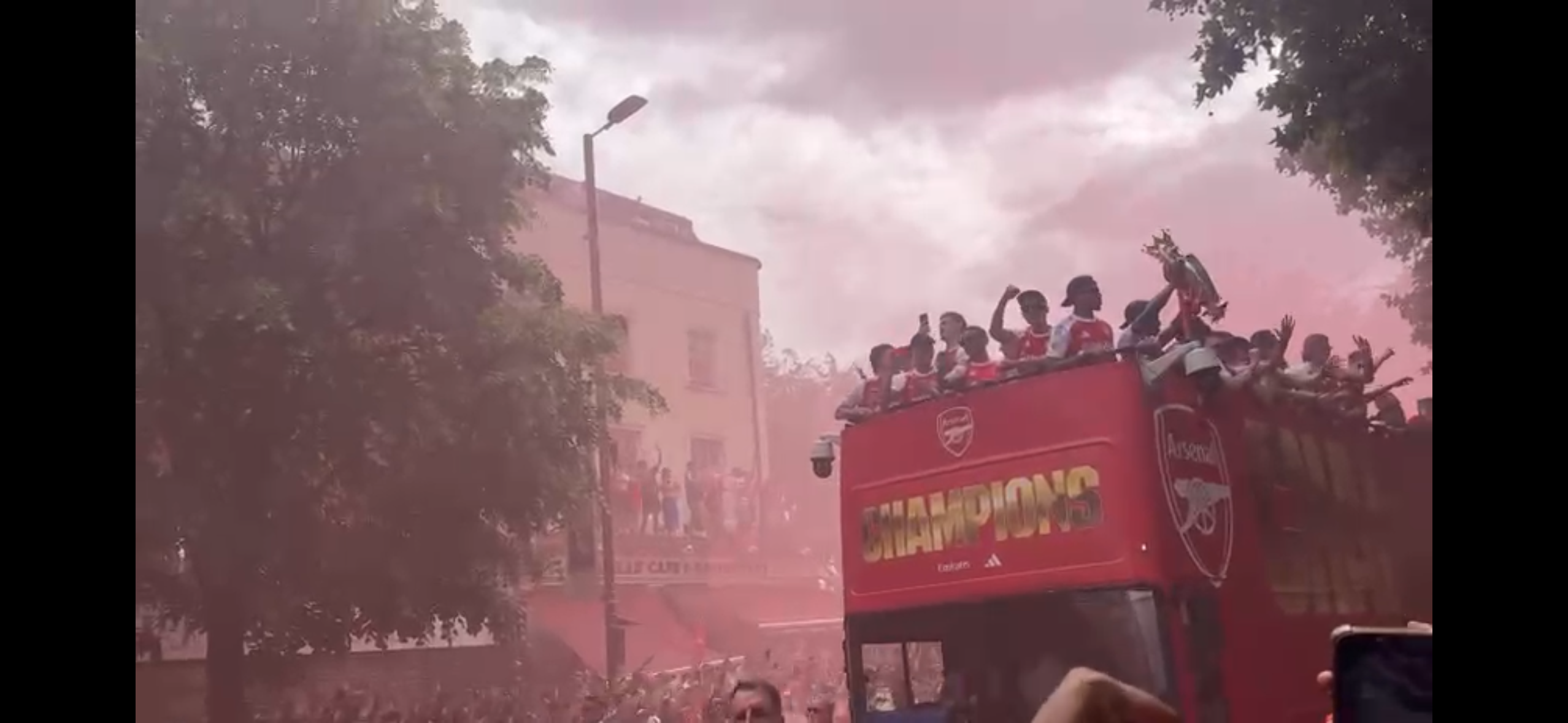
All the while the red smoke billowed out and the excitement grew. Then stewards walked in front of us and the buses arrived, noise ratcheted up further and I could see the outline of familiar players and the trophy. Rice, Timber, Saliba and Gabriel at the front. Saka holding the cup aloft, Calafiori hanging out the side looking immaculate, Gyokeres posing at the back. The women’s bus greeted equally deliriously, even the staff and other peoples bus getting huge cheers. And then gone up the road on the Tour de Islington. George did have to revise so we started to make our way home, eventually walking to Highgate tube. There were Arsenal shirts everywhere. To some extent photos and videos of the day do it justice, the crowd millions strong, on the streets and on rooftops, lampposts, everywhere and anywhere. 

I’m now sitting typing this on a rainy morning two days later. There’s the whole of summer to still go, but the past fortnight is inevitably the time that will sum it up. Hot, sunny and joyful. So much has been said about London showing its true face, a modern and multicultural celebration; dancing, music and happiness everywhere, a party everyone wanted to be a part of. That definitely happened. It also happened so immediately that it’s more present generally than everyone realised. But it also stayed around more intensely and for so long that it’s hard to think that we’re beyond the moment. It might be that the whole thing is just getting started. I hope so. But you also never know. This could never happen again. You’ve got to be a part of it. 

Being a part of May 2026 and being able to share it with everyone has been one of the joys of my life and I will always be grateful for it.