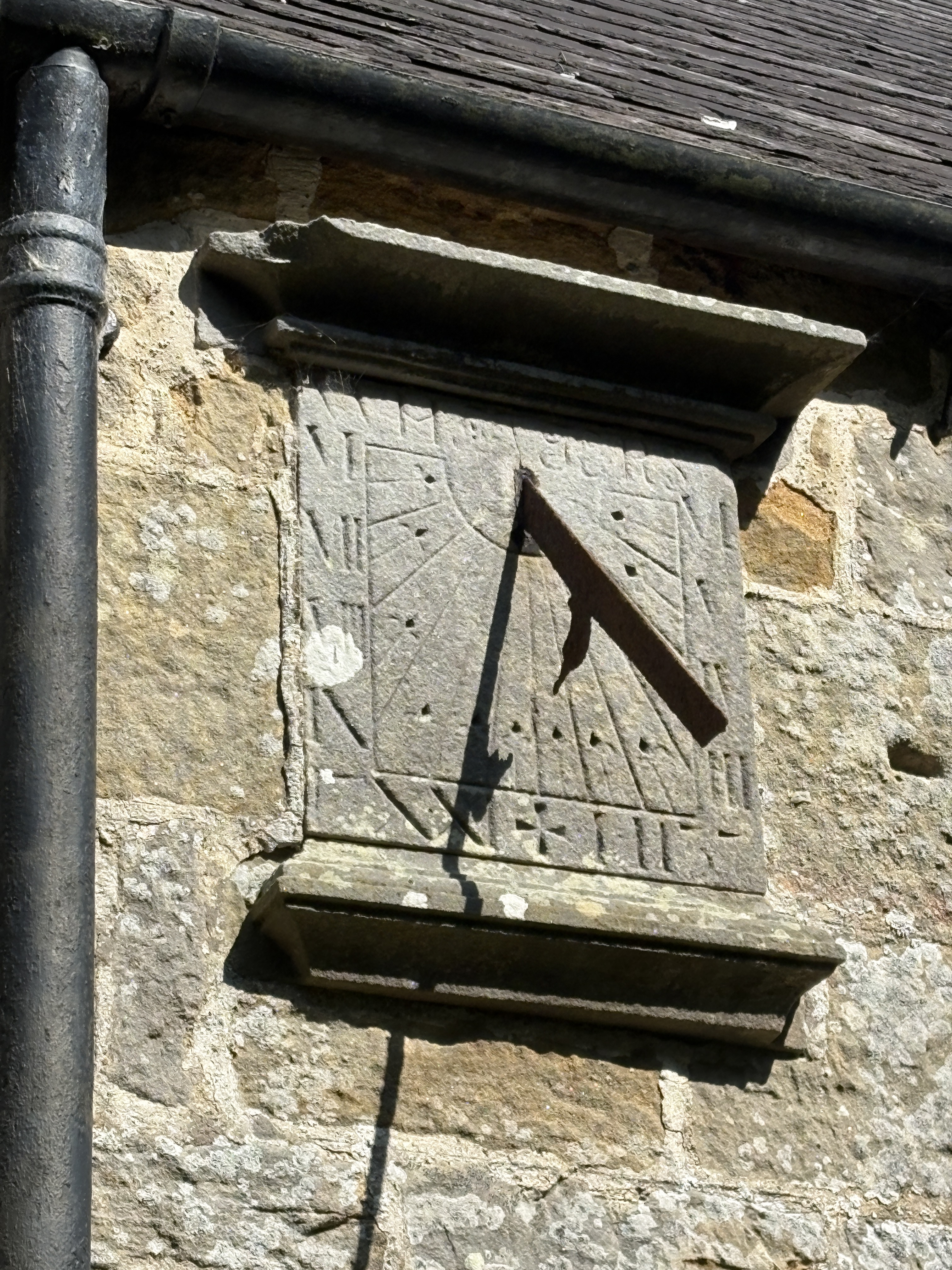
This isn’t really about sundials, but this summer has been. We’ve seen a few, and like weathervanes I’ve come to notice and appreciate the complexity and craft going into them, how with quiet churchyards, old cottages and greens they still define English (and Scottish) villages, and how I find all of these things comforting, which is probably the point.
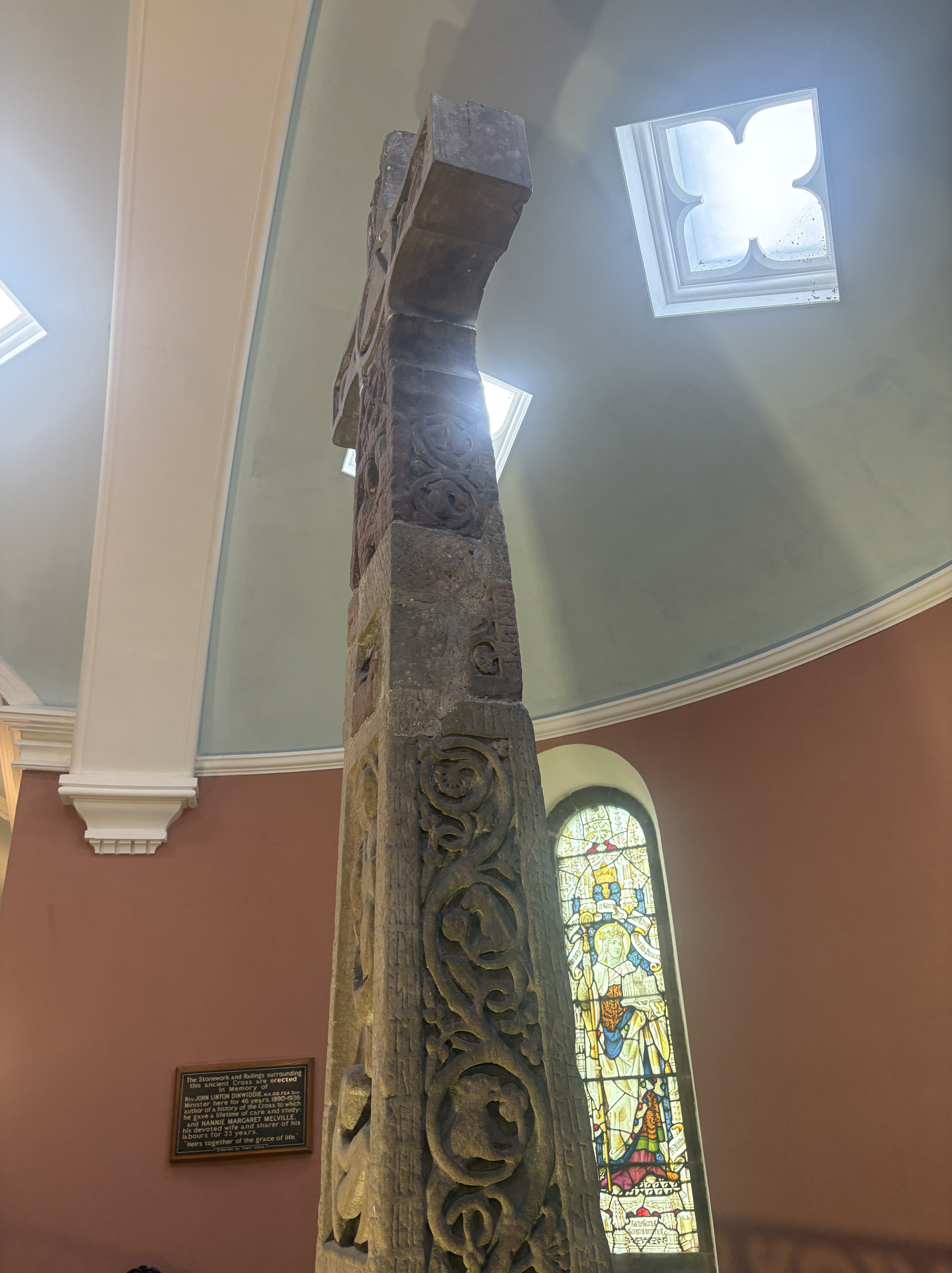
A few days ago I took an unusual drive with my sons from Yorkshire to Edinburgh. Truthfully, we didn’t go the quickest way. And having set off up the west side of England and reached the border, we then turned left instead of right. Bless them, they didn’t complain as to took a while to reach the village of Ruthwell in Dumfriesshire, but really not somewhere that felt like anywhere. But this was evidently a place important enough once to stand up a vast, 5.2m high sandstone cross, some time around 700, and then at a later point (probably) augment it with lines from The Dream of the Rood, and Old English poem, in Anglo-Saxon runes.
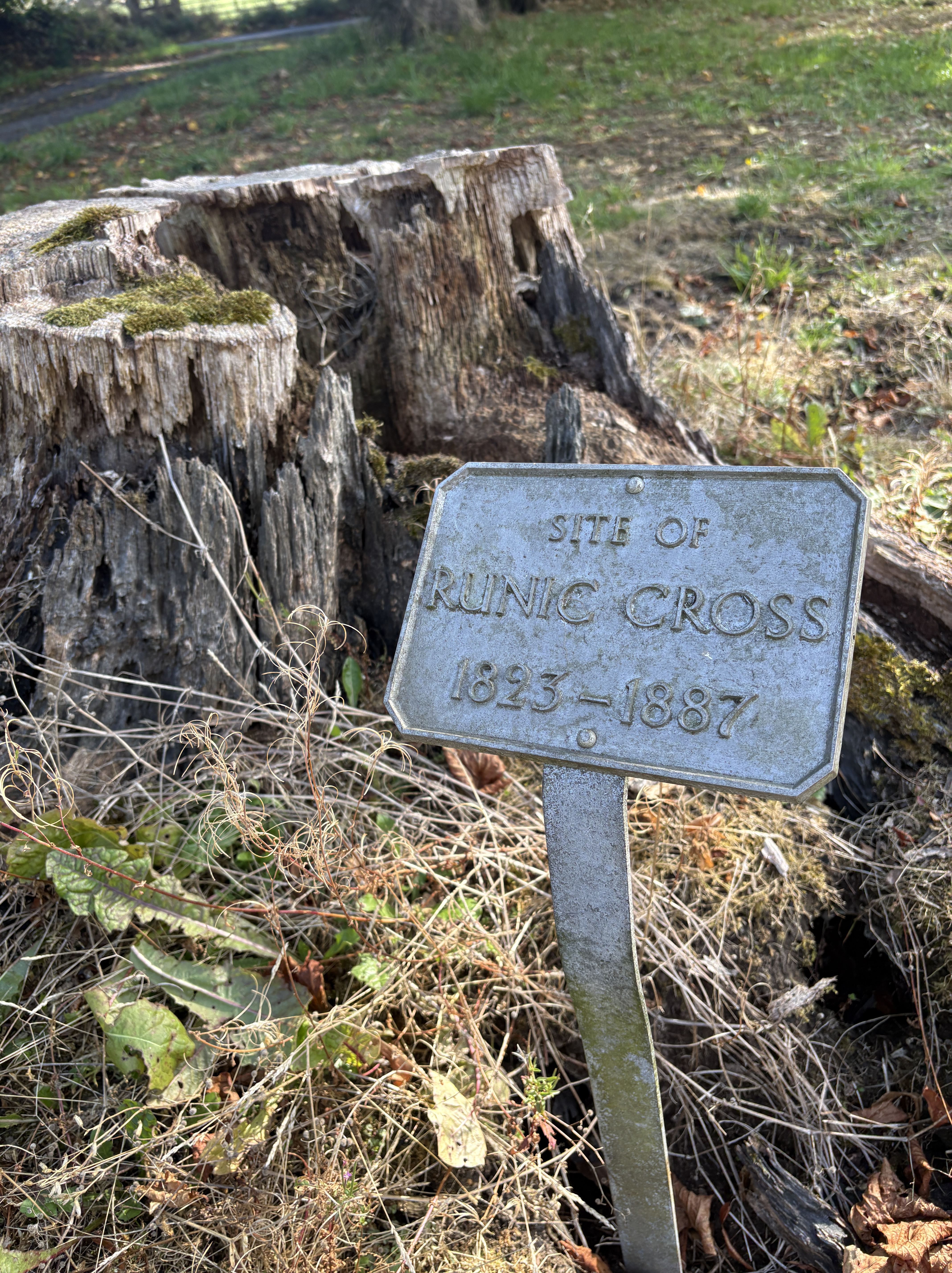
When put like that, it doesn’t seem so silly that given that the Ruthwell Cross exists, and that a lot of people made a lot of effort to make it, look after it, and then put it back together after a few centuries in the churchyard, that we should go and have a look at it.
A man and a woman were trying to fix the church organ when we arrived, but paused to talk to us about the cross. I was very happy. The grounds of the building and surrounding countryside felt free of today’s world, as did the jumble of lanes leading eventually back to the fast road to Glasgow and Edinburgh. Then we went to see The Cure, which was very different and an excellent evening. I thought Robert Smith was a superb frontman.
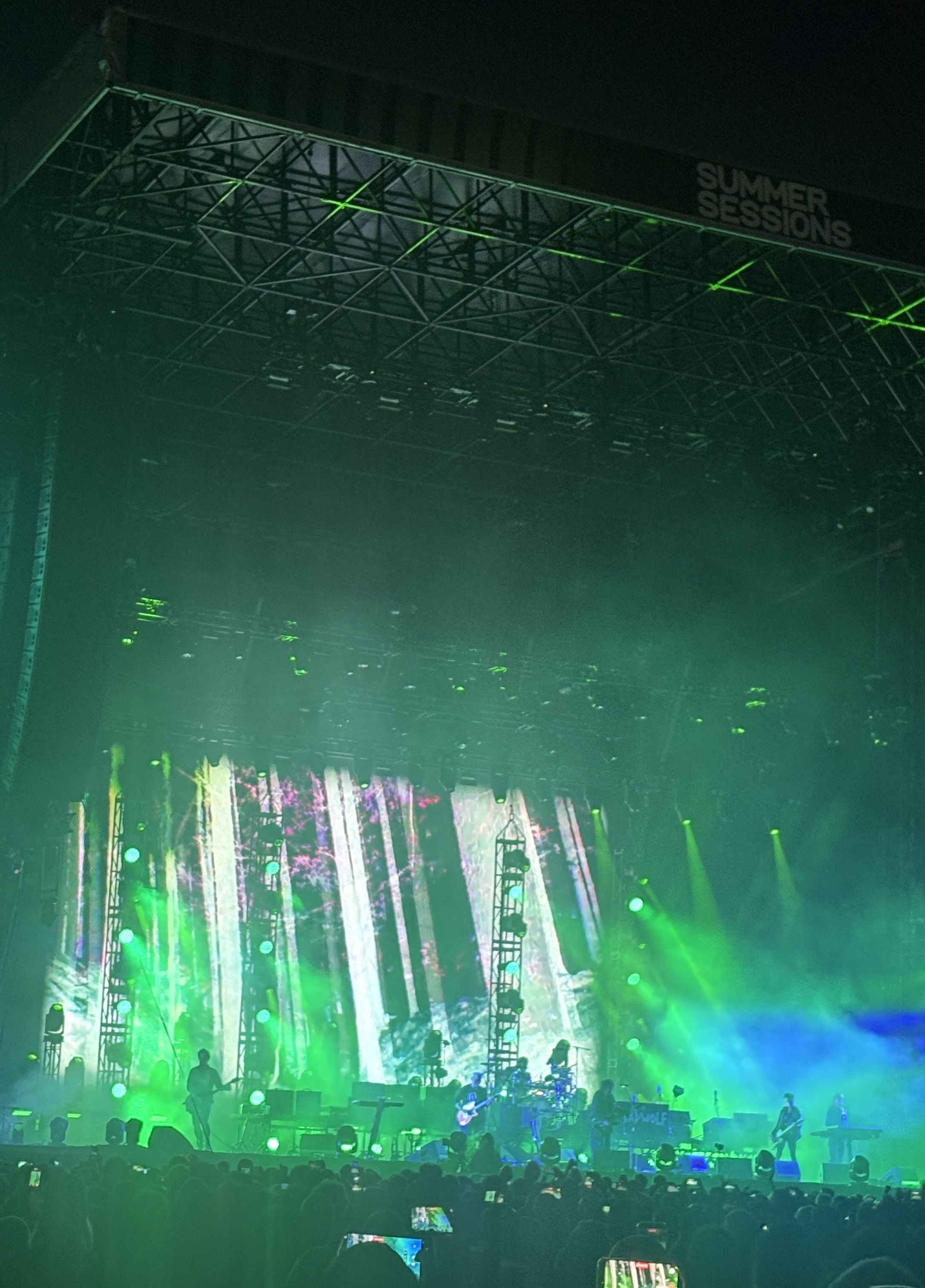
After the concert we sat in the car park for an hour, the endless day rolling on into the night, escaping by a dusty track against the airport fence with Ryanair and easyJet plans blazing their lights at us. The boys nodded off, and I drove through the silence of the southbound A1, marvelling at the quiet, and trying to stay alert. Duns, Dunbar, Athelstaneford, if it was daytime I’d have been off having a closer look, but it nearing 1am on Monday morning and our car was approaching the border, quickly crossed with the only fanfare in your head. Familiar roads from here, Berwick, Ancroft, then arriving in darkness to an incredible night sky. Before bed, picking the letters out saying ‘Arsenal Champions 26.’
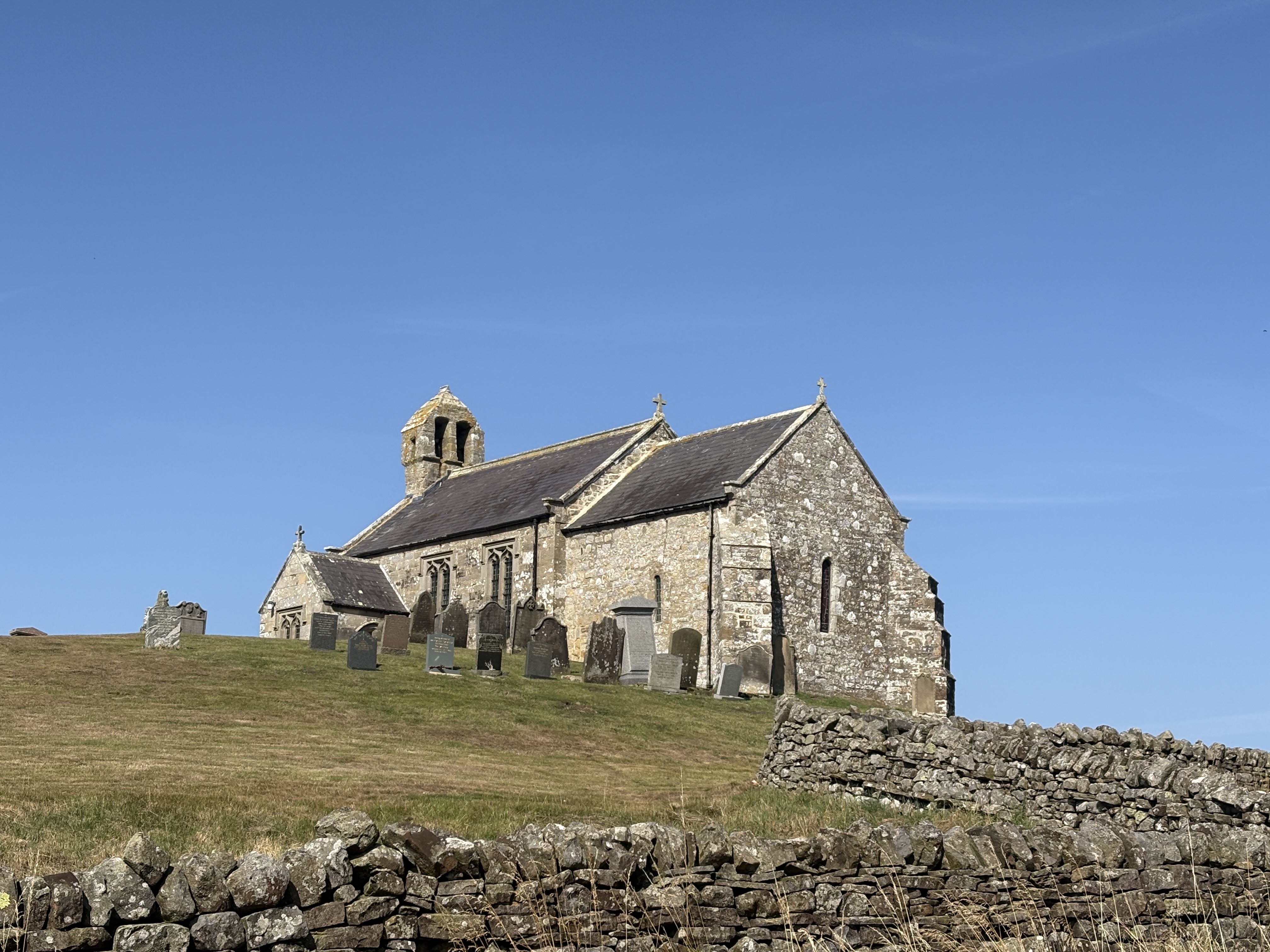
After a few hours sleep it was off again towards Newcastle to return the car. But kind of, sort of, apologetically towards Newcastle, more by the way of some other points of interest. South of the Cheviot valleys the landscape changed, with purple-covered moorland and long, steep roads empty of people and places. I followed a straight, single-track road that felt miles from its turn off, winding past a farm to St Aidan’s Thockrington. The church is all that survives of a village that fell victim to Cholera, and sleeps like a beached whale on a lumpy hill, enclosed by dry-stone walls. It was perfect.
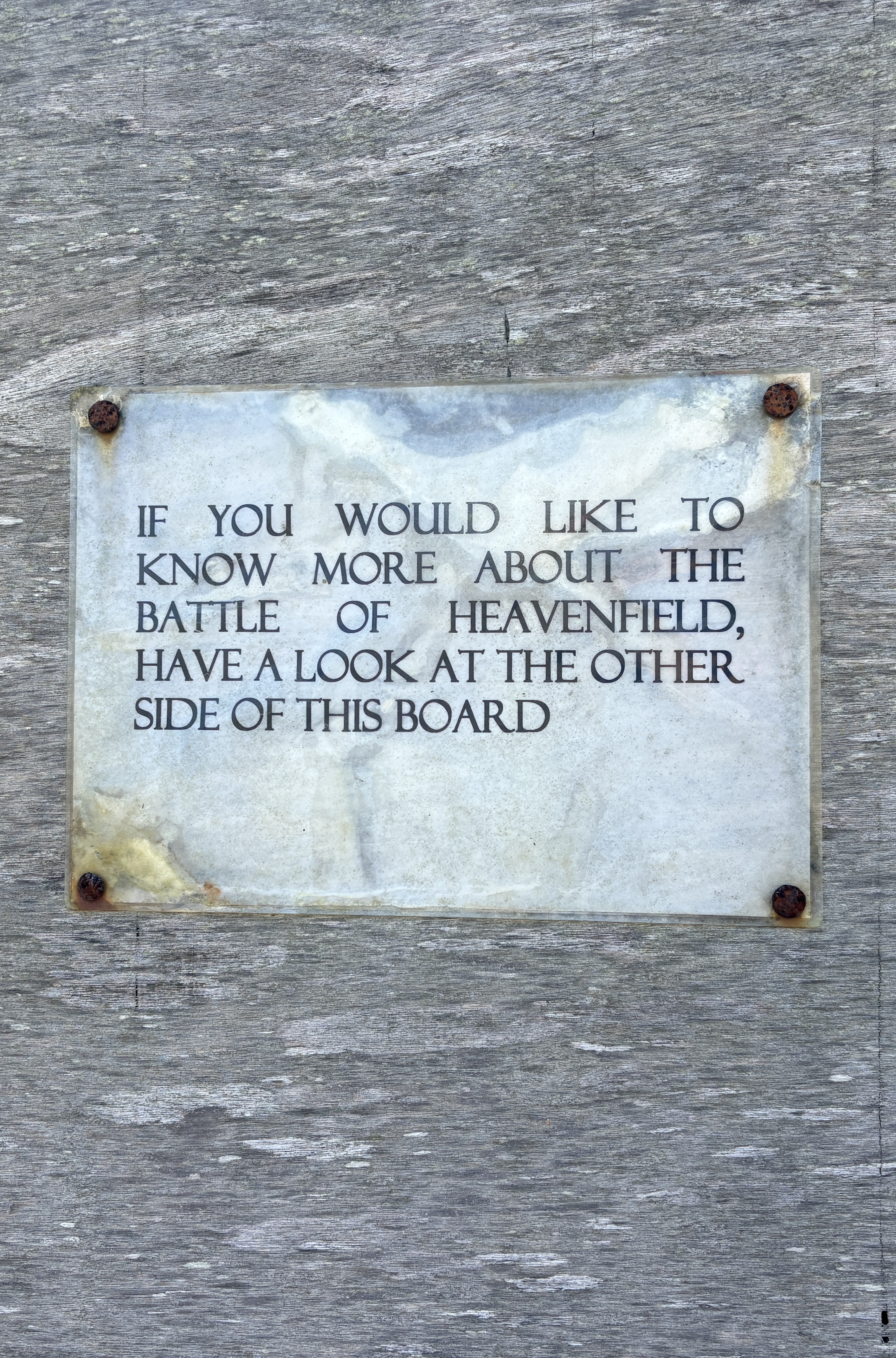
Fifteen minutes away and the profusion of brown signs announced Hadrian’s Wall type stuff everywhere. There was no wall left at the site of the Battle of Heavenfield (635AD), where Oswald socked it to his British rival Cadwallon, but there was in his time. All I could see was a beautiful view, a church in a grove of trees, a sense of some things long gone, ancient struggles around faith, power and ancestry. As with almost everywhere there was a war grave, a more recent reminder of it all. Quite a lot to contemplate when I had to get the car back to Newcastle railway station so I’ll forgive myself mucking up parking a bit. The last part of this adventure was a train back to Berwick full of holidaymakers returning, or arriving, I wasn’t quite sure which. I walked back into town quite tired, down quiet streets with shadows starting to rival the afternoon glare.
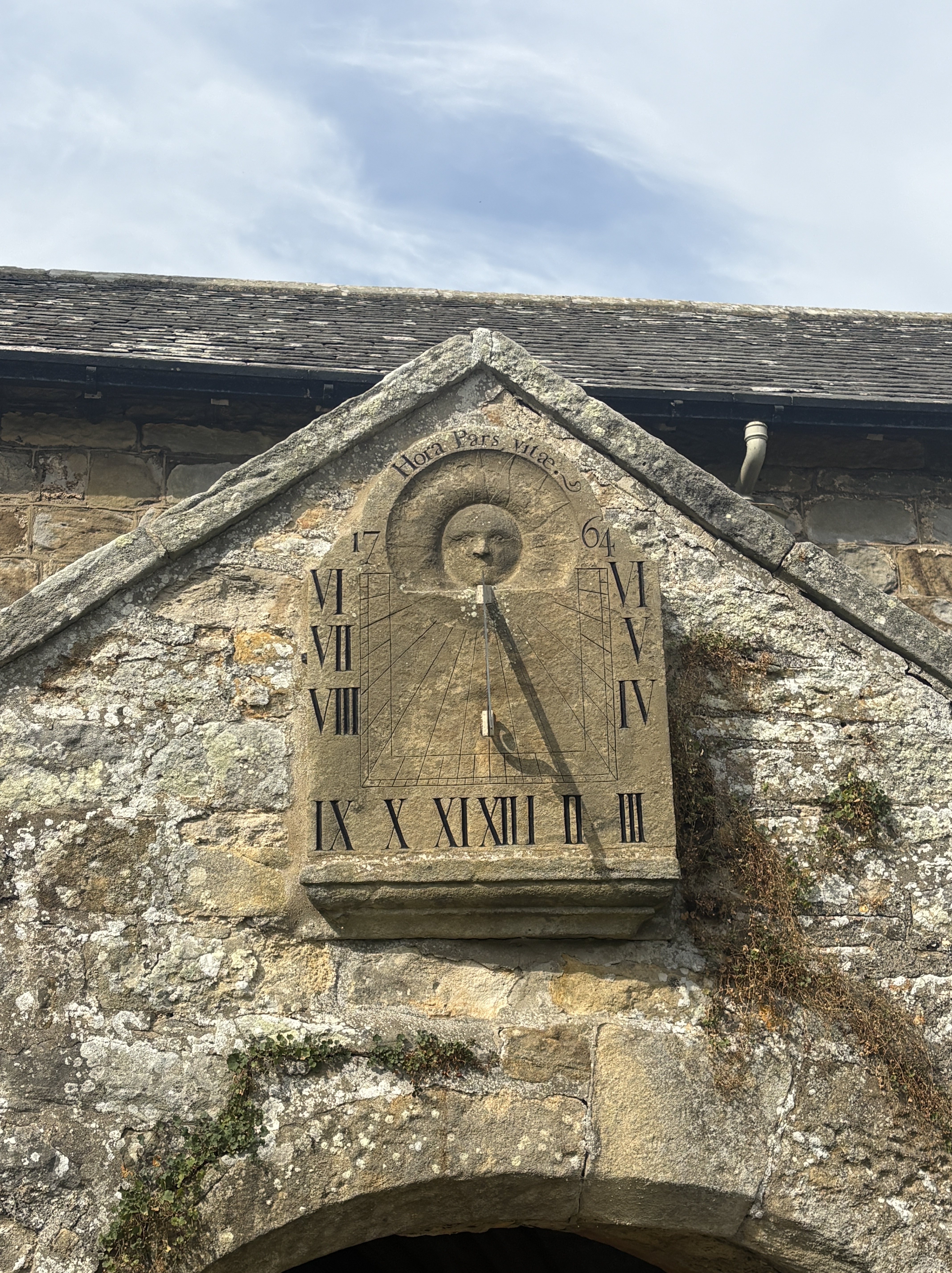
We found another sundial while on the trail of the whelp in Kirkwhelpington. It was right at the time, not adjusted for the modern seasons. Kirkwhelpington – The town of the followers of Whelp – a puppy or a baby – with a church. The Kirk probably came later.
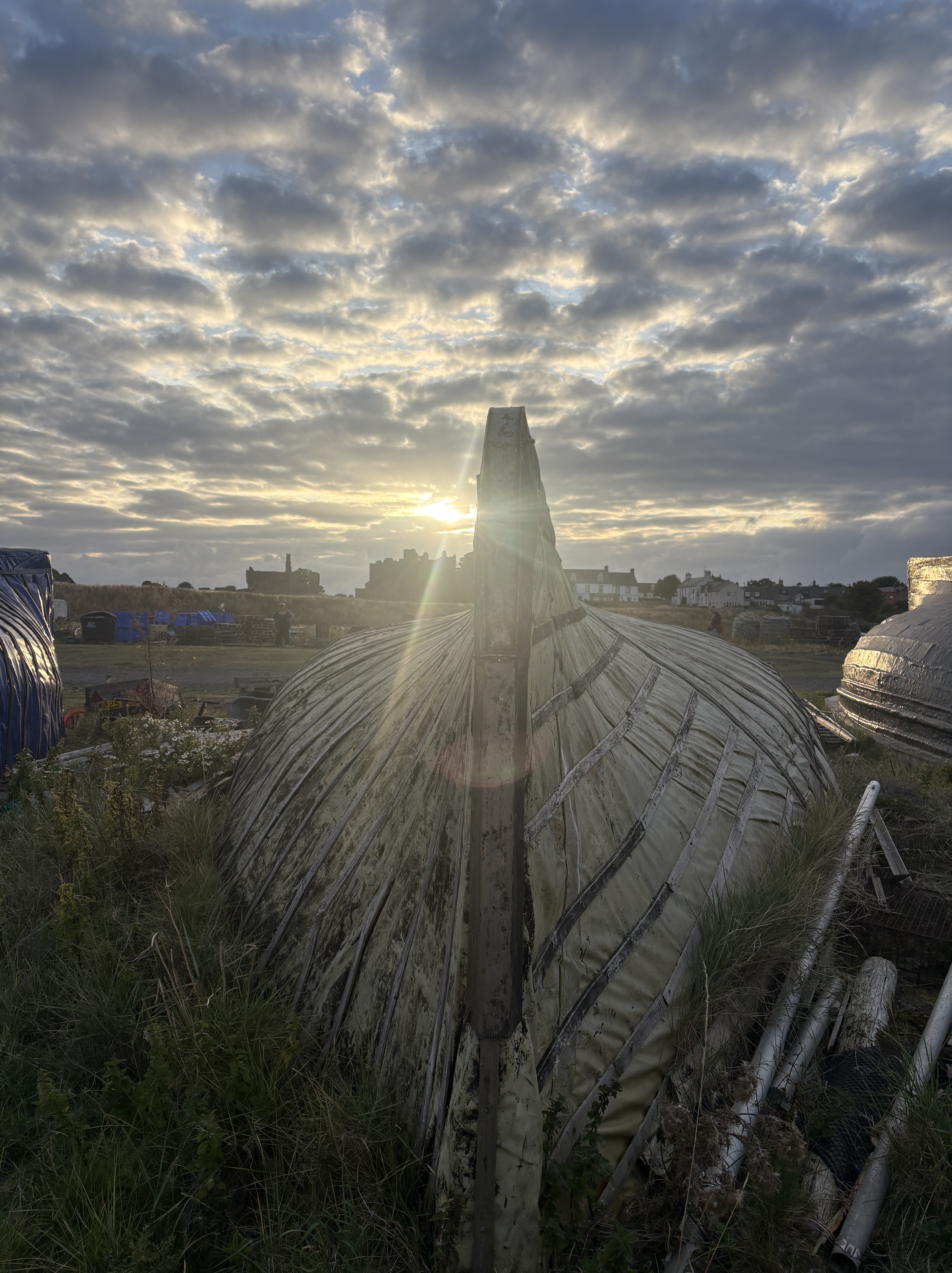
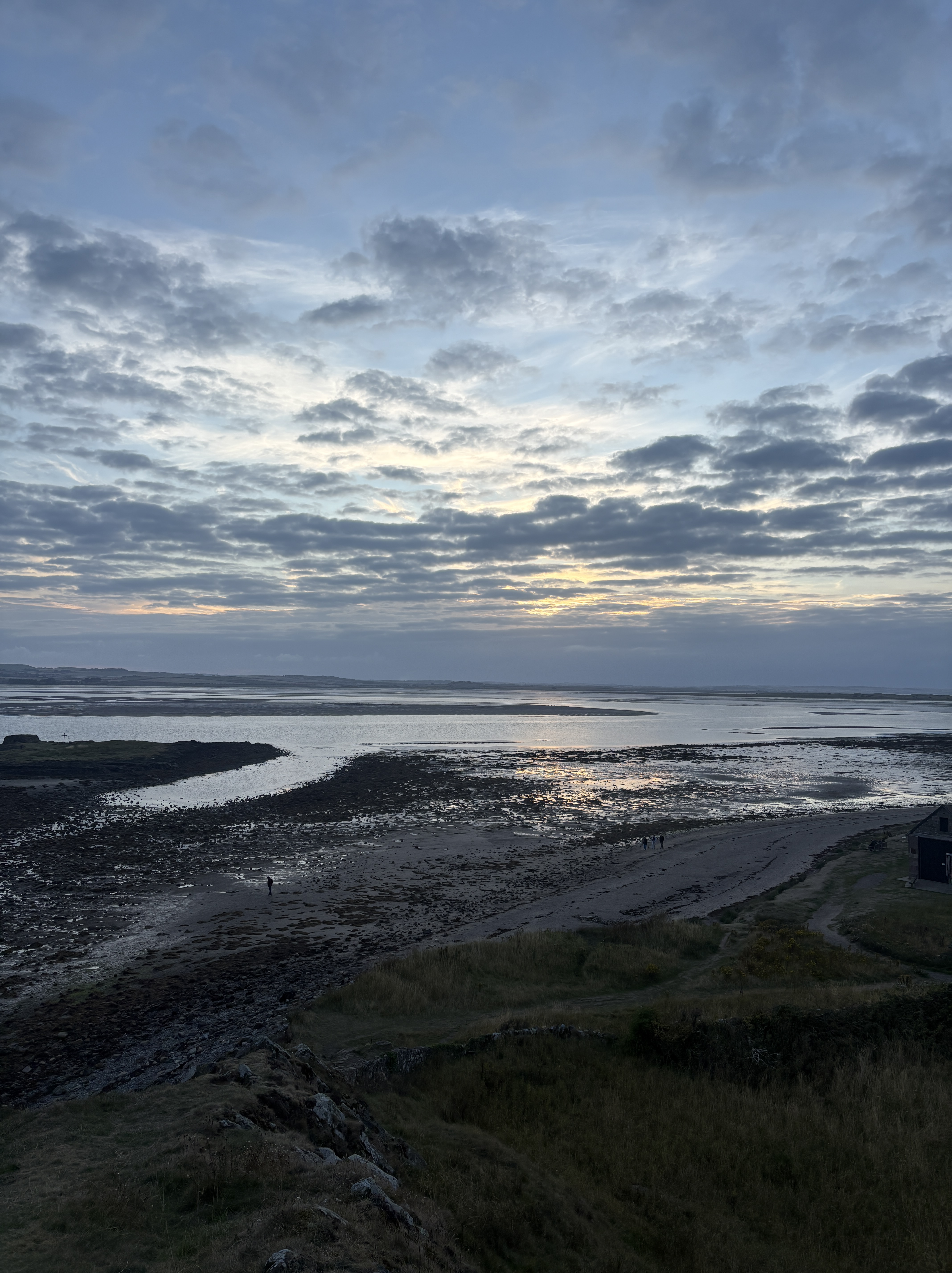
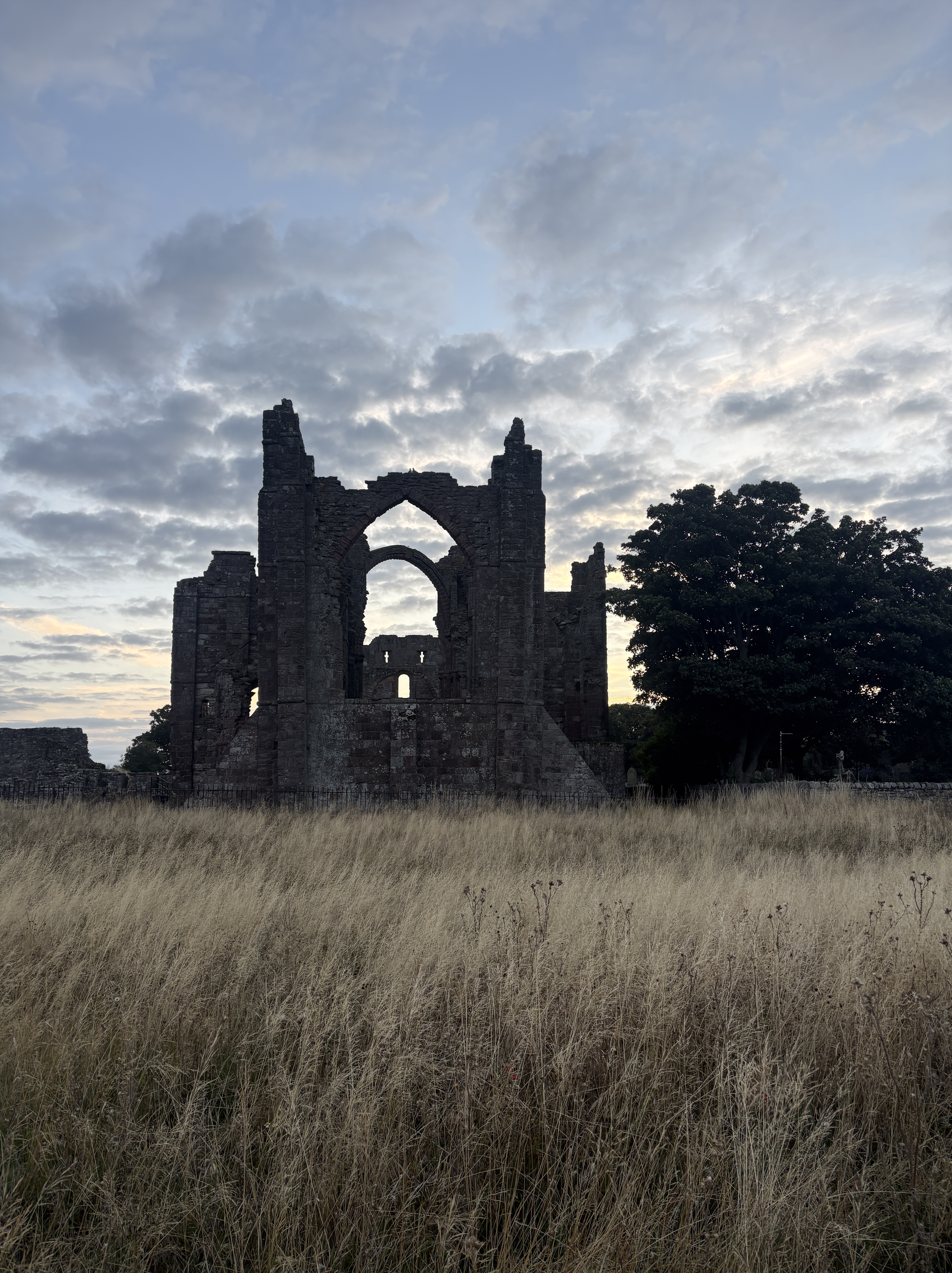
The next day we went over to Holy Island, not with the day-tripping crowds, but for a quiet evening picnic. It was a little cold sitting on a blanket watching the water from the harbour, with the whale-like upturned boats behind us, and hard to imagine in such a tranquil place there had once been the uproar of marauding Norsemen. A long time ago. But if so, a lot of Lindsfarne is the same. The tide still cuts it from the mainland twice a day, pilgrims arrive barefooted and the shifting waters provide makeshift homes for colonies of seals. Swimming off Bamburgh after a storm flew through the island castle appeared just a little darker than the sky a few miles north. There’s always a sense I’m missing something, further than I can see.
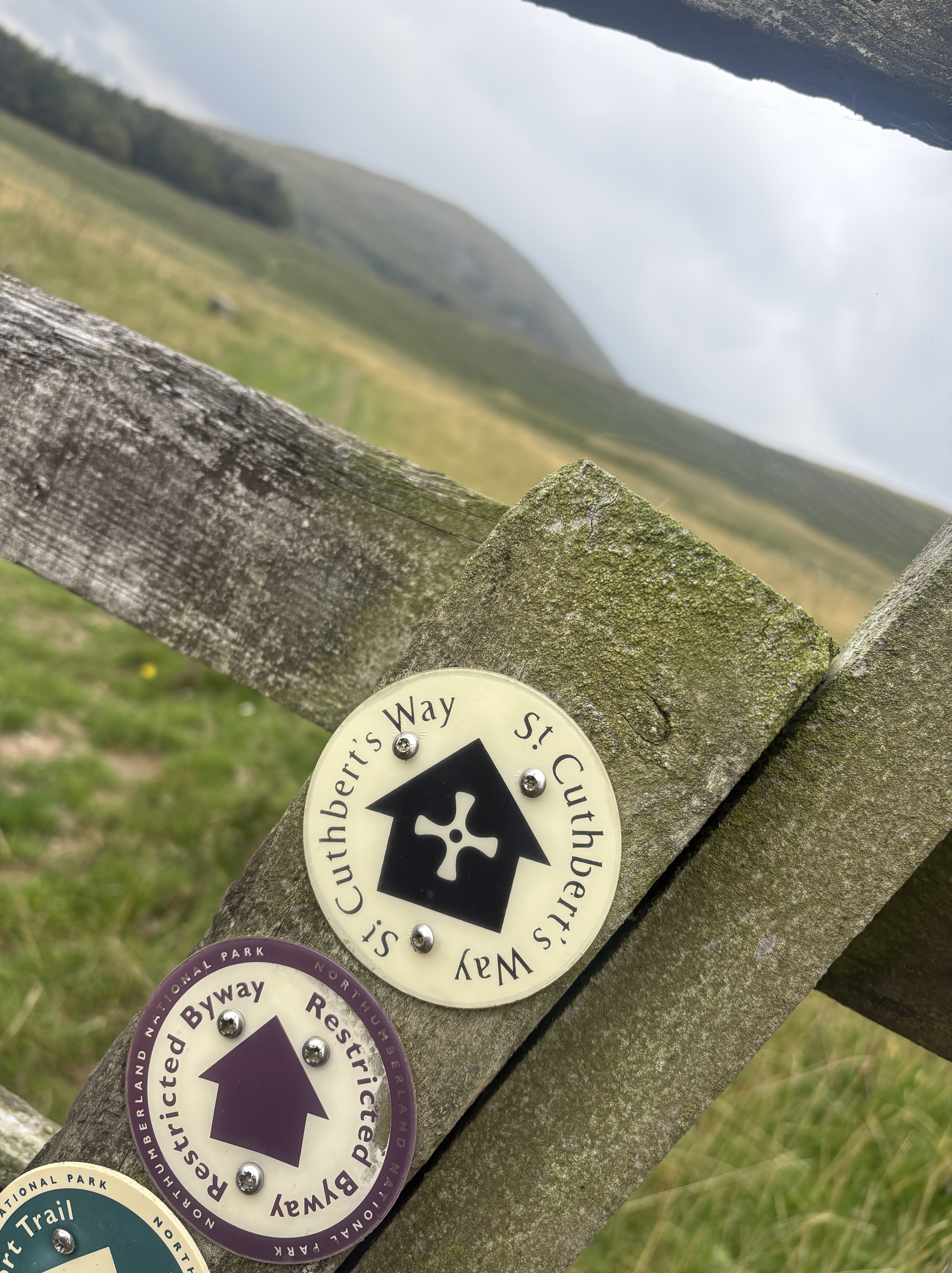
Later in the week on a route mapped through the Cheviots we followed the eastern flank of College Valley, over three tops, then looped back along St Cuthbert’s Way for a stretch. I had been reading a short book which had gruesome details of the fate of Cuthbert’s corpse over the centuries (clue: he decomposed), and enjoyed more the thought I was walking in footsteps from his time, when Northumberland went much further north and south.