Category Archives: Uncategorized

Strange punishments in Byzantine Constantinople

Among the many delights of John Julius Norwich’s superlative Byzantium trilogy is a huge and astonishingly varied number of ways to inflict pain on human beings. I’m not even halfway through volume two and already towns of heretics have been immolated, enfeebled Emperors have had their hands hacked off and turbulent clerics have been blinded by being forced to stare into steaming bowls of retina-wrecking concoctions. Even those with no interest in the history of late antiquity and the early middle ages will find much to enjoy in the gory details.

None quite match the fate meted out to Theodore and Theophanes, two ninth-century writers from Palestine. Without going into too much of the story, these two scribes were iconodules, or fond of icon veneration, one of the most divisive issues the Byzantines had to deal with. At the height of Emperor Theophilus’ anti-iconographic reign (829-42) the boys were brought to Constantinople and given the standard beating and flogging to change their minds, but they declined.

It was then that they were held down and had  twelve lines of ‘abusive lampoonery’ tattooed on their faces. And that, poor quality of verse or not, was intended to be a lesson to Theo and Theo, who were promptly dispatched to Apamea, forever branded with unkind verse.

The war over icon veneration claimed many victims, but none in quite such an unusual way. Theodore died from his wounds, while his brother survived to see the triumph of Orthodoxy. Poor chap. There are more gory details to shock and delight as the centuries roll by: the Byzantium trilogy is a highly recommended read.

New York notes, part one

New York’s pace and energy is infectious. I have been to a few places that have absolutely thrilled me – Istanbul, Damascus, Palermo, Amsterdam, but for that first and lasting rush of excitement it is here, and London, and nowhere else. Here or Istanbul for a ‘let’s go now’ anytime break? Too hard to say.

I’m staying at the Yotel Times Square, which is a long way from my favourite part of town but something of a revelation as a hotel. I was able to see Yobot, the robotic luggage porter, do its thing and check in early. The very fresh room had a decent size bed, shower, TV and fantastic Hudson River views. What moe could you want?

Yotel - jolly good show in Theatreland

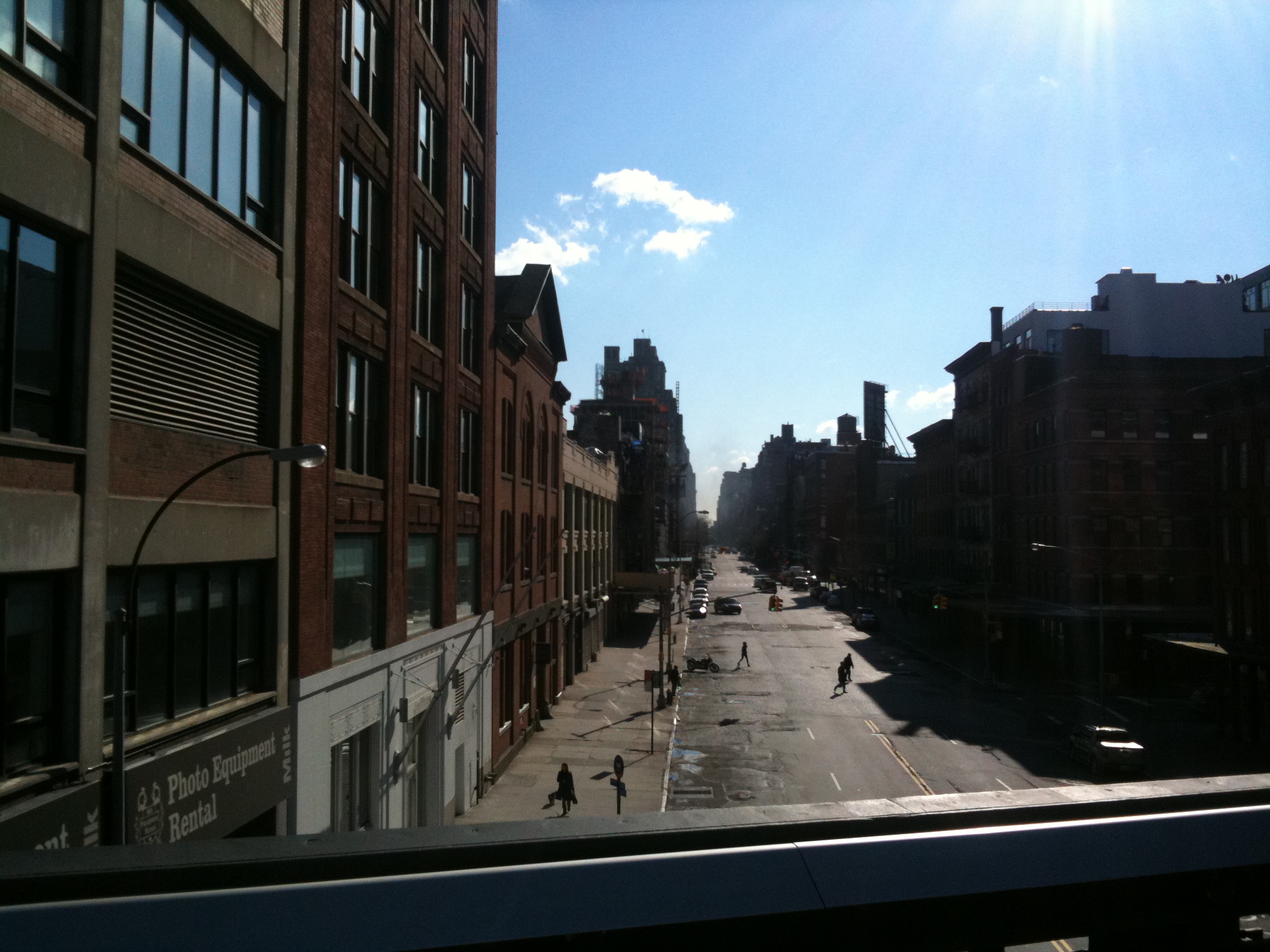
First stop, the High Line. New, unmissable, edgy, accessible. I rush it, to be honest, in the early morning cold and wind, glad for my tweed jacket and feeling like Sting’s Englishman in New York. Caffeine at Joe, the Art of Coffee (6.5/10, though they did give me another fill up when I knocked my first one to the floor in excitement), a typical Manhattan bacon and egg roll and a haircut (4/10) and my Chelsea pit-stop is done.

I strolled from the end of the High Line through the Meatpacking District – fully gentrified since my last visit and, truth be told, no longer terribly interesting by day. I’m sure it’s great at night but I’m not!

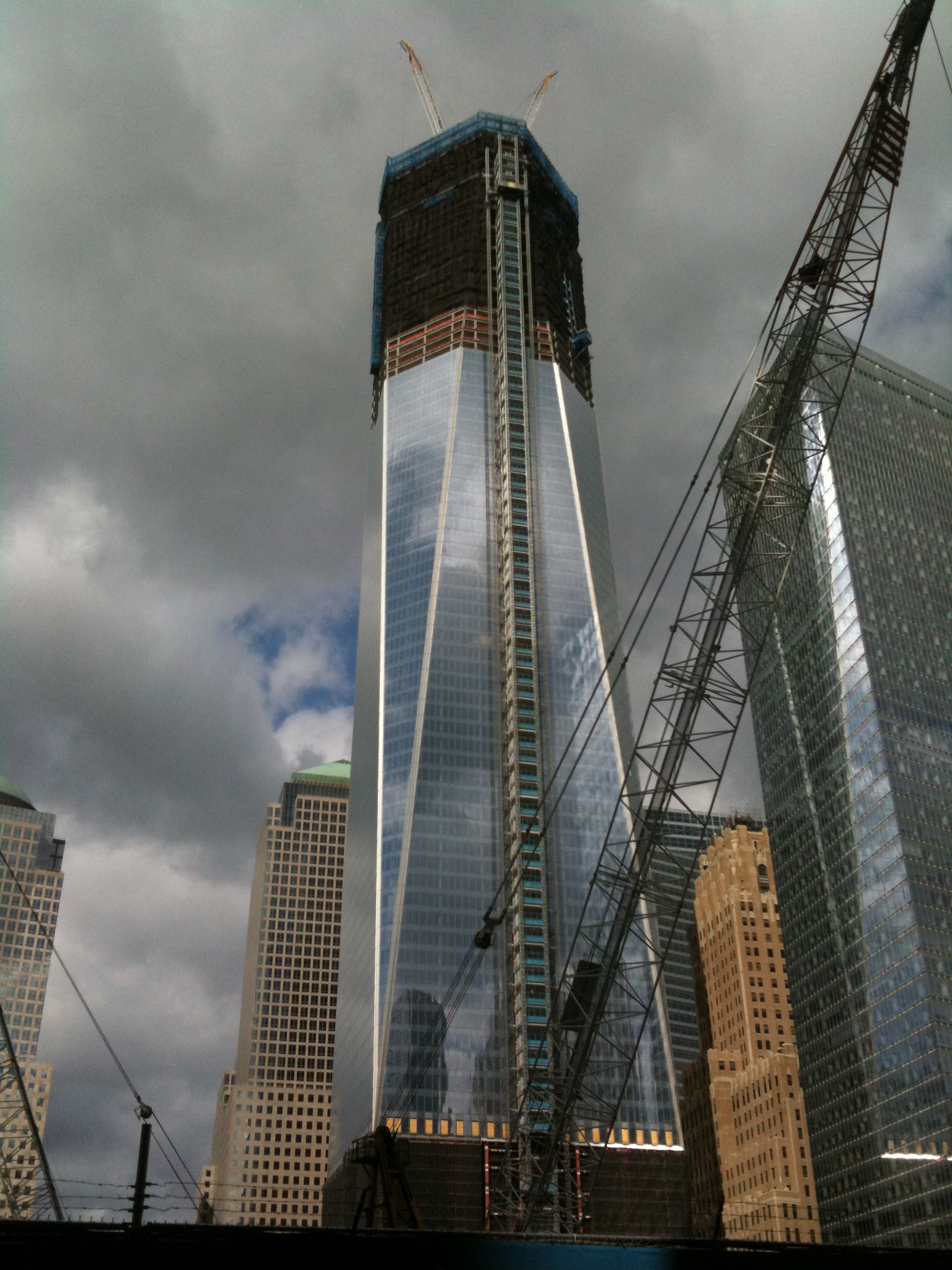
On through Greenwich, Soho and into Lower Manhattan. It may have been a busy February Saturday but I was able to get a walk-up ticket (free, like the best things in town) for the 9/11 Memorial. It was fascinating, moving and huge, with big crowds. Go, and consider reserving ahead. The rigourous airport style security to get in, complete with stressed-looking staff was another reminder of the legacy of that day. If you seek my memorial, look around you indeed.

1 WTC takes shape

Next stop was Strand Books, the magical repository of dusty delights on envy subject under the sun. It is also the place that’s given birth to a million tote bags. Allow three hours for a leisurely browse of history, sport and NYC books. There’s a toilet in here which is a boon in a city that’s low on public conveniences. Good coffee nearby.

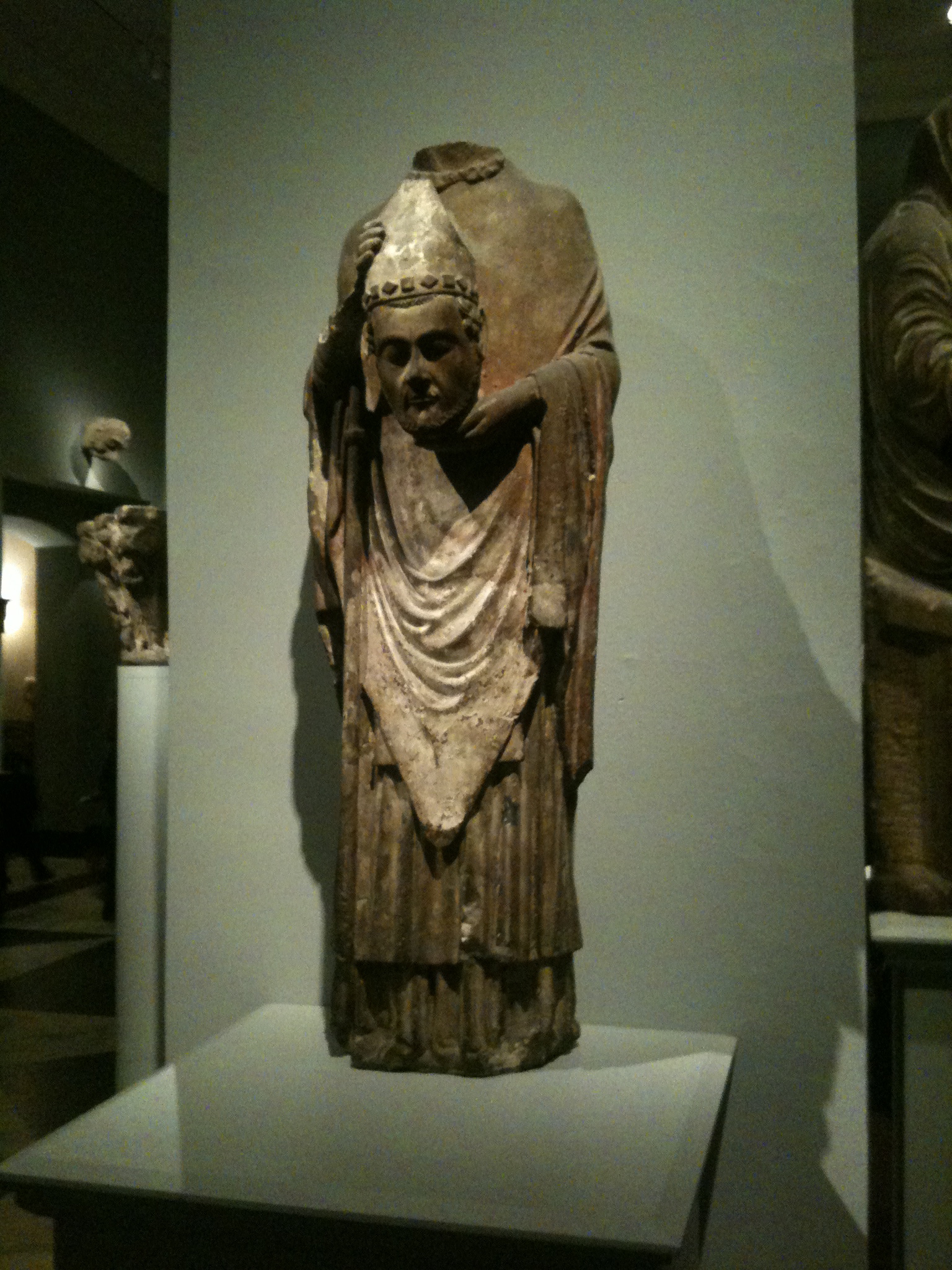
It all gets a little confused after this, probably due to the effects of the previous night’s red-eye flight. At some point I passed through Grand Central twice, ate several hot dogs and slices of pizza and rode several subway trains, popping out at the Metropolitan Museum of Art. It is wonderful, undeniably, but I find  the pricing structure odd. The suggested donation is a whopping $25. I paid it. The chaps in front of me paid $1. The whole thing is slightly confusingly done. It’s Byzantine galleries are magnificent and it has that air of an unparalleled cultural institution.

He lost his head in New York

My evening mission was to return to Greenwich to visit Rebel Rebel, a lovely record shop in a city where vinyl can be hard to find in quality or quantity. From there I headed back towards Times Square, not a part of town locals give a monkeys for but lovely at night, and the home of the Uptown branch of Shake Shack. Celebrated for its burgers,word is well and truly of about this pace and the queues were dramatic. My fault for going at 6pm on Saturday night. Then, after a quick-fix alternative nearby, a bar selling burgers and craft beer from all five boroughs (a Queens IPA was especially tasty), back to Yotel, where the city looks wonderful and a party is starting, and off to sleep.

Ten years of the Tour d’Afrique

The best ideas are usually very silly ones. Riding a bicycle from one end of Africa, the continent of ultimate travel, certainly fits the bill. Designing and leading a tour that allows ordinary men and women to fulfil a dream to do just that takes a silly idea and multiplies the logistical challenges by far more than the number of people there.

That’s where the Tour d’Afrique comes in. This bicycle race and expedition, running over 8,000 miles from Cairo to Cape Town and taking in Egypt, Sudan, Ethiopia, Kenya, Tanzania, Malawi, Zambia, Botswana, Namibia and South Africa is celebrating its tenth anniversary. I was lucky enough to ride a section of this in 2009, and found it an unforgettable adventure. I won’t go into the details here, but you can have a read about some of the more memorable moments in this post.

The Tour has in some ways come a long way in ten years, and the company behind it has launched tours covering many other parts of the world. The essence, though, remains the same. A spirit of adventure, of making the impossible possible, of pushing the limits of what individual think they can achieve. Most of all the expedition is one long love letter to Africa, to camaraderie and to the human spirit.

Happy trails

As this is all undeniably worth celebrating, hats off to the intrepid crew behind the Tour, who have marked ten years on the road in Africa with a sumptuous hardcover book. Celebrating ten years of the Tour d’Afrique bicycle race and expedition captures the experience of riding brilliantly. The wildlife, scenery, colleagues, kit, bikes, and above all Africa in its mutlicolour glory are all represented here. If you’ve ridden a stage or more – and chapeau in particular to any EFIers out there reading this (you get your own section, naturally) – a glance at this lovely book will bring your long-gone saddle sores back to life in an instant.

Bob Geldof in 2006 said “when I talk about Africa I have a feeling here in my stomach. Sounds stupid, I know. It’s not a romantic thing. It’s almost a physical feeling, which translates as “fuck, I wouldn’t mind being there now”. He couldn’t be more right unless he’d added “on a bike, in 45c heat, with a third night under the canvas and a double helping of tuna pasta ahead of me.”

Click here for more about the book, and the Tour generally.

Train food: the rules

A strict code of etiquette governs eating on proper* train journeys, and as today is a busy day for travelling I thought it only appropriate to publish these guidelines for the first time.

1.    Train food must either be made at home, or purchased from outlets at the station. No other food can be consumed other than the inferior fare available from the buffet car.

2.    Train food should be more varied than a standard packed or desk lunch. So exotic items such as mango and pineapple chunks can be added to crisps, sandwiches and the like.

3.    Regular calorific regulations do not apply when eating on a train. Large bags of crisps, maxi-packs of chocolate and ‘Percy Pig’ type sweets are essential parts of Train Food. Healthy items like mango and pineapple chunks can be added to give the impression one is eating in a better way, provided the less healthy items are consumed in full.

4.    On boarding, Train Food must be taken out of any plastic bags and carefully arranged on the tray table in front of you. If you have noted rule (3) this will mean your dinner will easily cover the table, and spill over onto the person’s next to you. If you have a proper table, you will end up drawing imaginary lines on the table with the person opposite you. Do not engage in conversation about this. It is you against them. The loser risks having their food pushed onto their laps.

5.     Train Food must not be consumed until the train is moving.  This is the golden rule of Train Food. Anyone opening a can of pop or box sandwich or even scoffing a sneaky crisp should be the subject of hoots of derision from fellow passengers, including strangers. No hooting in the Quiet Zone carriage, where silent mockery is in order.

6.    Due to rule (4), you will find that moving out of your seat while eating, once you have begun, is quite impractical. Therefore expect eating even large amounts of food to take up a reasonably small part of your journey.

7.    Someone near you will have something that looks nicer than yours. The only way to deal with this is to ensure you eat all yours, quantity trumping quality.

8.    You will finish your meal to find that you have a large amount of detritus surrounding you, and no obvious way of disposing of it. The annoying person from rule (7) has probably finished before you and put their empties, which once looked and smelt so nice, in the little bin between two seats. It will now begin to not smell so nice. You can either wait for the man or woman with the enormous bin-bag who thunders down the train as you approach the terminus of the service, or take your empties with you.

9.    Eating a full meal on arrival at your destination is generally still appropriate.

*Those of 60 minutes or more. Less than that and you risk spending more time buying your picnic than riding the rails eating it.

Old bike ride, new bike ride

I’m shocked to find that three months have passed since I swapped on bike ride to work for another.  On my last pedal up the ever-chaotic Holloway Road I thought that I should probably write about both rides, so here I go.

Old ride

From outer north London, 020 8 land (any fule no not to write 0208), it is south, south, south to Old Street. The route crossed the North Circular and the isolated oddness of Strawberry Vale, a huge and strange estate that’s cut off by the A406 on one side and Islington & St Pancras Cemetery on the other. It’s best to keep riding, up and over East Finchley, then up Far Highgate bank past Wellington SIdings and on to Highgate Wood.

The downhill stretch of the ride is exhilarating, with views of distant St Paul’s from the relative safety of the Archway Road bus lane. Coming in the opposite direction tough boys and girls ride up and over Highgate Hill, avoiding the crunch of traffic at Jackson’s Lane and testing stamina, achilles tendons and fitness. But Holloway Road is unavoidable, a mash of blind t-junctions, buses and trucks and endless waits at busy junctions. It is a wonder anyone gets on a bike to do this but we do, every day. Once round the roundabout at Highbury Corner New North Road is something of a raceway, where you start to pick up fixie riders heading west from Hackney and beyond. City Road, and journeys end, and glad tidings for not dying en route. 8 miles. 40 minutes.

New ride

From outer north London it is a gently curving south-westerly ride to White City. While there are many better places to ride to, the ride itself is lots of fun. The backstreets of Finchley Church End lead to Regents Park Road and Henley’s Corner. Once past Golders Green the ride starts to feel unusual for someone used to riding into and out of the centre, passing unfamiliar places with new views of London. Wembley’s arch looms omnipresently further west. Sunsets around Child’s Hill and off to the A41 are breathtaking. 

From Finchley Road Fortune Green Road runs fast downhill, with enough kick to make the return leg a leg-stretch. One of London’s oddest places awaits, West Hampstead’s jumble of stations, pedestrians and queuing traffic. It is the one part of the new ride that feels like the old one. Past here and further downhill, West End Lane snakes with antiquity towards Kilburn, once home to a priorty. West End Lane curves off almost unnoticed from the main flow of traffic to the High Road, and after a dog leg a long, straight line leads on past Queens Park and through Brondesbury to Kensal Rise.

Where am I now? I’m not sure. The friendly spirits of the West London Cemetery – my grandmother and Isambard Kingdom Brunel ensure safe passage to Scrub’s Lane and the last coast to journeys end, livened up by a tasty junction and a crossing beneath the Westway, where we hold on for tomorrow as the song goes. White City and journeys end and, usually, less thought to risks en route, more thoughts of other things. 11 miles. 45 minutes.


Athens in a day

Or, a day in Athens. Written on location in August. Sorry for not publishing before now. I’ve been a bit busy with the day job!

A stopover in Athens is a treat, and for me was a chance to see again I city I last visited in 1992, and thought the world of despite nay-sayers loudly trumpeting its downsides.

I loved Athens on that fleeting visit: the bright, slippery rock of the Acropolis, the searing heat of the summer streets and best of all my Dad having an enormous tear-up with a taxi driver which resulted in us piling in to the taxi, shouting a lot, then getting out again without having got anywhere. And I was excited to return.

Byzantine in period, not in outlook

Now, like then it is August and Athens is sweltering. The cooling breeze that made Chios (where I’d been for a wedding) delightfully temperate was absent, and I chose the mad-dog Englishman approach to exploring, charging round in the heat of the day, seeking shade where it was offered.

Nearly 20 years on, Athens felt familiar and different. The wide streets were there, as were the street-side caves of Kolonaki and the sense of gentility mixed with raw, youthful energy that I found thrilling last time. I am no longer a slightly awkward teenager wearing a loud shirt and straw hat, but my love of history and charging round cities remains. Athens did not disappoint.

Anthropomorphic olive oil drum in the Benaki

My flight from Chios landed at 8am, leaving me 11 hours before my next hop home to London. I was able to leave my bag at left luggage – €4 for a half-day, and get a metro trip into town and back for €14. The train took 38 minutes to get one stop short of Syntagma, where if the Acropolis is your only goal you an change lines and be whisked to the foot of the legendary rock.

I hopped out Evangelinos, from where the Byzantine Museum is a quick stroll away. It was a treat which skilfully filled in the blanks between Roman and Ottoman occupation, and viewed late antiquity through a Greek prism. The icons were particularly spectacular and it made for a better introduction to the Byzantine World, ironically, than anything to be found in Istanbul. The copies of iconic mosaics from Ravenna and Constantinople, painstakingly recreated by masterful modern scholars of the form were a delight to be able to inspect.

Downtown Athens is dotted with seriously ancient churches like this

After a quick visit to the British Council, where Patrick Leigh Fermor worked for a while and a cafe where you could feel his ghost scribbling away in the sunshine it was on to the Benaki, which for reasons I’m not entirely sure of was huge fun. It was bright and airy with a terrace cafe affording my first glimpse of the Parthenon and Panathenaic Stadium. Among many wonders in a wide-ranging collection they had a drawing of Athens in its classical pomp by Edward Lear. I wanted all their books, especially some stunning bilingual works on Greek architecture.

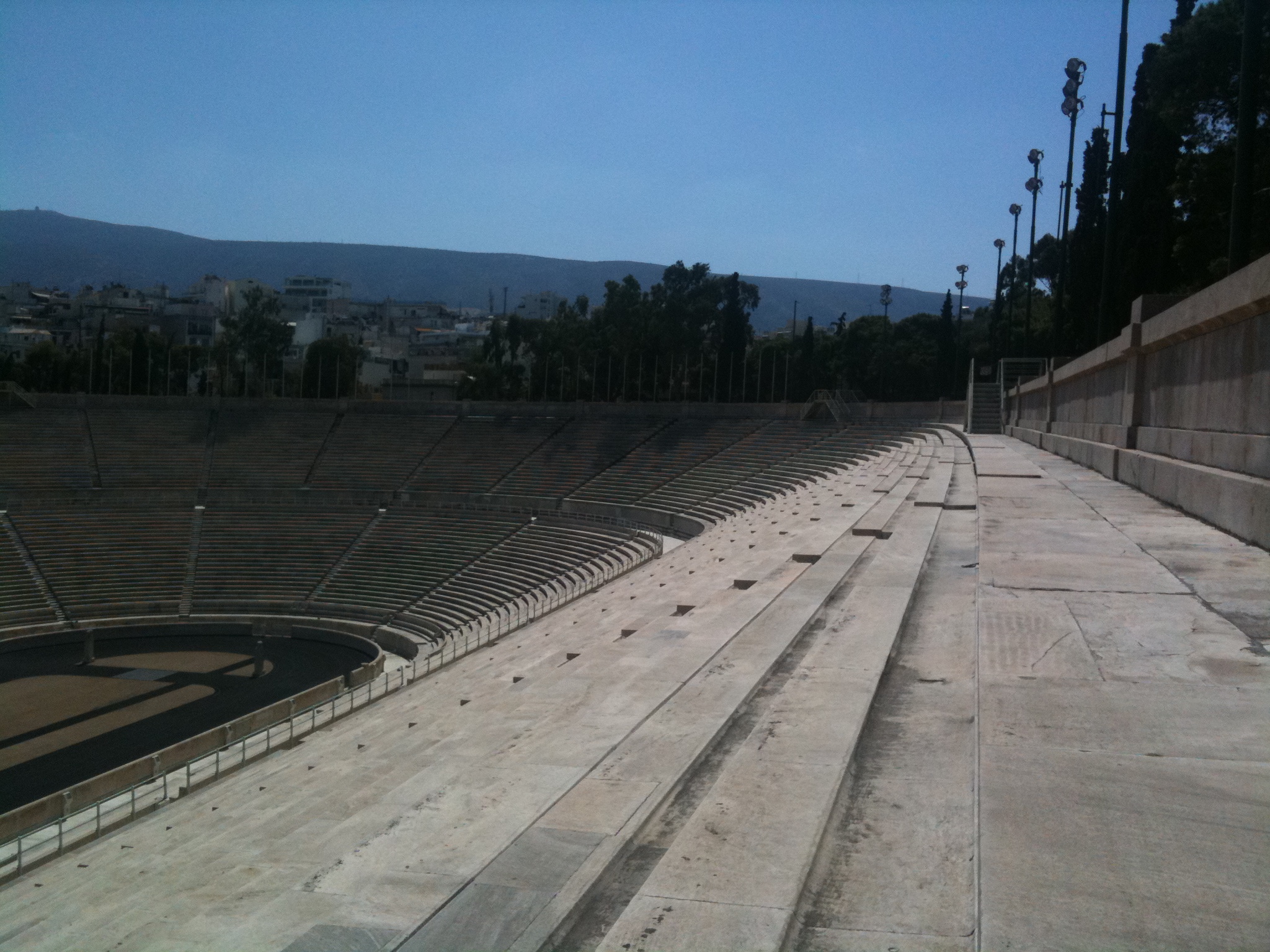
No surging please, we’re Athenian: the Panathenaic Stadium

From here I must add a note of caution. I’m footsore and a little sunstruck after doing what I did and would recommend an edited version of this. On the other hand I saw a huge amount and made the most of the day. The Panathenaic stadium, venue for the 1896 games was terrific value at €3 including an excellent audio guide. I walk on to Syntagma, Monstiraki and the flea Market (underwhelming) and on to the pedestrian promenade the links the market to the Acropolis via a host of ancient treats. I hopped up the Pnyx, saw the theatre of Herodus Atticus and ogled the Parthenon from a wide variety of angles before diving into the Acropolis Museum. In case you’re wondering, by this point I was sweating profusely and opted out of the hike up to the top in the afternoon sun.

The Parthenon shining in the afternoon sun

The new Acropolis Museum is now 7 years old, which feels scarcely believable. It is a key sight and deals quite marvellously with the Elgin Marbles issue. The museum’s presentation of the friezes eloquently and without hysteria makes the case for their return. It is convincing, informative and above all keeps the constant theme of telling the story of the Parthenon while leaving the visitor to draw their own conclusions. It is another place with a superb viewing terrace.

Outside, it was back to the glorious sweat of the Athenian wanderer. It’s easy to get lost, or lose the tourist crowds, in the backstreets of Plaka, and I loved the walk to the Agora as much as rambling around this huge site. On your way out on the Monastiraki side there are lots of lovely cafes to refuel in.

Lastly, a few other small notes in case you’re wondering: Athens was orderly, clean and friendly. It was not expensive and eating was very reasonable – €4 for a souvlaki and coke at a cafe in a lovely square is a good deal in western Europe in August. Athenians are friendly, proud of their city and seemed delighted I was there. In every room of every museum I went in, even the busy Acropolis Museum, guards grinned and said hello.

It will not be 20 years before I next return.

How did we get here? Morrissey from Kill Uncle to Your Arsenal

In search of stout? As a wise man once said...

It is 1991, and Morrissey is at his most handsome, about to surge to the peak of his powers as a solo artist, a post-Smith. From the single My Love Life up until the incomparable Vauxhall and I the Mancunian singer produced an unbroken string of classic records that tower over much of the rest of his work.

The journey is a decidedly odd one. Kill Uncle, his second (proper) solo album after the rightly-revered Viva Hate, is an elusive record. Written with Mark Nevin (best known for recording with Fairground Attraction and Kirsty MacColl) and recorded with session musicians (Andrew Paresi, who documented his experiences in the BBC radio documentary I Was Morrissey’s Drummer) and those roped in from other bands (Madness’ Bedders), the album was short and at times bizarre. The singles (Sing Your Life and Our Frank) were light and breezy, but the rest of the album is loveable in parts and instantly forgettable in others. The first side of the record ends with the enjoyable Mute Witness and, Morrissey’s funniest ever song, King Leer, veering towards music hall, camp and winsome. The flip side, barring the lyrical high of Driving Your Girlfriend Home, can only be described as a palate cleanser for what comes next.

What came immediately next was Morrissey’s return to the live stage for the first time since the legendary free concert at Wolverhampton Civic Hall in December 1988 where he had taken to the stage with his former Smiths, minus Johnny Marr. The extensive Kill Uncle tour was to be different, and an all new band was recruited. Before this tour (if anyone can confirm if first contact was for the video for Sing Your Life, which has both Mark Nevin and Mozzer’s soon-to-be new band playing at Camden Workers Social Club then I’d be grateful, as I’m stumped to be any more precise) Morrissey had met Alain Whyte and through him other rockabilly enthusiasts Boz Boorer, Gary Day and Spencer Cobrin. After Sing Your Life they became his band. The effect of working with these new influences was immediate – compare Pregnant for the Last Time with anything on Kill Uncle. Harder, faster, shorter and with quiffs not harking back to the halcyon 60s but the Psychobilly scene where punk and rock and roll met. Funnily enough, Pregnant for the Last Time stands up well in a chronological listen to Morrissey’s singles, though the fork in the road between a pop past and a rock future is clearly here. Isn’t it?

Pregnant for the Last Time

And yet, the path is laden with wrong turns for the listener, and makes for a confusing journey. Morrissey released Kill Uncle in March, 1991. The second single, Sing Your Life, was released in April. Pregnant For the Last Time follows in July, with Whyte, Boorer and co playing on it but written by Nevin. It whacks along. You feel like you can draw a straight line from this to Your Arsenal’s bolshy bits. Yet what comes next is a blast of melodic loveliness in the shape of My Love Life which came out in September. This near last-gasp of Morrissey’s partnership with Mark Nevin was arguably the best thing they recorded together, though I Know It’s Gonna Happen Someday from Your Arsenal runs it close. Nevin also has writing credits on Glamourous Glue, though Alain Whyte has the rest of the tunes on the album in his name.

The incomparable Alain Whyte

Throughout this time the link with Kill Uncle’s distinctive sound weakens, mostly driven by Morrissey bonding on and off stage with his new bandmates and the resulting creative output. I was too young to see any of the Kill Uncle shows, first seeing Morrissey live at Alexandra Palace in December, 1992, after an abortive attempt to see him supporting Madness at Finsbury Park that summer. He had been bottled off by skinheads the day before and had decided against dancing round the stage draped in a Union Flag. My knowledge only comes through Live in Dallas, an easy-to-find document of the Kill Uncle tour, and shows how Boorer, Whyte, Day and Cobrin were shaping up as Morrissey’s band. Rockabilly, fast-paced romps through material that wasn’t their own, with blasts of the sound that was to surface on Your Arsenal. The tour is documented in Linder Sterling’s brilliant Morrissey Shot, which shows a gang of young men on a hysteria-fuelled adventure round the world set to a changing sound.

Your Arsenal: an altogether more masculine Mozzer

Nevin’s contribution to Your Arsenal, that controversial classic, is often overlooked as it suits a linear view of history to assume Whyte, Boorer and producer Mick Ronson gave that lame-coated masterpiece its identity. The truth is more complex, and makes for an enjoyable Saturday night with some of Morrissey’s loveliest record covers and most interesting songs.

Fountain Island and Sarah Records

I’m not entirely sure why I decided to buy it that day. I could have heard somewhere about a record label that was right up my street. I may have noted something on the radio that caught my ear. It’s just as likely though that on that warm summer’s Saturday in Reckless Records on Camden High Street I picked up Fountain Island, liked the cover and, with a fiver (£5.25 to be precise) in my pocket, took a chance on it and carried it home.

I was hooked before the tube ride had finished and I’d got it on the stereo. Staring at the sleeve of something you’ve just brought while going home did that sometimes. Fountain Island was one of the classic compilation LP’s Sarah Records put out throughout the labels life, collecting songs otherwise only found on singles. The artwork, benefiting from 12-inch rather than 7-inch size covers, reminded me of back gardens and sun-baked suburban streets. Once on the turntable I was quickly hooked by the mix of gentle and more urgent guitar music, which carried a strong antipodean flavour to go with the more expected Bristol fuzzy noise. I now count some of the bands on that LP as my favourites: the Orchids, the Sugargliders and some that only my brother and I seem to know and cherish: Tramway, take a bow.

Fountain Island got me hooked on Sarah. This record label, I quickly learned, was run by Clare Wadd and Matt Haynes, from a PO Box in Bristol. I wrote off to them for some singles and, when they came back I had a hand-written reply with some thoughtful responses to what I’d asked them. Over time, I came to look forward to these notes as much as the music. When I got good enough GCSEs to go to Sixth Form College Matt sent a pat on the back. I still have the note. Record inners came decorated with pictures of branch line services from Bristol. Mini-catalogues backed with hand-cut collages of tight-typed prose about love and loss. Here’s one, in lieu of me being sufficiently organised to scan my own ones. Besides, they’re personal.

Sarah had been going for a few years by the time I had cottoned on to it. Just like every musical movement ever, you should have been here a few years back. I didn’t care. I’d never found anything I liked doing more than going to the football, but rooting round record shops in search of missing Sarah seven-inches came pretty close.

Most other articles about Sarah descend into dullard cliches far too easily, labelling its output fey and winsome. Critics lack the respect and imagination to listen any further. The Field Mice and Heavenly are, to those lazy ears, the sum total of Sarah’s contribution to music, with a caustic nod to Pristine Christine by the Sea Urchins, the very first Sarah single. iTunes will prove the nonsense of this position. By all means have a listen to the Field Mice and Amelia Fletcher’s timelessly sharp lyrics, but also take the time to find Secret Shine, Blueboy, Brighter, Even As We Speak and Tramway. I shall keep mentioning the latter band until anyone reading this buys ‘Maritime City’. I’m not sure there’s ever been a record quite like it. You can hear the b-side here. St Christopher’s blazing rendition of All of a Tremble is another excellent introduction to a wonderful and underrated band.

Matt Haynes went on to produce Smoke: a London Peculiar, a publication as unique and rooted in place as Sarah had been, and I scribbled a few things for that. Thought Clare and Matt have admirably refused to cash in on their cult status you can find lots of Sarah stuff on iTunes. Here’s my top ten in no particular order:

1. All of a Tremble – St Christopher
2. Helmet On – East River Pipe
3. Maritime City – Tramway
4. After Years – Secret Shine (though Loveblind, sometimes known as Spindrifting is wonderful too)
5. You Should All Be Murdered – Another Sunny Day
6. Half-Hearted – Brighter
7. Emma’s House – the Field Mice
8. If I could Shine – the Sweetest Ache
9. Distraction – Boyracer
10. Shadow of a Girl – Gentle Despite

Anyone else have a Sarah favourite to share?


Ithaka by C P Cavafy

As you set out for Ithaka
hope the voyage is a long one,
full of adventure, full of discovery.
Laistrygonians and Cyclops,
angry Poseidon—don’t be afraid of them:
you’ll never find things like that on your way
as long as you keep your thoughts raised high,
as long as a rare excitement
stirs your spirit and your body.
Laistrygonians and Cyclops,
wild Poseidon—you won’t encounter them
unless you bring them along inside your soul,
unless your soul sets them up in front of you.

Hope the voyage is a long one.
May there be many a summer morning when,
with what pleasure, what joy,
you come into harbors seen for the first time;
may you stop at Phoenician trading stations
to buy fine things,
mother of pearl and coral, amber and ebony,
sensual perfume of every kind—
as many sensual perfumes as you can;
and may you visit many Egyptian cities
to gather stores of knowledge from their scholars.

Keep Ithaka always in your mind.
Arriving there is what you are destined for.
But do not hurry the journey at all.
Better if it lasts for years,
so you are old by the time you reach the island,
wealthy with all you have gained on the way,
not expecting Ithaka to make you rich.

Ithaka gave you the marvelous journey.
Without her you would not have set out.
She has nothing left to give you now.

And if you find her poor, Ithaka won’t have fooled you.
Wise as you will have become, so full of experience,
you will have understood by then what these Ithakas mean.

Translated by Edmund Keeley/Philip Sherrard

(C.P. Cavafy, Collected Poems. Translated by Edmund Keeley and Philip Sherrard. Edited by George Savidis. Revised Edition. Princeton University Press, 1992)

I am indebted to the Guardian reader who referenced this poem in a tip they sent in last week for bringing these wonderful words to my attention. I know nothing more about Cavafy, but have seldom read a better evocation of the journey, as opposed to the end point, being the point of travel.

Menelaus and Helen by Rupert Brooke

HOT through Troy’s ruin Menelaus broke
To Priam’s palace, sword in hand, to sate
On that adulterous whore a ten years’ hate
And a king’s honour. Through red death, and smoke,
And cries, and then by quieter ways he strode,
Till the still innermost chamber fronted him.
He swung his sword, and crashed into the dim
Luxurious bower, flaming like a god.

High sat white Helen, lonely and serene.
He had not remembered that she was so fair,
And that her neck curved down in such a way;
And he felt tired. He flung the sword away,
And kissed her feet, and knelt before her there,
The perfect Knight before the perfect Queen.

So far the poet. How should he behold
That journey home, the long connubial years?
He does not tell you how white Helen bears
Child on legitimate child, becomes a scold,
Haggard with virtue. Menelaus bold
Waxed garrulous, and sacked a hundred Troys
’Twixt noon and supper. And her golden voice
Got shrill as he grew deafer. And both were old.

Often he wonders why on earth he went
Troyward, or why poor Paris ever came.
Oft she weeps, gummy-eyed and impotent;
Her dry shanks twitch at Paris’ mumbled name.
So Menelaus nagged; and Helen cried;
And Paris slept on by Scamander side.