The doomed ducks of the Tsiribinha River

This article originally appeared in Zine Magazine, translated into Norwegian.

Who would be a duck on a river safari in Madagascar?

Animal lovers, look away now.  The story I am about to tell you is a sad tale. As many of you will already know, once you get outside of Europe, North America and Australasia the world’s culinary tastes change quickly. Food becomes spicier and ingredients get more exotic. Unusual beasties get coated in batter and deep fried. Eating sometimes becomes less about fine dining and more about winning the battle of mind over stomach.
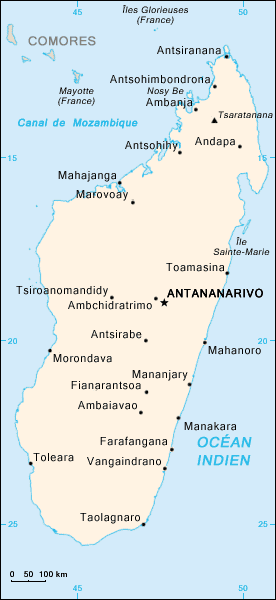
Not that any of this is usually a problem in Madagascar. Here you find the best possible colonial legacy: a fusion of French recipes combined with rich tropical flavours and a dash of Asian invention. The Malagasy people, after all, trace their roots to South-east Asia rather than Africa. Nowhere else on earth are fresh baguettes baked in straw-roofed huts in the shade of Baobab trees.

This wasn’t the only reason my wife and I had decided to come here on honeymoon. We’d long dreamed of visiting and with flights proving expensive and the world’s fourth largest island needing several weeks to see properly this seemed the perfect opportunity. While researching the trip we ended up, somewhat unusually for a honeymoon, throwing out any ideas of luxury resorts and opting to tackle one tough adventurous journey after another. My wife has yet to fully forgive me. A week in a five-star resort, however, would not have come close to being as memorable as what we ended up doing.
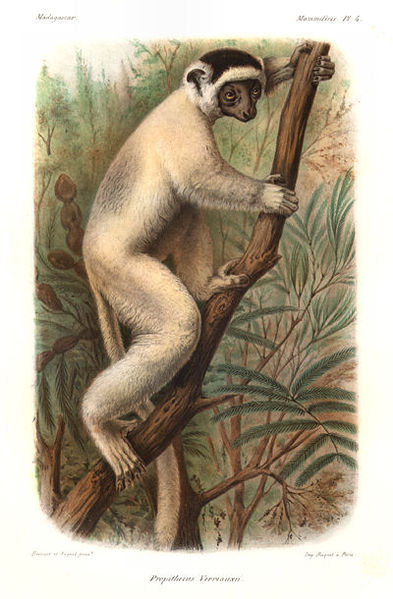
After a visit to the idyllic Ile aux Nattes, where during summer months you can stand on a golden beach and watch whales breaching from the shore, we flew back to the capital of Madagascar, Antananarivo. We took a bus on to the country town of Antsirabe, and then another on to Miandrivazo, a quiet riverside town. From here three-day rafting trips down the Tsiribinha River begin, passing through seriously remote areas, rural villages and troops of lemurs drinking at the waterside. Which all sounds very idyllic. It was, unless you were a duck.

Our party numbered six, twelve if you count our guide, cook, two paddlers and two random ladies who’d been invited along for the ride. In this way, Madagascar was very much like Africa. Our rafts groaned with our backpacks, people and supplies, and the low water meant that we kept getting grounded. It didn’t matter much, cruising on the river was serene, camping on the beach at night under an incredibly starry sky was a wonder and there were lots of lemurs and the odd crocodile to look at.

Unfortunately it soon became apparent that our guide had never organised a river trip before and had underestimated how long it was going to take and how much food we’d need. This information had not been received well. On the third morning, when it had just been announced that it was not to be our last morning and there was nothing for breakfast, I noticed something moving in our boat. I poked the object with my paddle. A duck poked his head above the pile of bags it appeared to have been snoozing under since we left Miandrivazo. This nice duck was not long for the world. In a bid to soothe the anger of a group of tired tourists who had not washed for the best part of a week and had just been told that not only were they late, but that they would not see several of the promised sunset at Baobab Alley at the end of the expedition, he was unceremoniously cooked up that night and served in a Canard du Tsiribinha stew. And jolly nice he was too. Sorry, Donald.
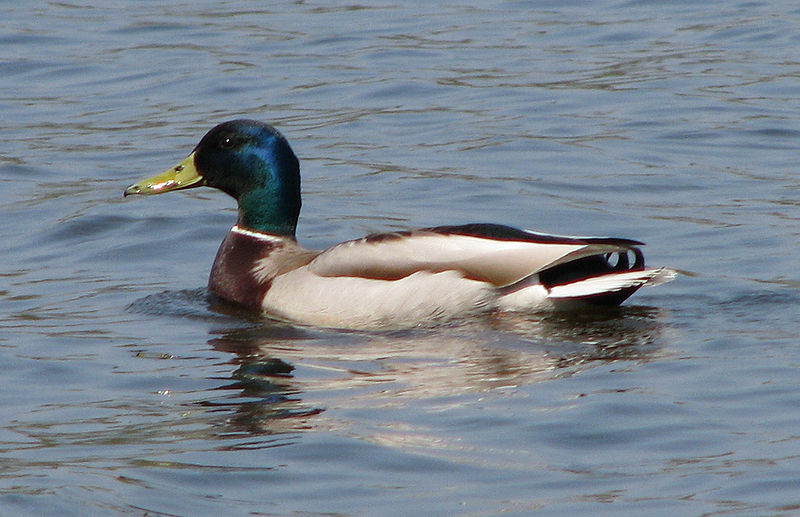
Desole, Donald

A day and a half later we limped into Morondava, way behind schedule, and sat down to what was probably the best meal of my life: chicken in a coconut sauce served with very French pomme frites. The next day my wife was taken ill with food poisoning, as were several other people on the trip. The duck, or possibly the river water used to cook him, had his revenge. The trip then went from bad to worse: our guide had offered by way of compensation to pay for us all to stay at a fine hotel in Morondava, which we had accepted. He had then, it seemed, skipped town without paying the bill. On a search for medicine for my wife in the back-streets of the town I bumped into him, and marched him back to the hotel to settle up, which he did under protest.
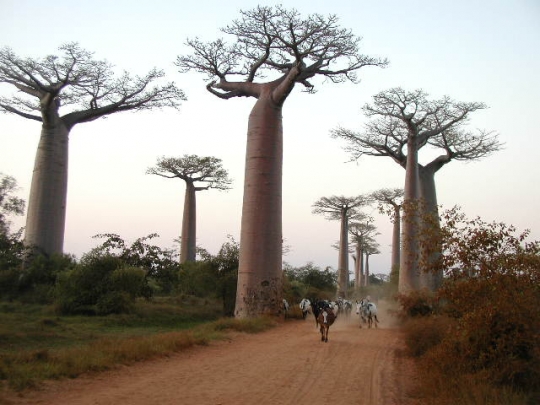
Baobab Alley near Morondava

We spent a few more days in town and moved on to elsewhere in Madagascar. We ate some more fine meals, saw many more lemurs including the Indri, the biggest of the lot, and even stayed in a top-end hotel or two. Madagascar remains one of my favourite places, but I tend to pass on the duck cooked in river-water stew.

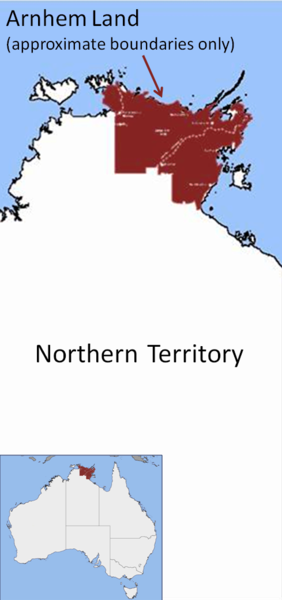
Total Eclipse in Australia, November 2012

Anyone who saw the footage of eclipse hunters on Easter Island on 11 July may be wondering where they can catch a piece of daytime darkness for themselves. Locals on Easter Island will be glad to be left to get on with fixing up their Moai for the next plane-load of Polynesian pilgrims.

The bad news is that there’s a bit of a wait until the next blast of totality. The good news is that seeing it offers a chance to get into a seriously wild part of Australia. On 13 November 2012, the skies above Arnhem Land in the Northern Territory and Queensland’s Cape York peninsula will darken, before the path of totality whizzes south-east past the uninhabited Kermadec Islands (who knew where they were?) and across the international date line into 14 November.

Back a bit, Bush Tucker

Those familiar with Les Hiddins, better known as the immortal Bush Tucker Man will know all about Arnhem Land’s spectacular nature and vibrant Aboriginal culture. Bush Tucker Man, who bought the Top End of Australia’s culture and nature to millions worldwide  is very much alive, despite years of rumours of his untimely demise which seemed to emanate from the Australian community in London. After a few beers Les Hiddins was alleged by antipodean friends to have been eaten by crocodiles,  to have disappeared into Arnhem Land never to be seen again or (my favourite) to have toppled off an escarpment in the Macdonnell Ranges at the behest of a particularly zealous Director demanding that he should move back for a wide-angled shot. Les is happily still with us and enjoying his doutbless very unusual retirement.

Arnhem Land

Access is limited to many parts of Arnhem Land making visiting a challenge. Cape York is more accessible, being much beloved by 4×4 enthusiasts aiming for mainland Australia’s northernmost point. It should mean the tourist equivalent of a lottery win for the steamy country backwater of Cooktown and remote mining town of Weipa. This account of an overland trip to through Far North Queensland should whet your appetite. Bear in mind though that mi-November is the start of the wet season, and getting too far into the wild may be a challenge.

Cape York Peninsula in red

One cautionary note: us Londoners got massively excited by the 2000 Eclipse, only for a cloudy day to dull the spectacle. I watched from Parliament Hill in north London, where the disappointed crowd jeered the cloud cover. At least if you head for Cape York you’ll have something else to show for your efforts.

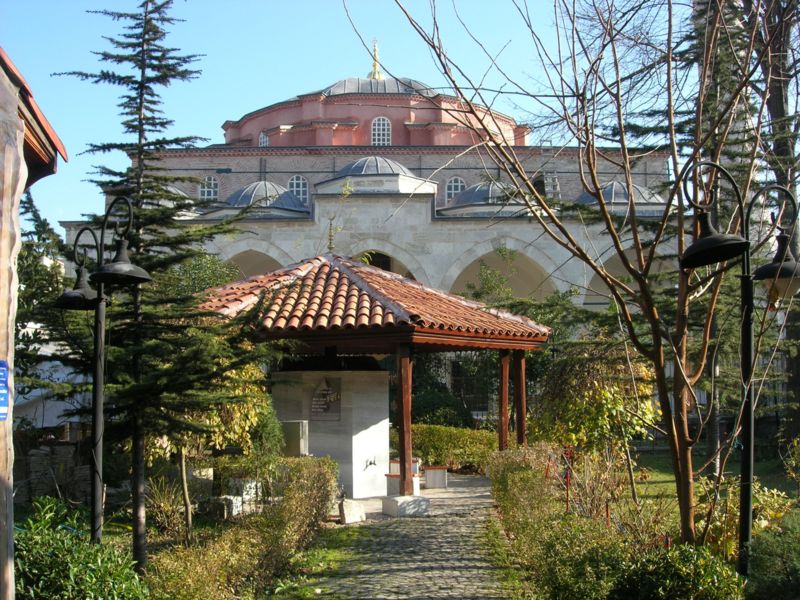
Little Hagia Sophia

In a city that offers a lot of wow moments, one picked out from a week of many.

Emperor Justinian I, with his Empress, Theodora left a mighty legacy on Constantinople during his reign from 527 to 565AD, dates that seem bogglingly ancient and obscure to the mind of this Englishman. While England was rooted in darkness during this period, in modern-day Istanbul a revival of the glories of the Roman Empire was going on. Justinian had a bit of trouble with rioting early in his reign, with the Nika revolt resulting in the destruction of Hagia Sophia. The destroyed Basilica’s remains can be seen in the grounds of today’s church, sitting slightly forlornly with large tourist’s bottoms resting on them after inspecting the mosaics.

The marvellous Byzantium1200 project has a reconstruction of this earlier church as well as many other 3D images of lost Constantinople. What a superb website.

Justinian’s ambition and drive – which characterised his reign – is best epitomised by visiting the rebuilt Hagia Sophia, constructed between 532 and 537. The only downside is that every man jack in town is either in Hagia Sophia, the Blue Mosque or walking between the two at any one time. But the chaps behind Hagia Sophia, Isidore of Miletus and Anthemius of Tralles left another fine construction. Don’t act like you don’t know them. They are serious men of history and to be saluted.

Isidore and Anthemius warmed up a little by building the Church of Saints Sergius & Bacchus, fulfilling a promise made by Justinian to dedicate a church to them in thanks for their reputed delivery of him, in a vision, from a treason charge in his youth. This church, built between 527 and 536, has been since 1513 a mosque, known today as Küçuk Ayasofya Camii, or Little Hagia Sophia. Pick up John Freely and Hilary Sumner-Boyd’s brilliant Strolling Through Istanbul for a detailed architectural guide to the building and its precincts.

Visiting is a joy. Still functioning as a neighbourhood mosque, Little Hagia Sophia feels quiet, cool and sacred. It is easy to imagine post-conquest Constaninople, and further back the role the place would have had as a neighbourhood eastern Christian. The few visitors who make their way here stroll around in silence. It is impossible not to be awed by the sense of light and space. The only thing dragging you into the modern age is the occasional commuter train trundling out of Sirceki railway station bound for the suburbs or distant Thrace. Within the compound is an Islamic burial-ground and a cool, tranquil tea garden lined with small shops. This leafy place is perfect for a restful hour reading or, in the case of our young companions, breaking out the wooden train-set that goes everywhere with us.  In two of the shops artisans work on hand-crafted illuminated drawings of Dervishes and centuries-old scenes of Istanbul which make wonderful souvenirs.

To reach Little Hagia Sophia, turn your back on its big brother and aim for the Arasta Bazaar. Walk through here and on exiting follow the street downhill – you’ll start to see the familiar shape emerge at the bottom of the street. There’s no entry fee but donations are welcome, and arms and legs should be covered.

On your way back to the marvellous Sultanahmet scrum, or perhaps while munching a fish sandwich on the dockside at Eminönü, you might wish to reflect that for all Justinian’s achievements, when he died Byzantine scholar and historian Procopius wrote a bilious Secret History of his life tearing him to shreds. What a fascinating, complicated and confusing place Istanbul is, and so much of its history can still be explored.

Racing cheetahs at Romford Greyhound Stadium

Now here’s a thing. In the 1930s, Greyhound Racing was a serious threat to the popularity of football and forty stadiums across the Uk hosted meets. There were several tracks in London: Catford, Hackney Wick, Harringey, New Cross, Stamford Bridge, Walthamstow, West Ham, White City (which was the spiritual home of the sport), Wimbledon and cavernous original Wembley Stadium among them. Romford in Essex also hosted meets, as it continues to do to this day. Wimbledon is London’s only other functioning dog track.

Parklife: wot no cheetahs?


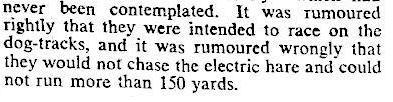
For the racing public of Essex, it appears that simply watching dogs chase a mechanized hare was not enough. Cheetahs, shipped from Kenya and given a few months to acclimatise, became in 1937 the star attraction at Romford. The Wiki for Harringay Stadium picks up the story, but frankly it poses more questions than it answers. Who made the decision? How were cheetahs persuaded to race for human edification? And did they try to eat any of the dogs? Why did racing stop so mysteriously?

I sought out the Times clipping referred to in the entry, but to be honest it just waffles on about cheetahs and how good they are at racing without providing any more facts. It also does not provide the information in the Wiki, but at least offers some valediction that the whole thing isn’t some kind of fanciful hoax.

Anyone know anything? Anything at all?

**UPDATE: This post, which appears to be from the Daily Mail, has some fascinating details on this, noting that cheetah racing at Romford did indeed happen. “Complaints from the locals and safety issues” put a stop to it. It seems the explorer Kenneth Gandar-Dower was behind it all. He was an Eton Fives ace, too.**

Old St Paul’s Cathedral

The greatest wonder of the internet is how it has brought long-lost books back to life. Far from displacing the printed word, the web in fact makes more of it accessible. Old St Paul’s Cathedral by Canon William Denham is one long-lost wonder which anyone can find and enjoy via the Gutenberg Project.

The frontispiece of the book is a lovely illustration of Old St Paul’s, complete with spire, with Three Cranes Wharf in the foreground.

Old St Paul’s stood for nearly 600 years (1087 – 1666) and was the most famous victim of the Great Fire of London. It was falling into disrepair in the decades before the fire and it is a little-known fact that Sir Christopher Wren had been commissioned to supervise renovations before the fire. the wooden scaffolding built to facilitate repairs helped seal the Cathedral’s fate.

The spire was destroyed by lightning in 1561, which is why illustrations of the Great Fire show St Paul’s in its rather truncated form.

Denham’s book in its physical form is well worth seeking out. The original was an outsized hardback with dozens of illustrations by Wenceslaus Hollar, who surveyed St Paul’s in 1658. Packed with long-lost detail, the book lifts the lid on the life of what, along with the Crystal Palace and Ranelagh Gardens is one London’s greatest lost buildings. Here’s one snippet:

At one of these Whitsun festivals (it was in 1327) another procession was held, no doubt to the delight of many spectators. A roguish baker had a hole made in his table with a door to it, which could be opened and shut at pleasure. When his customers brought dough to be baked he had a confederate under the table who craftily withdrew great pieces. He and some other roguish bakers were tried at the Guildhall, and ordered to be set in the pillory, in Cheapside, with lumps of dough round their necks, and there to remain till vespers at St. Paul’s were ended.

More on the Holloway Road spiral escalator

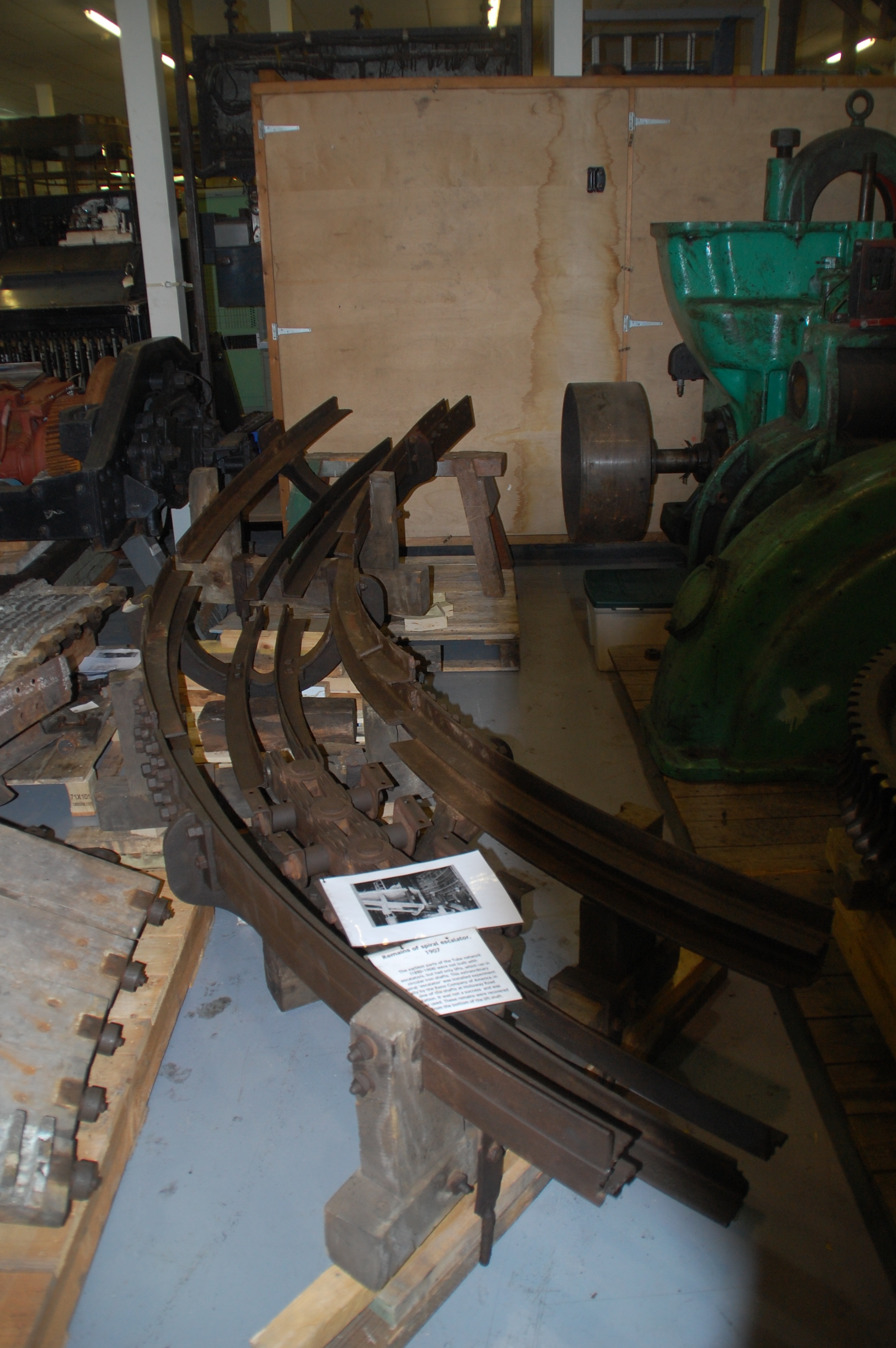
Fans of unusual engineering works thrill to tales of the spiral escalator which was found, derelict and broken, at the foot of what is now the liftshaft of Holloway Road Piccadilly Line station. This post tells the story so far.

During April’s London Transport Museum Depot Open Day – one of the capital’s best transporty days out, I sought out the remains of the escalator again, and it’s obvious that some diligent assembly work has taken place. You can now get a clearer idea what it would have looked like and just what an unusual construction it would have been. Some pictures below:

Just after I posted this I spoke to Tim Shields, a Curator at the Museum who is in charge of making more of this and other large objects at the Acton Depot. He told me:

In short, I am working on a new museum ‘revisiting collections’ initiative, which aims to capture and promote the ideas, stories and developments behind key engineering objects now in storage at Acton. – (The Edwardian spiral escalator being one of those selected.) It is envisaged that the project will achieve these aims by improving the conservation, labelling and interpretative display of such items.

A careful start was made in November on piecing together what remains of this rather perplexing and unique jigsaw puzzle. To start the first phase of work, a clearer understanding was needed of the volume of material in our care. To do this, we temporarily assembled as much of the spiral structure using wooden pallets and blocks.

Following on from this, three corresponding sections (offering best display value) were selected for further inspection and conservation. – Its interesting to note that on closer examination of the drive chain mechanism, a large number of track runner bearings were found to be in very good condition, many containing original grease over 100 years old!

Throughout January the metalwork (including exterior framework and chain guide channel) was stripped, cleaned and treated with a conservation grade preservative.

Planning is in progress to commission the construction of a specifically designed base, which will support the permanent display of several reassembled parts. Scheduled to be completed by summer 2010, it will enable a large (4 meter length) section of spiral escalator to be displayed at the correct incline, allowing visitors to gain a better understanding of how it possibly once worked.

When complete, the top will look most complete, and the spiral escalator will be stripped away towards the bottom.

Tim also filled in a few blanks in my knowledge. He said that what records existed suggested that it was successfully built, and used in a test phase for one day but never saw public use, eventually falling out of favour and into disrepair.

As you can see from Tim’s quotes above, over the next few months the reconstruction outlined above will be taking place, so by the time of the next Acton Open Day there should be plenty of interest.

Big thanks to Tim for taking the time and trouble to call.

Also in Acton in April modellers came up with some seriously impressive creation. This fictitious incarnation of an Abbey Road station includes some hairy miniature Beatles strolling across the famous zebra crossing.

Welcome up, Blackpool FC and Bloomfield Road

I’m late in welcoming Blackpool FC to the Premier League for next season. Bloomfield Road, the Seasider’s home ground, may look little like it does in this wonderful aerial shot from the 1950s, but the painted exhortation ‘O Be Joyful’ will be ringing true both for Tangerine-clad BFC fans and visiting supporters, who have effectively swapped an away trip to Burnley for the delights of a visit to the Lancashire coast.

It’s a shame that the  mighty Kop, filled to bursting in this picture, won’t be there to admire. But Blackpool away is going to be the first fixture I look for when the fixtures are announced.

The London We Love

Dartmouth in Devon has a bookshop called Compass Books. While browsing here while on a recent visit I found a stash of books about London from the 1930s, 40s and 50s. The prices and condition were good, and I snaffled the lot. Most were disappointing but one has proved a delight. The London We Love by G E Eades was published in 1946 and provides an overview of the city and its history.

Eades himself is an endearing guide. He introduces himself in the preface:

I am a London schoolmaster. I was born and educated in London; I have spent more than forty years teaching London boys and girls, and for the last twenty years I have been teaching grown-up people too, many of them my old scholars, about London and its story. I have been reading that story and wandering about in London studying its people and buildings ever since I was a London schoolboy; I have come to love London and I want you to love it too.

It sounds like Eades lived his life well and to the full.

Most delightful of all are the illustrations, which capture some of the personality of the city. Here are a few which capture the essence of London as it was, and sometimes still is.

The soldier above appears to be telling the mother of the boy that she should be standing on the right. Quite right too, but so much for chivalry! Apologies if this is slightly to the right, I blame my scanner.

Anyone who has played football at Market Road, near Caledonian Road tube will recognise the clock-tower in the above picture, and will instantly understand what the name refers to.

The header on my site also comes from the book. I’ve posted these pictures here to try and raise them from obscurity. If anyone likes them I shall post some more.

The long way round – London to Oslo overland

This article appears in a translated form in the May 2010 edition of ZINE magazine.

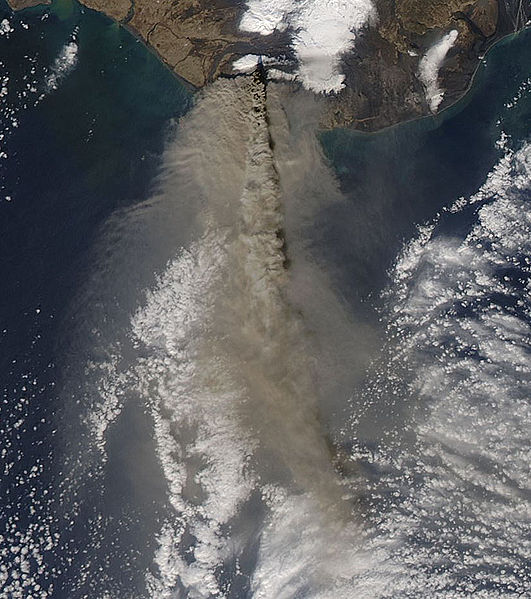
It isn’t just due to Iceland’s newest and noisiest volcano that we’re doing more overland travel. More and more of us are choosing to make the journey part of the holiday, or take a road, rail or sea trip to see more along the way.

Can you stop wafting that smoke in my direction please?

My own experience is that while the idea is very nice you should be prepared for a few adventures along the way. A few years ago I was asked to speak at a conference in Oslo. I was pleased about this as at the time I hadn’t been to Norway, and thought this was a good chance to see somewhere new. I walked into the office of my boss and asked him what he thought. ‘You can go…’ he said. I paused, knowing something else was coming ‘but you’re not allowed to fly. I want you to get there without flying and write an article about your experiences’.

I breathed in, both excited and slightly worried. The conference was a week away and I realised I had little idea how I was going to get there. I quickly worked out a route. The ferry was too slow and too expensive – this being the last days of the Newcastle to Bergen boat service – but trains, it seemed, would work just fine. I made bookings where I could and packed my bags for a big adventure.

The route was far from simple and I had planned some tight connections. Nine minutes in Brussels, an hour in Hamburg, half that in Copenhagen and half that again in Gothenburg. The railways of mainland Europe have a formidable reputation in Britain compared to our own frequently late and overcrowded trains, so I figured if I could somehow arrive on time heading from London to Brussels that everything else would go like clockwork.

Eurostars at St Pancras

The Eurostar pulled in a few minutes ahead of schedule and I sprinted to the platform for my sleeper service to be greeted with a sign saying the sleeper to Hamburg was four hours late. There was no explanation and no-one to speak to. I had no choice but to join the small band of night-train refugees huddled together for protection from the perils of Brussels-Zuid station at night. In an instant, I had missed every connection on my journey and had no idea what time I would get to Oslo. I lay down on a bench and cursed my boss in his comfy bed, oblivious to the chaos he had indirectly caused.

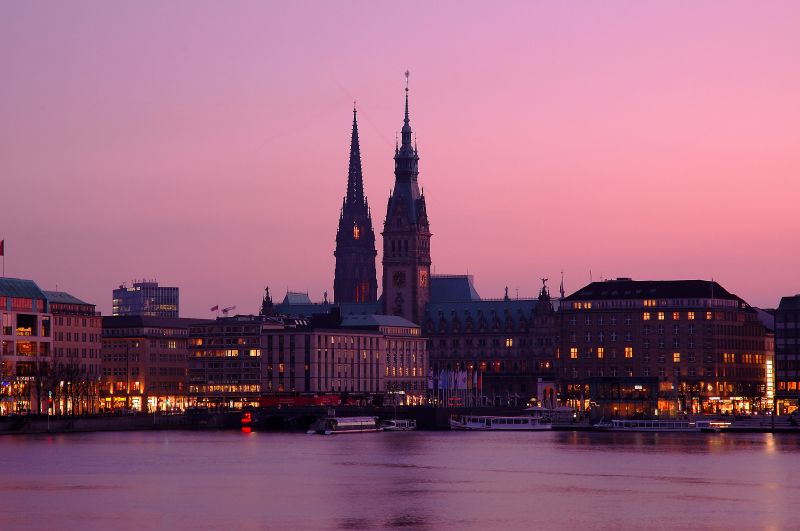
Handsome Hamburg

On boarding the sleeper I found another obstacle in my path. My travelling companion, a French businessman, had locked the door of my compartment and would not let me in. I knocked, rattled and shouted and eventually gave up. There was no guard in sight. I lay down in the corridor and tried to sleep before being woken two hours late by the same man heading to the toilet, then by the guard who threw me off the train at Dortmund aiming for a faster connection to Cologne. It appeared to be a smoking-only service. Things admittedly got better from there on in: trains improved in standard in Germany and Denmark, the ferry journey between the two was a marvellous journey where the train drove on and off the boat, and I even made a three-minute connection in the Danish capital. I added Hamburg to my list of great underrated European cities after a brief wander around town between trains. Crossing the Oresundsbron ticked another travel ambition off the list.

Øresundsbron

It was eleven o’clock at night before I arrived in Gothenburg, where I checked into the kind of small and depressing business hotel that becomes the refuge of the desperate and sleep-deprived and lay down for a few hours. The only train that would get me to Oslo in time was a 6am departure. I reached journeys end unwashed, exhausted and more than a little wired after such a long and strange journey. It had taken just over 40 hours from door-to-door.

Olso's new opera house

At the conference, which funnily enough was about ecotourism, I became something of a celebrity. I was ‘the guy who came by train’ and, rather than finding the hardships of the trip grimly fascinating  found everyone I spoke to was jealous. Many told me they would gladly have swapped another flight in a metal tube for seeing some new places and having an adventure. There were limits though and not many volunteers for dozing on a Brussels train station bench.

While this trip doesn’t compare with Amundsen or Heyerdahl’s adventures, it does suggest that ditching the plane sometimes can lead to something different, meeting new people and picking up a story or two. Maybe that’s why we all delight in tales of unusual journeys whether caused by a volcano or a mildly sadistic boss. With just a small but different decision, there’s a whole world out there waiting to be explored.

I took the plane home, in case you’re wondering.

Logistics

I booked my tickets through a combination of sources, arranging Eurostar direct, then using Deutsche Bahn‘s helpful UK booking office to get to Copenhagen. From there I could have booked as I went, but I made advance reservations through Trainseurope. The journey was a couple of years ago but cost in the region of £300 total. I flew back for considerably less than that with British Airways.

A Whirl-Blast from behind the hill

A Whirl-Blast from behind the hill
Rushed o’er the wood with startling sound;
Then–all at once the air was still,
And showers of hailstones pattered round.
Where leafless oaks towered high above,
I sat within an undergrove
Of tallest hollies, tall and green;
A fairer bower was never seen.
From year to year the spacious floor
With withered leaves is covered o’er,
And all the year the bower is green.
But see! where’er the hailstones drop
The withered leaves all skip and hop;
There’s not a breeze–no breath of air–
Yet here, and there, and everywhere
Along the floor, beneath the shade
By those embowering hollies made,
The leaves in myriads jump and spring,
As if with pipes and music rare
Some Robin Good-fellow were there,
And all those leaves, in festive glee,
Were dancing to the minstrelsy.

William Wordsworth