Category Archives: Uncategorized

Behind the scenes at Talking Travel: Lonely Planet & PRI The World’s podcast

The latest Talking Travel podcast went live today, talking about the World Cup, South Africa and, just to broaden the appeal, the Houston Rodeo.

Bush House - from London to the world

Recording the podcast is always fun, and requires a trip deep into the labyrinth of studios and corridors of Bush House, the iconic home of the BBC World Service. The inscription above the door of this wonderful building reads ‘Dedicated to the friendship of English-speaking peoples’.

Bush House is on Aldwych (definitive articles need not apply), the oddly-positioned buffer between the Strand and River Thames beyond and Holborn and Covent Garden to the north and west. Best known to older Londoners as giving the name to a disused stub of Piccadilly Line, the area is also home to the London School of Economics, the Indian and Australian High Commissions. Two superb churches, St Clement Danes (with Samuel Johnson lurking round the back) and St Mary-le-Strand, marooned in the middle of the busy road, can be found close by. Robert records from BBC America’s studios in midtown Manhattan, while Clark drives from PRIs HQ in Boston, Massachusetts, from whence sprang musical genius Jonathan Richman.

The podcast is a joint effort between Public Radio International’s The World programme and Lonely Planet, and contributors reflect this. Here’s a little more about the voices on the recording:

Clark Boyd

Clark Boyd in Hungary

Location: Boston, Massachusetts USA

Favourite destination(s): Edinburgh, Scotland, Santiago de Compostela, Galicia, Spain, Bryce Canyon, Utah, US

Next destination: Moving to Brussels, Belgium

What I like about recording the podcast: I normally cover technology for the show, so hosting Talking Travel gives me a chance to explore something new and different. I feel like I’m learning loads about one of my favourite things to do: travel.

Robert Reid

Robert Reid in Mexico

Location: New York City

Favourite destination: Home after a long trip, when curiosity radar is still activated and you see familiar things in new light; or Mexico

Next destination: A hobo convention in Mississippi, seriously

What you like about recording the podcast: It is simply a pleasure to be a part of, and I enjoy listening to the result – and learning from Tom and Clark – as much as making it.

Tom Hall
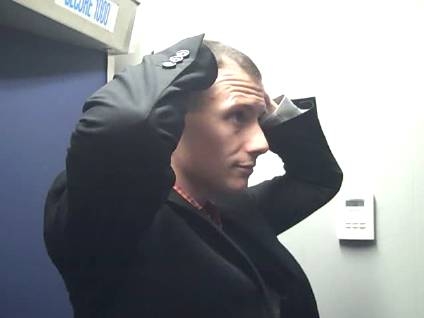
Tom Hall in X-Ray Machine, Manchester Airport

Location: London

Favourite destination: Paris, Rome or anywhere in Africa

Next destination: Cardiff, Wales

What you like about recording the podcast: having a chance to explore themes and destinations in detail, and the transatlantic banter.

We’d welcome your comments and suggestions for what you’d like to hear on Talking Travel, so get in touch if you have any thoughts.

Easter Island and the 2010 solar eclipse

This article first appeared, translated into Norwegian, in the March 2010 issue of Zine, hence Norwegian references.

Holidays are usually about chasing the sun. There may be the odd occasion when you choose to leave a beautiful country like Norway for somewhere wet and cold, but most of the time the quest takes us somewhere we can get a blast of tropical heat and a vitamin D overdose. It shouldn’t be a surprise then that eclipse chasing is, well, hot.

Earlier this year an annular eclipse – where the moon partially obscures the sun – provided a spectacular ring of fire visible from the Maldives, southern India, Sri Lanka and China. Many snowbirds who had flown south for the winter found themselves in the right place at the right time. The Eclipse lasted in parts for eleven minutes – the longest not only this century but also this millennia.

It’s not surprising then that Easter Island is proving quite a draw for eclipse chasers on July 11, when a total eclipse will pass over the heads of the islands famous statues for four minutes and thirty-nine seconds. The combination of somewhere utterly fascinating – and with a special pull for Norwegians brought up on stories of Thor Heyerdahl’s Pacific adventures – and an eclipse sounds almost too good to be true.

Hold on before you rush to book. Let’s consider what will await those who pay the inflated costs of getting to one of the world’s hardest-to-reach islands at eclipse time? I was lucky enough to visit Easter Island a few years ago, travelling from Santiago in Chile to Tahiti on the only international flight to pause and refuel here. In fact, the plane carries enough fuel to render the landing unnecessary, to counter the risk of there being no fuel available on arrival and the flight being stranded. There are also several domestic flights each week from the Chilean mainland to Easter Island.

I found the land of the moai a very special place, with an almost unbelievable history and sense of separation from the rest of the world. Visitors tour the island on horseback, on foot and by best of all by bike, and at night the main town of Hanga Roa rocks to a gentle yet inviting island ryhtmn. Like all remote islands it can have a lonely feel, and though I treasure having visited I was relieved when my flight came in. Now I’d return here before going anywhere else.

Tukuturi: aka the kneeling moai - and the only statue on the island with legs

Easter Island has only got more popular since then and flights haven’t got any less busy. Eclipse time will be the busiest of peak times. The islanders themselves are increasingly unhappy with the volume of tourists who visit – 70,000 came last year to a place with a permanent population of 2,500 – and it likely that every room on the island and then some will be filled up when with Eclipse chasers. This means big costs for those who do come. It may be the holiday of a lifetime, but be aware that it might take you that long for your wallet to recover. At least the enigmatic moai will be standing impassive and not asking visitors to pay a premium for a photo.

There’s one other risk worth considering. July is bang in the middle of the wet season and while blue skies are entirely possible, a cloudy day would not be unusual. The Total Eclipse which passed over the UK in 1999 did so through a blanket of cloud. I watched from the top of Parliament Hill in London, one of the city’s best vantage points, and the effect was a little like a series of progressively greyer clouds rolling over your head. Thousands of excited eclipse-watchers hooted and booed at the cloudy skies which seemed ridiculous at the time. We tramped back to the Lonely Planet office more than a little disappointed.

Viewing a solar eclipse may not be worth all the hype. There are certainly better times to come to Easter Island. But both are worth seeing and should have a space on every traveller’s must-see list. You could wait a year and see Easter Island at a quieter time, and make sure you’re closer to home on June 1 2011, when a partial eclipse will be visible over northern Norway. All this obeys one unwritten rule of travel: while you’ll want to go when everybody else does, it’s usually better to plan your trip for when the crowds are elsewhere.

Morrissey Shot

Moving house for the second time in six months. Putting books away unearths memories again. Well loved old favourites get dusted down and packed off, destination another bookshelf. Some catch your eye and demand a leaf-through.

Morrissey Shot

Chief among them is Morrissey Shot, Linder Sterling‘s spectacular photobook from Morrissey’s solo golden years, 1991-92. In this period Mozzer shed the seclusion of his early solo years, released a succession of wonderful singles and albums and formed an unlikely songwriting and touring partnership with a pack of rakish Kentish Town quiffed-up Rockabilly boys. The concerts, including the marathon Kill Uncle tours, were the first chance a generation of post-Smiths fans had to come together. The level of fervour and celebration has never been matched since.

Sterling’s photos capture the fun and curiosity of this time.

Morrissey looks fabulous throughout, mysterious and imposing on stage, at turns playful and melancholy off it. Boz Boorer and the rest of ‘The Lads’ as clueless critics dubbed them lark around in the background. Through it all fans provide constant inspiration for Sterling. Several shots capture fleeting, tender moments between fan and singer, a snatched moment indelible to the fan, one of thousands for Morrissey. The faces of the crowd, from Dundee to Tokyo, are potraits of wide-eyed excitement. There are a few examples here.

Morrissey went on to record two of the best albums of the 90s – Your Arsenal and Vauxhall and I – then end the decade in exile. Fans continued to believe and fight the good fight against lazy critics of a genius. His concerts are still wonderful, celebratory affairs – you’ll see quiffs, hearing aids and flowers harking back to the mid-eighties – and it would be a disaster to miss Morrissey when he passes through your town. But to see him at his most handsome, his most creative and most alive, seek out a second-hand copy of Morrissey Shot.

Notes from Northern Ireland: pubs, murals and an airport named after a footballer

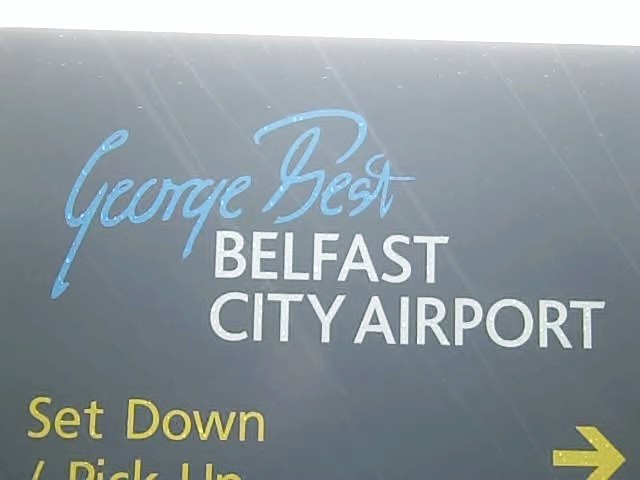
As you might expect from a city at the northern tip of an island in the Atlantic Ocean, Belfast is not always a dry place at the end of February. It poured down from the moment I stepped off the plane at George Best Airport until I took off again.

An artful long pass from the city centre

George Best Belfast City Airport is the only one in the world named after a footballer. Unless Buenos Aires or Três Corações get around to renaming their air terminals after hometown boys Diego Maradona or Pele there will be no airborne association with a more gifted player. Best is everywhere in Belfast and a true unifying figure in a city which still has visible divisions, even if today’s Belfast is very much looking forward to a shared future.

King of pubs

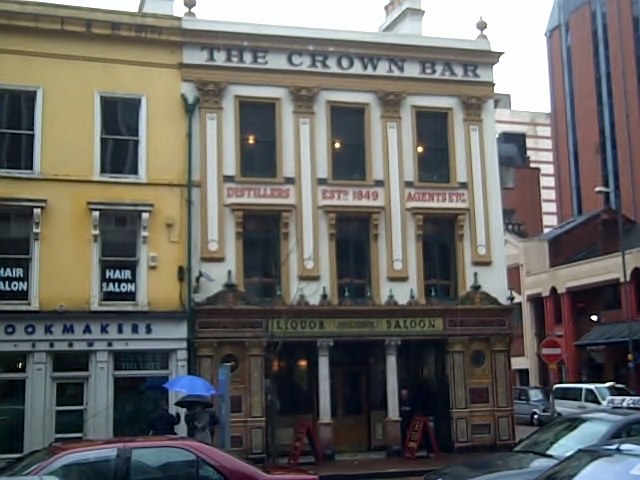
I was only in town for one night but dropped in on the Crown Liquor Saloon. This pub is a Victorian folly that somehow made it as a boozer, complete with ornate woodcarvings, neo-Gothic decor and huge private booths that hide you from the outside world. I congratulated myself on snagging one, only to realise you’re totally left alone once inside and that it was more fun chatting at the bar. Strolling the city in the evening drizzle I happened upon bands setting up to play gigs in the bars tucked away in the cobbled Cathedral Quarter and hotels like the Fitzwilliam offering upscale drinking and dining that was too trendy for a soggy corduroy-clad hack like me.

Belfast Wheel by night

The next morning I had a chance to look around. City Hall, the visible expression of the nineteenth century prosperity, the end result of Belfast’s status as one of the world’s manufacturing and shipbuilding powerhouse has excellent exhibitions and a great guided tour. It’ easy to find, next to the Belfast Wheel which is the best place from which to see the changing skyline. If big ships are your thing – and the giant Harland & Woolf cranes which are visible from all over the city prove that it was Belfast’s thing for generations – then don’t miss the fascinating Titanic Trail and accompanying boat tour. Both take in sights associated with the ill-fated ocean liner which left here – working perfectly, as locals will point out with tongue firmly in cheek – a hundred years ago next year. You’ll also find an art trail hugging the banks of the Lagan River, including this fishy fellow below.

A visit to West Belfast, still home to large working class Catholic and Protestant communities, is the best way to get a handle on the Sectarian divide which shaped the twentieth century history of the Northern Irish capital. Many come on excellent and informative Black Taxi Tours. I opted to go on foot, and suspect I was the only person to walk down both the Shankill and Falls Roads that day. Both areas are aware of their attraction to visitors and the both local communities and the city council have signs and maps to direct casual visitors around and make you feel welcome.

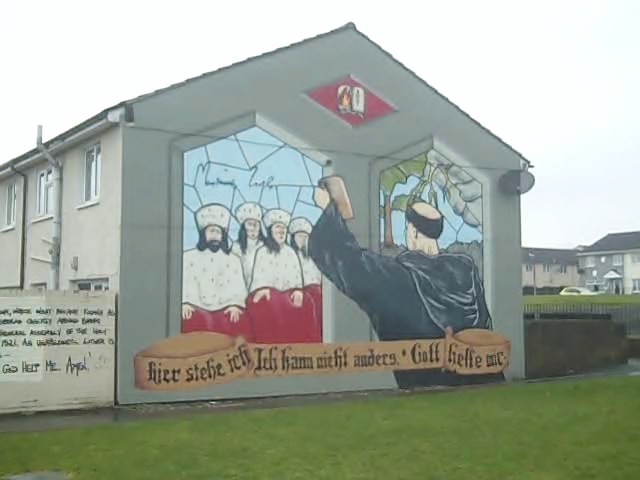
Martin Luther in the hood

It is hard to avoid the sense that these murals belong to the last century, not this one. The first mural you come to walking west along the Shankill Road no longer homages the loyalist cause but makes a proud claim on the area being the earliest of Belfast’s settlements. Yes, you’ll still find militaristic and political murals, and other monuments while exploring both sides of West Belfast, but the more recent renewals are more benign and hopeful and in many places offer outlets for imaginative local artists. My favourite, found elsewhere in the city, is this one devoted to one of Science’s most philosophical questions. I passed it while out running so was camera-less.

Interesting place, Belfast. It has centuries of history, a few cracking hotels and anyone who grew up with Northern Ireland looming large in the news would do well to go and see it for themselves. The city sits in the shadow of some towering mountains and is close to some lovely coast, meaning with a few extra days you could see a lot of what Northern Ireland has to offer. Bring an umbrella.

Ask Tom: now online at Guardian Travel

Some of you have been swinging by here looking for the page I until recently contributed to the Observer newspaper in the UK.

Sadly the last Escape has now been published and travel’s taking a back seat in the newly revamped Observer which makes its début on Sunday – and very sexy it promises to be too. The first Ask Tom appeared in the Observer on 22 April 2001 so it’s been a long run and has been the source of a lot of challenges and fun, especially when dealing with readers queries. Rachel Suddart and Fiona Buchan (nee Christie) also contributed to the page in its early stages.

Notable among letters received have been those from an angst-ridden couple venturing on a camping holiday wondering what to wear in bed (pyjamas), a memorably grumpy gent driven to distraction by texts, emails and phone calls whenever he goes somewhere interesting asking him what he ‘s doing (try trekking in west Papua where phone and email don’t go) and not one but three letters from prisoners enquiring about where they can flee to that would not deport them back to the UK (I have no idea, try a lawyer).

Happily this isn’t the end of my own work with the Guardian & the Observer. Ask Tom is moving to a new home online at Guardian Unlimited, and as well as the usual q&a on any travel subject under the sun I’ll be doing a monthly live chat and hopefully some audio and video. The first of these pieces is now live. There’s an archive of previous answers here.

The email address for questions is the same as the one on this site, so drop me a line, it would be great to hear from you.

Helsinki in February

Visiting the capital of Finland in February isn’t everyone’s idea of a fun time. It is cold, very cold, -12c during the day. There are huge piles of snow everywhere. The noise of cars skidding on roads is a constant backdrop. This is how I’m completing the set of Nordic capitals and it’s thrilling.

So, how just how snowy is Helsinki in February?

(Still shots from a Flip, excuse the quality)

Snowy statues at magnificent Helsinki Central Station

Near-criminal negligence

Hover-ferry arriving into frozen harbour

Mighty Tuomiokirkko

Unexpected cycle rides from London: St Pancras to Southend

St Albans is a good place to aim for if you’re a central London based cyclist in a hurry. Start from St Pancras International, with a ride on the railway line which connects two ancient Christian martyrs.

St Pancras Station

St Pancras, who gave the area, which in turn gave your departure station its name, was a Roman teenager martyred in 304 for converting to Christianity. His legend accompanied Roman soldiers to the camp located in nearby Somers Town. He was quite a hero figure for early Christian in Britain and there are many churches and sites dedicated to him. St Alban was the first British Christian martyr, who met his end at some point in the third century AD.  He was according to the Venerable Bede executed in Verulamium, the Roman settlement which is today St Albans. If you seek his memorial you’ll find it in St Albans Abbey. It is not a ludicrous suggestion that Alban should replace Palestinian lizard-stabber George as England’s patron saint.

St Albans Abbey

You can ride out but I’d rather swap twenty minutes on the train for an hour fighting traffic through Kilburn and following the ugly-lovely Edgware branch of the Northern Line. The exception is the climb up Brockley Hill, a worthy test which gives you time to puff and ponder that the Northern Line would once have come this far en route to Bushey Heath.

It is a 20 minute train ride from St Pancras (less from Kentish Town and West Hampstead) by fast and frequent service and you’re straight out of the station and away. Left turn, right up the High Street, fork right up the hill to where there’s a glimpse of the abbey and off into the Hertfordshire countryside. Pretty villages like Wheathampstead, Ayot St Peter and Codicote come quick as you ride through the lanes of classic cycling country.

Less obvious is to then edge 100 miles east to Southend-on-Sea. But this is a fine ride. It’s rural and quiet and, unless you decide to do it on a snowy day like I did, you can weave through quiet roads and pop into larger towns as needed for sustenance.  Route finding requires a map: Collins 30 Miles Around London worked for me. The OS 1:250,000 South East England. I like the Polaris Maptrap for keeping your map in view.

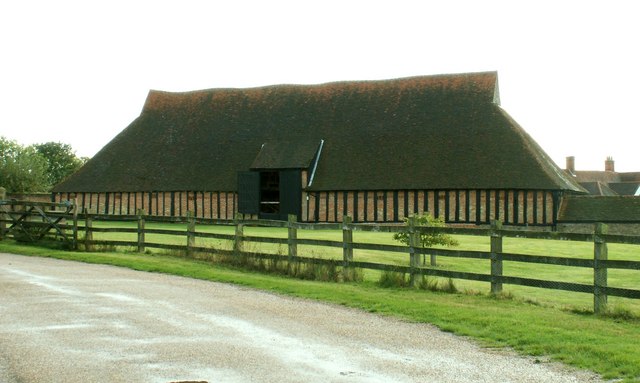
The route snakes its way east across Hertfordshire and into Essex south of Bishop’s Stortford. The B1256, predecessor of the A120 is your friend to and through the cockneys-made-good town of Great Dunmow. As pleasant and rural as the name suggests, I thawed out with a brownie and a coffee in a fab cafe here. I then skirted south of Braintree and past the epic and ancient Cressing Temple Barns. Villages in this part of England has Germanic crests at their parish frontiers and still feel like small fiefdoms. It’s only in larger towns like Witham that I came too next that you feel the modern world has made inroads.

Cressing Temple Barns: 300 years older than America

By now the rolling hills of north and west Essex were giving way to flat, marshy stuff and inclines were at a premium. I missed the turning for my planned lunch stop at Maldon and bashed south to the muddy River Crouch at South Woodham Ferrers. It is not as glamorous as it sounds. But is is more glam than Southend-on-Sea. Reached by cutting, illogically, west then turning finally south-east through Rayleigh – via a giant hill which probably wasn’t necessary – it is not a place worth riding almost a hundred miles to get to. But the seaside town has its charms and journeys end is always nice. Hit the seafront, breathe deeply then retreat to the genuinely lovely Westcliff and Leigh-on-Sea for a well-earned fix of whelks and mussels.

Southend from the Pier

Trains back to Fenchurch Street are every few minutes, with a few steps to negotiate at the end and a gentle weave through London’s traffic to home.

Undertake this route and you may just be the second person to follow it. Do let me know how you get on if you attempt it!

Distance: 86 miles
Time: 6-9 hours
Elevation:  6/10

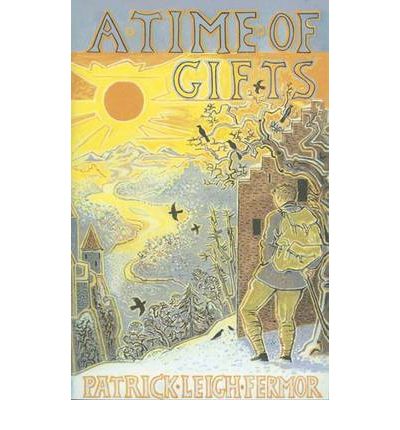
Classic Travel: A Time of Gifts

A Time of Gifts is everything a travel book should be: brilliantly written, educational, inspiring and full of memorable anecdotes that, once read, appear like ghosts in the reader’s own journeys.

It begins with a simple decision. It is December 1933. 18 year old Patrick Leigh Fermor can’t decide what to do with this life, so he decides to go for a walk. Full of the vim of youth, he decides that Constantinople is his destination. Resolved to this gently eccentric trip, Leigh Fermor proceeds to carry it off, armed with a stick, a few possessions and occasional pickups of money from home.

As the story progresses his naive charm works a magic spell, turning a trip that promised months of freezing nights in hedgerows into being put up in castles and fine apartments. Leigh Fermor never loses his edge though, and once back on the road returns to the traveller’s life with endless enthusiasm.

Two features of A Time of Gifts jump out and linger long in the memory. The first is Leigh Fermor’s prose which is rich and lively. He deserves the title of the greatest living British travel writer. While in part the lucid nature of the writing is due to the author writing – in 1978 – as an older man looking back on an adventure rather than scribbling in the moment, and therefore being able to weave in the astonishing knowledge he possesses, it is also the obvious thrill of discovery and the simple delights of an utterly free life that makes the book special.

Once read, I’d defy anyone to not recall the noise of the ice skiff charging along frozen Dutch canals or share the joy of rummaging around a ruined castle on the banks of the Danube, when considering a journey to the areas visited today. The Europe the book describes disappeared forever in 1939, and the lands travelled through in A Time of Gifts feel foreign and distant. That said, it remains a richly rewarding companion on a journey to the continent.

There is a sequel, Between the Woods and the Water, which takes the journey from the Hungarian Border to the Danube gorge known as the Iron Gate in what was Yugoslavia. Leigh Fermor did make it to Constantinople fourteen months after leaving Tower Bridge, but that was not the end of the adventure. The author went on to fall in love with Greece and a Romanian noblewoman with whom he lived with in Athens and Moldavia, and serve in the Irish Guards during the Second World War. Later adventures in Greece and the Caribbean, marriage and a life divided between England and Greece followed.

There has not yet been a third volume. Patrick Leigh Fermor will celebrate his 95th birthday on 11 February.

Suggestions for your favourite travel reads are welcome. With what’s left of winter, warm yourself up with A Time of Gifts.

Photos of Bath just after dawn

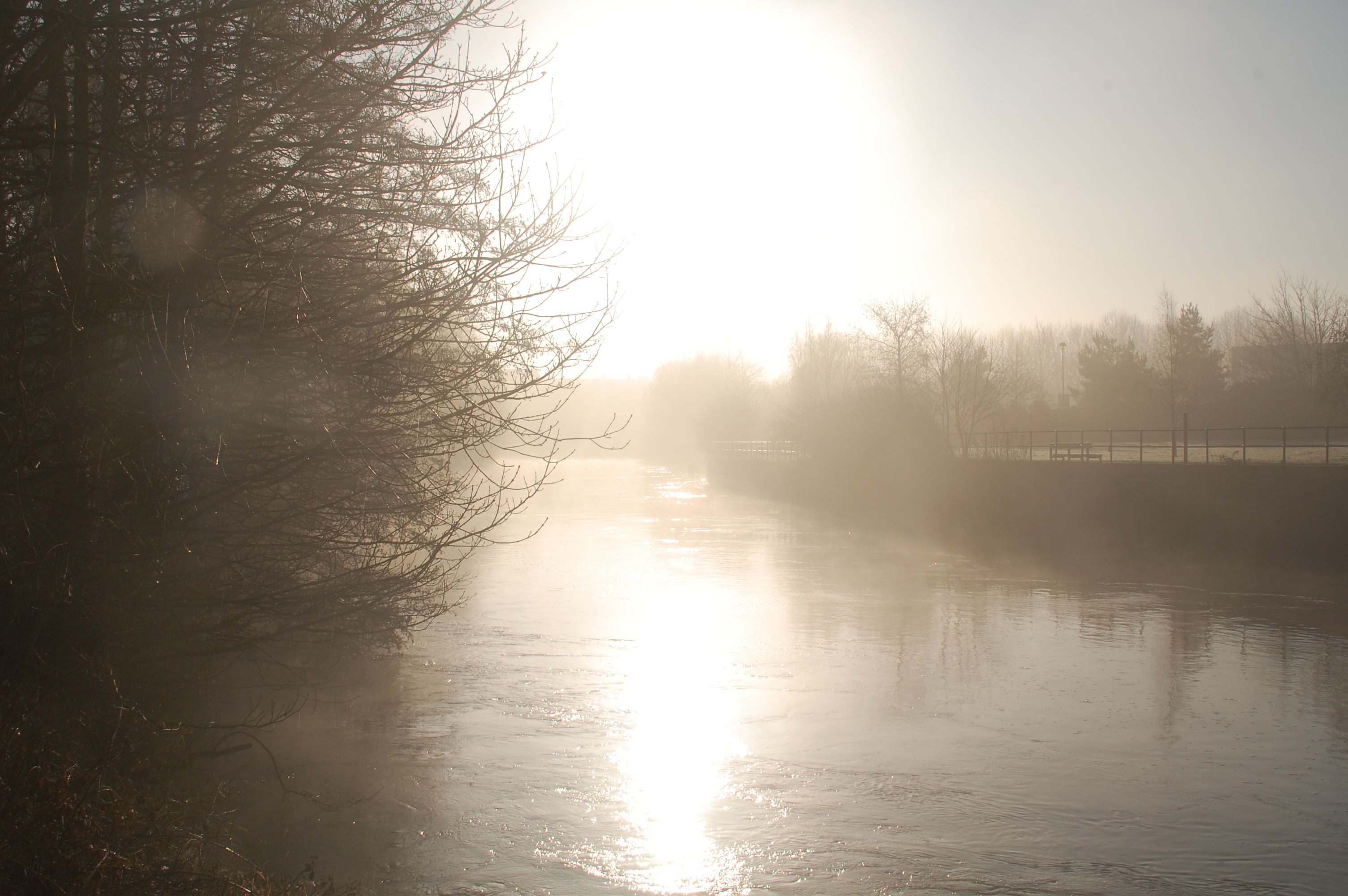
A few pictures from a visit to Bath, England’s most completely beautiful city. These were taken by the Victoria Bridge, also known as Dredge’s Patent Bridge across the Avon, west of the city centre.

The Avon in early morning sunshine

The Avon is most often glimpsed from visitors gawking from around the Pulteney Bridge. Downstream it flows fast through rolling fields, even close to the centre of Bath.

Bristol & Bath Railway Path

The Bristol and Bath Railway Path is a lovely place for a stroll, run or bike ride. As the name suggests, it links the two cities via a disused trackbed. In a style that will be familiar to anyone who has ridden the C2C, you’ll find unusual art along the route.

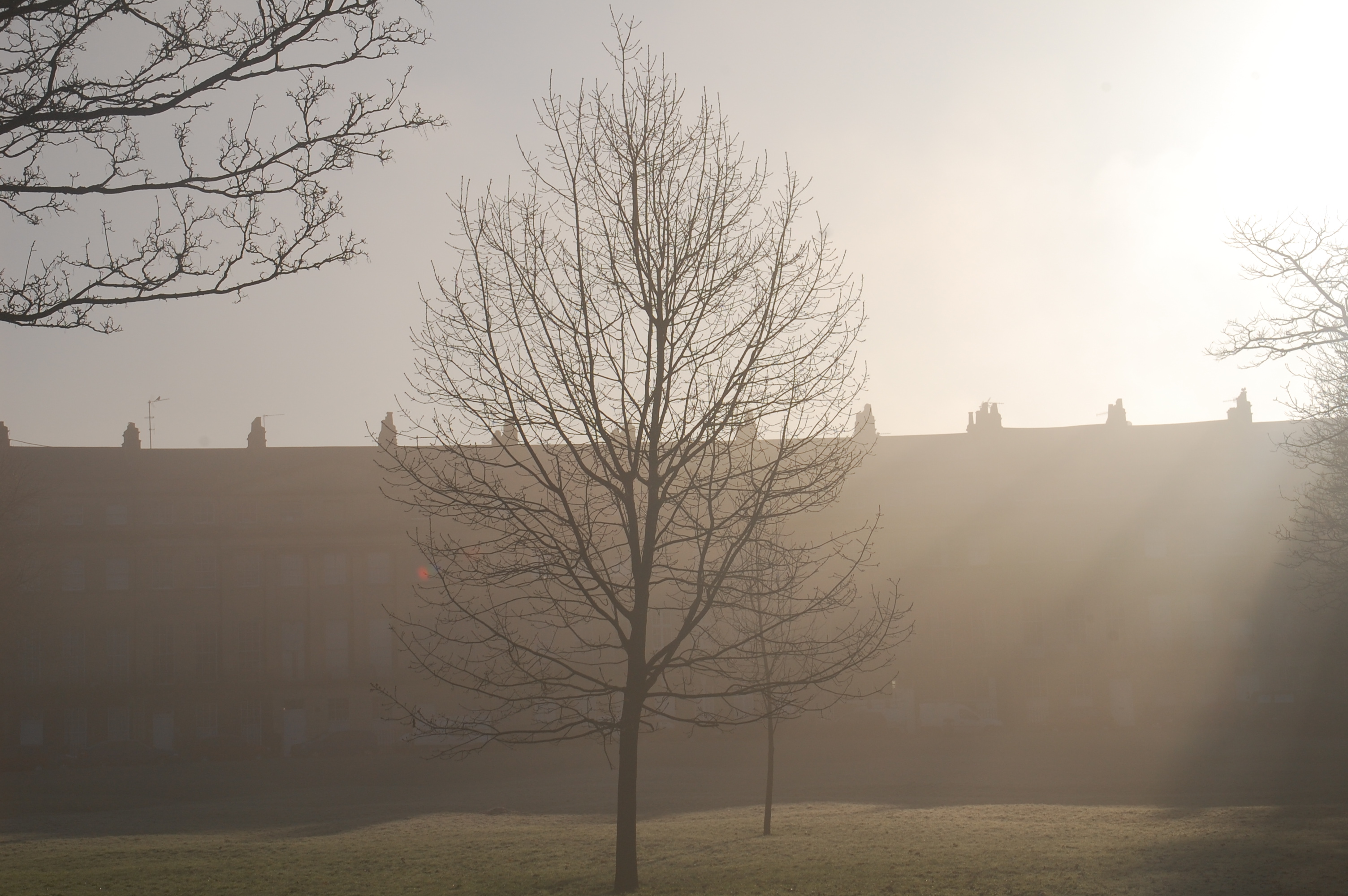
Norfolk Crescent, Bath

Bath has so many gorgeous honey-covered crescents that after a while you stop noticing them. Norfolk Crescent faces a handsome green which fronts on to the river path.

Secret London: Happy Birthday, Herbert Chapman

Big Herb

On 19 January 1878 Herbert Chapman was born. 132 years later, he still has a convincing claim to be the greatest of all football managers. Best known for turning Arsenal from a middling First Division side into the great powerhouse of the pre-war game, he just as remarkably delivered an FA Cup and two league championships to Huddersfield Town, as well as establishing the momentum for their third. Chapman was a great innovator, modernising football formations and presenting compelling cases for numbered shirts, artificial pitches European club competition and floodlit matches.

Herbert Chapman's grave in St Mary's, Hendon

Chapman died on January 6 1934, mid-way through Arsenal’s hat-trick of titles, as a giant of the game. He is buried in St Mary’s Parish churchyard in Hendon, north-west London with his wife, Annie Bennett Chapman. Annie lived to see Arsenal win four more titles, passing away in 1958.

I paid a visit here with my youngest son, still too young to argue with such a silly outing, on Sunday. The churchyard is quiet, with a rural feeling harking back to Hendon’s pre-suburbia village life. It’s a pleasant, peaceful place to visit, though the wind gets up a bit on a Saturday afternoon if Arsenal are losing. And if you’re not in the area, there’s the Herbert Chapman pub on Holloway Road, bustling on matchdays, and the old East Stand at Highbury which his achievements made possible. Happy Birthday, Mr Chapman.