Category Archives: Uncategorized

How to do travel writing

Beware, long post!

Before I post this I should make it very clear that I am not making any claims for myself to be a successful Travel Writer, nor would I describe myself as a Serious or Proper Journalist. Like I suspect most people who write about travel I do other things with my time too, and manage to make writing one part of making a living.

There are bad places to visit

Why I’m writing this, however, is in response to the very nice emails that I get sent now and again asking for tips on ‘breaking into travel writing’ or amorphous concepts like that. I’ve found myself giving the same suggestions time and again. Maybe some of you might come to this site looking for suggestions. Either way, I hope you’ll take these suggestions in the spirit they’re intended.

It’s been nearly twelve years since I got my first job in travel, and in that time I’ve noticed a few things that link together most people who make some sort of a living from travel writing. They tend to be very driven and enthusiastic individuals, as I’d imagine is anyone who manages to make money from something lots of others aspire to do. They go to the end of the road, work contacts and check, check and check again. When it comes to wanting to find something out, the guidebook writer to a country tends to know first and best – almost always far better than the tourist office or embassy of a country. If you don’t share this drive then I am sure you’ll find getting going hard going.

Next, they love the world and they love to travel. There’s nothing too hard about this and it’s what brings most people to the idea of travel writing. Note that there are two words in this phrase though – travel AND writing. If you’re doing the former, are you doing the latter? Are you keeping a blog which is an instant portfolio for your work? If not, then you’re missing out on a chance to show and tell anyone what you do – and how well you do it. It should have your contact details on it too. A lot of freelance work comes my way from people finding my blog and emailing me. Others have had TV and radio work and even book publishing deals come to them through this route.

Bueno photo, Diego

A small reality check. Very few people are full-time travel writers. I know how bad my attempt at being Bill Bryson or Paul Theroux would be. I’ve no idea how good yours would, but publishers aren’t exactly falling over themselves to publish travel lit right now. If you’re not a celebrity then it’s very hard to get someone interested in your bike ride from Bognor to Bhutan. Don’t lose heart though, you may be able to sell some pieces about this trip either while you’re away or when back.

What most people think of when they think of travel writing is going somewhere, writing an article about it and being paid for it. Then maybe doing another, and another, and then making a living from it. In fact, the majority of travel writers spend much of their time writing or updating guidebooks and writing about things other than just travel. I’ve done guidebook work but I’m not an expert. For that, think about following some of the top-notch travel writers you’ll find on Twitter like Paul Clammer or Nicola Williams, and have a read of the Travel Writing book I mention below. Leif Pettersen’s blog post on guidebook writing is an excellent read. There are details on writing for Lonely Planet here.

So what about selling an article? Impossible? No. Difficult? Of course! If not everybody would be doing it. Selling pieces is a tricky business, and people often ask about whether to submit a precis or a whole piece. I’d go for the former, though sometimes the latter is more appropriate.

Put yourself in the shoes of the Travel Editor at a national newspaper. They’ve got great jobs on one hand, but don’t be fooled into thinking they travel all the time. Often, they’re the most desk-bound people in the industry, working very long hours to get that week’s supplement out the door or, increasingly, stretching their working days to produce fast-changing online travel sections. One Travel Editor once told me that they received something like 30 unsolicited pitches and articles from people they didn’t know every day. Over a month that’s 900 pitches. Of these, they may take one. Or two. They also have an avalanche of email from travel firms trying to promote their holidays, flights and packages. The tough truth is that your 1500 word piece, sent in for consideration, may not even get looked at. Instead, then, send a snappy 75 word summary of the piece, stressing why it’s of the moment and why it’s right for the audience of the newspaper. It needn’t be about travelling to the ends of the earth.

Another Travel Editor I spoke to last year, at the height of the second coming of British holidays, lamented the dearth of inventive pitches on corners of England she’d love to have commissioned articles on: Lincolnshire, Shropshire, Essex and Notts.

So that’s quite a hurdle to jump. Ask yourself this though: is your pitch sharp and suited for the newspaper or magazine’s audience? Is it topical? Don’t overlook the latter. You might have a great idea for New Zealand, say, but it may be better to wait until the Rugby World Cup next year, when the country will be in the spotlight. Similarly, move fast. American travel pages have had plenty of London coverage off the back of the Royal Wedding. That could have been you if you’d have been quick. You might even get a reputation as someone who can write and deliver accurate and relevant copy at short notice.

Before I move on to more cheerful matters I should also add that your article, when published and beautiful will get you somewhere between £200 and £400. That may not cover your costs. But think about how wonderful it is to see your writing in print, talking about a memorable trip. This isn’t all about money.

Is your piece on track or hitting the buffers?

The good news is that there are more ways in than there used to be. I’ve already mentioned blogging as a way of building a portfolio. You’ll find like minded travel bloggers and tweeters organising meet-ups all over the place. These are good ways to meet people and make contacts. You’ll find plenty of sites who’ll publish your work if it’s good enough. They probably won’t pay but the networking benefits are there. Like lots of tough jobs to start doing you may find it helpful to do some things for people for free. Lost of people disagree with me about this and say you should never, if you want to be a Serious Writer, write for free. Such decisions are interesting and await you down the road.

If all else fails there

Other tips?

I’d also strongly recommend getting hold of a copy of Lonely Planet’s Travel Writing guide, written by Charlotte Hindle. It’s full of useful tips.

Get some formal journalism training so you can use shorthand and understand how to structure news and feature pieces. I’m being hypocritical here as I don’t have this. I wish I had.

Take pictures too. This is especially valuable if you go somewhere interesting. I’ve lost commissions due to a lack of decent photos. Durr.

Always note you are writing for an audience rather than yourself, and know who this audience is. It’s not you. You should sit quietly in the background as the place and the people you meet come to the fore. The exception is when you do something stupid. Then you can push yourself out there as the hapless clown. Everyone like a good travel disaster story.

Lastly, and most importantly, I would urge you to commit to being excellent. I’m surprised at the number of people who send in pieces without having read and re-read them and polished the prose until it shines. Read it out loud. Ask someone else to read it. It’s your work, be proud of it.

Online Travel Journalist of the Year

Funnily enough I was awarded Online Travel Journalist of the Year at last night’s Travel Press Awards.


This is me getting a nice big paperweight from Francine Sheridan, LAX Los Angeles World Airports.

It was quite noisy so I couldn’t hear what they said, but the judges (thanks judges) liked my work with the Guardian, especially a special live Q&A for travellers stranded by the eruption of the Ejyafjallajökull volcano, as well as blog posts and use of social media.

The event was at Paramount at the top of Centre Point, one of London’s most iconic buildings. The views of London at night, especially St Paul’s and the City, were magnificent.

By the way, if you’re not in the US, you may have missed my recent appearance on Entertainment Tonight, talking about my specialist subject, the upcoming Royal Wedding.

Brompton World Championships

Brompton bikes are – sorry Boris – the commuter’s friend. In fifteen seconds – ten if you’re quick – you can be off down your chosen road, quick as a whippet. When correctly liveried in jet black they’re the heir apparent to London’s black cabs. Best of all, they’re astonishing fun to ride and almost

All that said, Sleek racing machines they are not. Try riding one downhill. London, having largely a flat centre, rarely exposes the high-speed flaw of a Brompton. Without the big gears of a road bike, a descent renders the rider into a fine approximation of road runner, all whirring legs and benign expression.

The annual World Brompton Championships is slightly different to the full-scale component. Firstly, the race is a free-for-all. Anyone can enter provided they have the requisite folding bike. The race takes place over two laps of a winding, undulating course through the grounds of Blenheim Palace in Oxfordshire, adjacent to the town of Woodstock. And anyone entering must be dressed in, what else, a jacket and tie.

Having bored many of my friends into submission about the wonders of Brompton entering felt like a natural step. Plus the Evenlode, an interesting and previously unexplored tributary of the Thames, flows close by. It may have been early October but the prospect of a dip in a river and a dash on the Brompton was too good to resist.

So it was that I found myself standing in pouring rain next to four Belgian dressed in dicky-bows with plastic ducks dangling from their helmets. Muddy pools of water were forming around the brown and cream brogues I had on to compliment the 1940s pinstripe suit I was wearing. At the sound of the horn the 99 other riders in my pen and I hopped over the rope and ran over, Le Mans style, to where our Brompton’s sat in geometric order. I had to push and shove to get to mine, and promptly forgot how to assemble the bike. I swore a bit and fiddled and eventually got going, onto the road and into a howling gale.

The next thirty minutes were some of the most enjoyable cycling I can remember having. OK, so I overtook plenty of people, especially on the second lap, and that’s always fun. But the buzz is slightly lessened by whizzing past someone on a purple Brompton, dressed as a purple princess complete with purple wand. The real joy was the sense of English silliness of riding a small-wheeled wonder in the rain, on a twisting course through the estate of a country pile. In a suit. In the pouring rain.

And then it’s all over too quickly. My time of 30 minutes won’t rip up any trees, but it felt very swift on a bike with wheels only slightly larger than a seven-inch single. I wonder if they’ll let me ride the hundred-mile sportive in my brogues next year?

An Oxfordshire village

Warborough, just down the road from Dorchester in Oxfordshire, is not really on the way to anywhere. It’s not in the Cotswolds, nor is it located by the steadily-widening Thames which rolls by at Standlake. It’s not even on one of the sweet tributaries to Old Father Thames, like the Evenlode Or the Windrush, which meander through the county offering wild swimmers the promise of a dip in idyllic – if possibly not deep enough – fresh river water.

Maybe that’s why it’s managed to escape anyone’s attention this long. For this is a perfect English village, dating back millennia, A small slice of Eden hiding in the bullrushes away from the modern world.

To describe the place is to make bricks and mortar Ray Davies’ Vision of England immortalised and satirized in the 1969 classic The Village Green Preservation Society, and to offer a case study for WG Hoskins’ History of the English Landscape. I’m no local historian, by the way, so apologies if my observations are inaccurate in any way. I was distracted, you see.

Let’s start with the village green, Warborough’s open heart and gateway to fields and, beyond, the Thames valley and Vale of the White Horse. on the way here you might pass the picture postcard pub and what looks like a tithe barn. Replace goalposts and swings with strip-mined fields and pasture and you could have stepped back centuries. there’s nought more modern in the churchyard, where a Norman/early Gothic tower looms over a typically higgle-piggle house of worship. the Parish church has seen off the Wesleyan Chapel nearby, a reminder of a great revolution in faith from the nineteenth century that seems scarcely conceivable now.

Pub, fields, barn, green. Add ancient houses and no tourists whatsoever and you have a well-kept secret that makes for a lovely detour if you’re south of Oxford with time to tarry.

Everton away

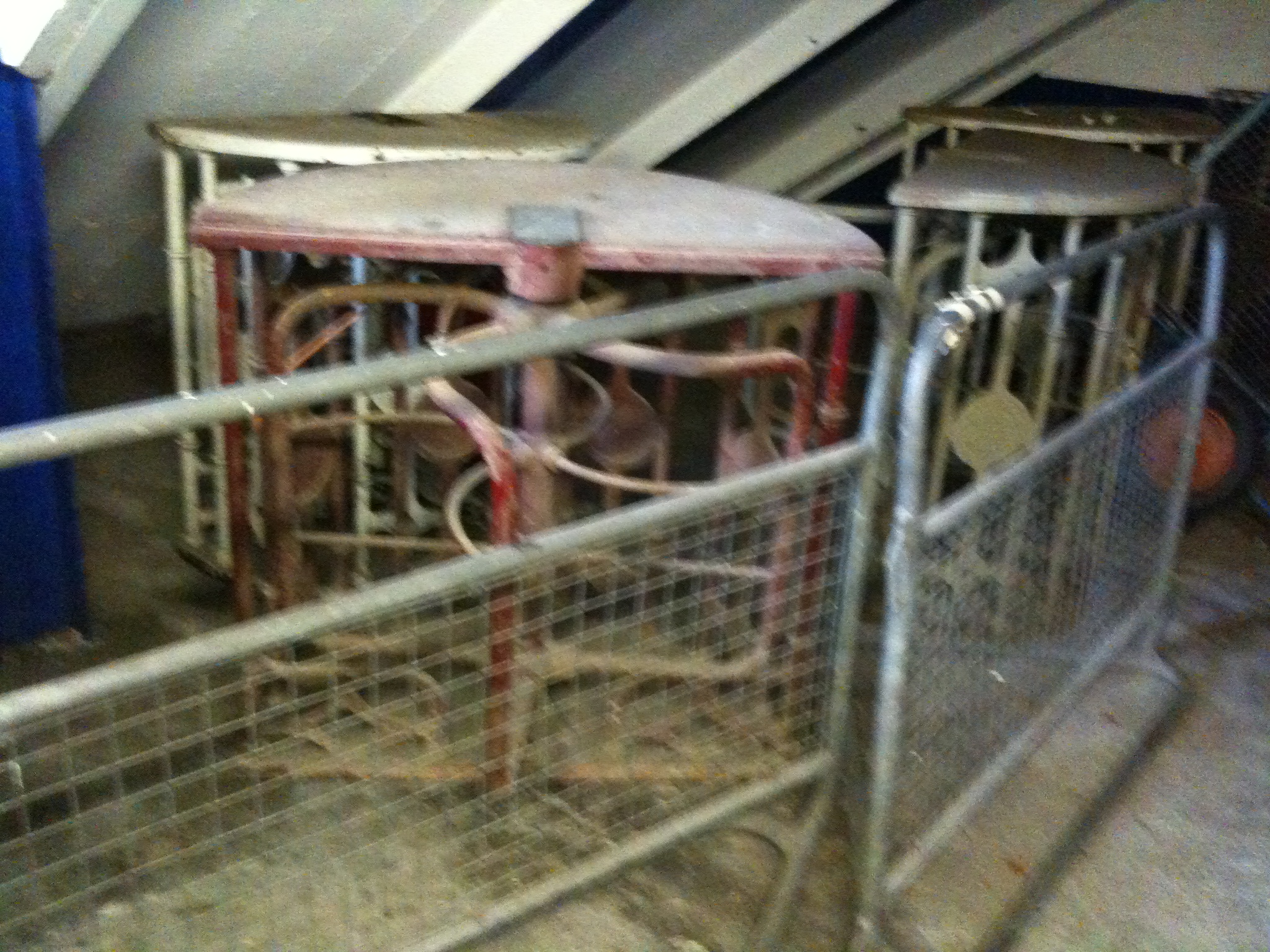
Old turnstiles gathering dust, Bullens Stand

Rush preventative turnstile

Pitchside punning


Happy travellers

Foxtrot Echo Lima Tango

Breathing the lonely word

Regular readers might know of my enthusiasm for Felt, one of the great lost bands. They’re a little less lost right now, thanks to Cherry Red’s reissue series and name-checking by the likes of Belle and Sebastian.

Another landmark in frontman Lawrence’s road to redemption and the legend status he always knew would come one day is the publication of Foxtrot Echo Lima Tango, a fanzine devoted to the band. The first edition sold out quickly, but a fresh print run has just become available. It is limited in numbers but is £10 very well spent.

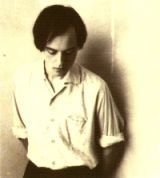
Lawrence: (sur)name dropper

Fanzines were the predecessors of websites devoted to bands. Hacked together with little more than scissors, glue, a (possibly illegally) commandeered photocopier and bags of enthusiasm. I loved music and football zines, especially for their DIY can-do approach. Smiths Indeed typified them.

Foxtrot Echo Lima Tango is something else though. It’s as beautifully written and thoughtfully packaged as Felt’s albums, and as close to a miscellany about this most mysterious of bands as you’ll find. Reading it makes Felt’s place among bands like the Jesus and Mary Chain, the Smiths and Cocteau Twins in the canon of 80s guitar music much clearer, and you’re sure to laugh, frown and read open-mouthed about the band’s near-misses with fame.

So big up Christian and Mike for shining a little more light on Felt. Read and listen on.

The back door to the Lakes

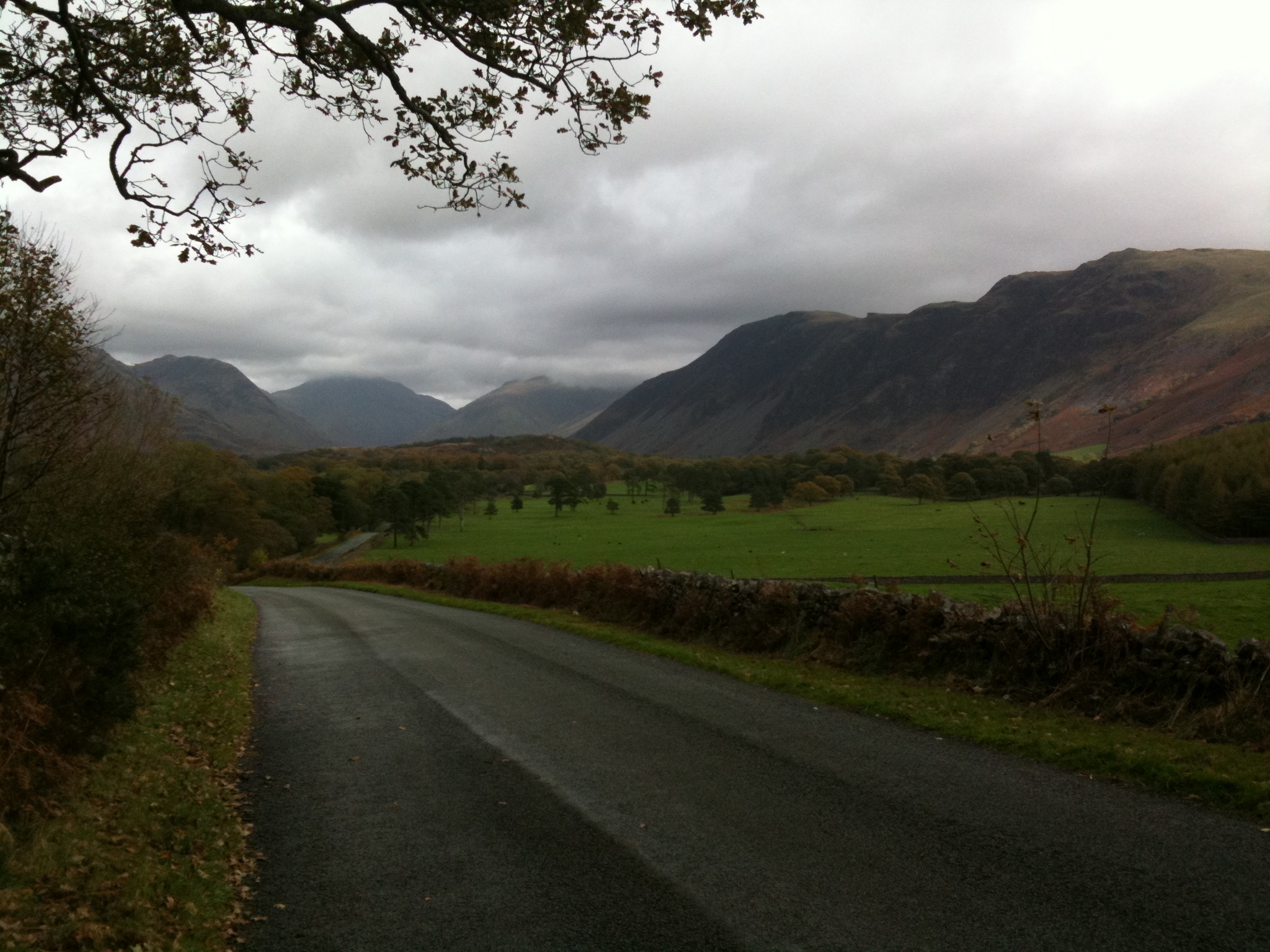
Distant Wasdale

The best way to reach the lakes? The snaking, traffic-trodden M6? Crammed up against a beer-bellied chap with a large bag on a west coast mainline train to Oxenholme or Penrith, then begging a lift? How about none of the above?

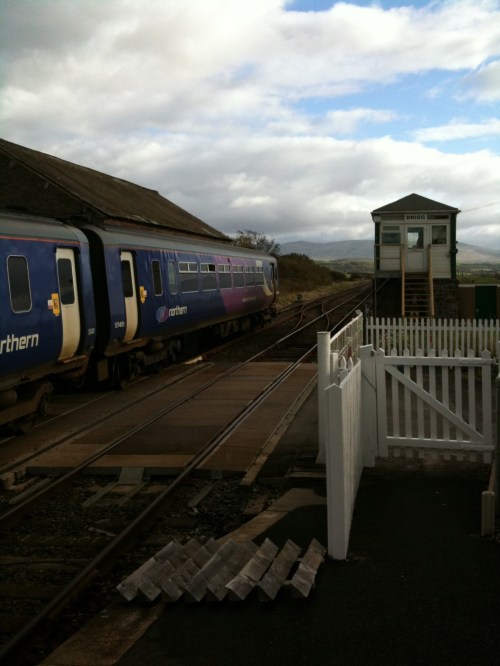
Lost in the world of modern railways is the Cumbria Coast Line, a two-coach throwback to another era, complete with request stops, signal-box attendants who double as gate-keepers for level crossings and an abundance of wonderful scenery. You’re probably not surprised by the looming, brooding fells – though Cumbrians are a no-nonsense bunch and you won’t see poets scribbling lines in awe of the hills on board – but the delicate wetlands, estuaries and tidal flats of the coast are less celebrated. Yet this is a journey to savour.

In fact, the Cumbria Coast line may save you time too. The south-western fells around Wasdale are notoriously time-consuming to get to from the motorway. If Langdale and Borrowdale are an hour from the big roads, Wasdale can be close to double that. Ravenglass, Drigg and Seascale are all ten miles or so from the western tip of Wasdale, and can be reached from London, with kind connections, in four and a half hours.

The lakes unfold slowly and deliberately. Just north of Lancaster station, where you’ll leave the main line unless bound to do so at Preston by a service running fewer options, you’ll get your first view if the mountains glowering at Morecambe Bay. Though this is the best known of the tidal flats n the Lancashire and Cumbria coasts it is by no means the only one. Carnforth, famous as the setting for Brief Encounter, is next, with rusting boilers from steam engines sitting alongside mighty diesels at Steamtown, an open-air museum dedicated to locos from the past. At Barrow-in-Furness, where the Royal Navy’s submarines are built you change from the zippy sprinters services to the Cumbria  Coast line proper.

There’s more for rail-buffs of all ages at Ravenglass, close to my one journeys end. Here L’al Ratty, a narrow-gauge railway, climbs up to eskdale on a very scenic journey. Muncaster Castle next door offers tamer appeal, with gardens alive with colour year round.

drigg.jpg

Request a stop at Drigg and have the station to yourself

The route crosses some of England’s most isolated spots, hiding amidst the folds of assorted Lakeland river estuaries, the North Sea and the cloud-covered Fells. The sun is intermittently blinding with the kind of fresh, sharp light that rain and breeze puts into sharpest focus.  Who needs to travel this beautiful stretch of the Cumbrian coast on a Thursday afternoon, bound for Ravenglass, Seascale and Carlisle? No-one except me it seems. So I have the train to myself until I get off at Drigg, a request stop. Requesting it seemed to surprise the Guard, whose tone of replying ‘really?’ to my request lends me to think that either no-one ever does or that it’s really not my kind of town. To my right, the bracken is a bright orangey-brown on steep, hummocky hills.

eskdale.jpg

Burnmoor Tarn, reached via the Old Corpse Road from Wasdale

The highlights of this journey are many. On the first leg to Barrow in Furness, the crossings of the Kent and Leven viaducts are astonishing, ever-changing vistas. Water and mountains are everywhere yet the train appears suspended, almost floating above it all. It looks more like the north-west of Scotland than the Lakes. A golf course with links on rocky promontories looms into view, then quickly passes. Wading birds find safe havens in the oxbows and inlets, the seagrass and sands out the window.

olivers-gill.jpg

Oliver’s Gill: good scrambling

As I get off at Drigg, I wait while the train pulls away bound for distant Sellafield, Whitehaven and Carlisle. There’s much more to explore on the coast, but I’m headed inland via a wonderful road where the mountains reveal themselves through folds of foothills. And then there it is: Wastwater. Not the biggest, not the most spectacular of the lakes but for me, the one that takes the prize as the biggest classic. As I slowly cycle its length to journeys end, the calm of England’s greatest landscape is already working its magic. If I were to stay forever would anyone mind?

Wasdale sunset

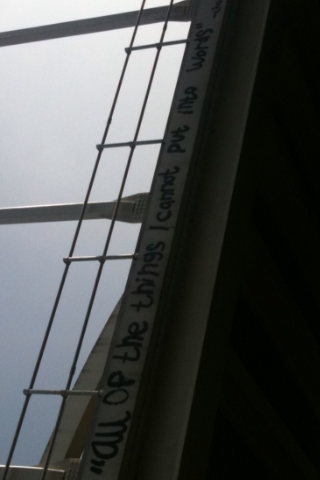
Spotted on the Regents Canal East London Line crossing

This probably counts as slow graffiti. I wonder what daring type managed to do this, dangling over the shallow water of the Regent’s Canal while on the lookout for trains?

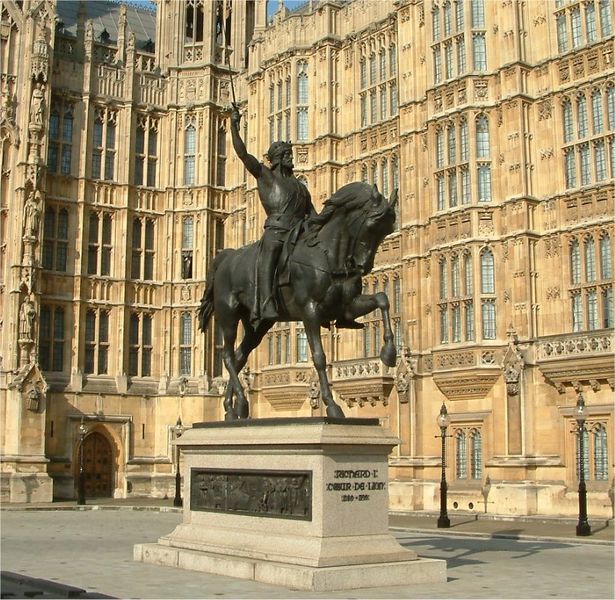
The Death of Richard I, Cœur de Lion

Richard I, Cœur de Lion, the Lionheart, is thought of as one of England’s finest rulers. Here’s his statue outside the Palace of Westminster, known to you and me as the Houses of Parliament.

Grr!

You don’t see too many other kings round there – after all, Parliament lopped one of their heads off once, and made life hard for plenty more. So he must be a pretty special chap in English history?

Well, sort of. When he finally got his hands on the throne of England, after years of plotting against his old man Henry II, having been egged on by his mum and Henry’s wife Eleanor of Aquitaine, he didn’t exactly take England to his bosom. He only spent six months in the country during his reign, splitting his time between crusading the Holy Land – where he failed to recapture Jerusalem from Saladin on the Third Crusade – and squabbling with Philip Augustus of France over Normandy, Anjou and lands in between. He was also captive for over a year, the hostage of his enemies in the Holy Roman Empire.  Like noblemen of the time in England still breathing the fire of William the Conqueror he spoke French not English.

One thing that is indisputable is that he was a great warrior and general, and it is from this that he gets his reputation as something of a badass. Which makes the circumstances of his death almost comical. In March 1199 he was beseiging an unimpressive castle in Chalus, located in what is today the Limoges region and, feeling confident, was touring the perimeter without chainmail on. He was shot by one of history’s more obscure names, Bertrand de Gurdun, armed with a crossbow which hit its intended target in the arm, which became gangrenous.

In those days, it seems, one did not simply shoot someone like Richard, regardless of having the chance to. So, sensing the end was near, he called for the chap to be brought to him and asked why he had shot him. The archer replied that Richard had killed his father and two brothers and – not unreasonably – that he had intended to kill him. Richard magnanimously forgave his killer. Once the King had breathed his last the fellow was seized by Richard’s furious aides, who were less obliging. He was flayed alive and hanged.

Richard’s heir, John, lost all his French possessions and the Lionheart himself now only turns up to save the day in Robin Hood films.

Life could be cruel in the Middle Ages.

Whistle-stop Prague

Inside the old booking hall of Hlavni station

I’ve just got back from a flying visit to Prague, my fourth and shortest visit to the city. Somewhere along the line the Czech capital has become the biggestndraw in central Europe, behind only Paris and Barcelona in the European league table of most popular of city destinations. It’s not as cheap as it once was, but that’s not necessarily a bad thing. The stag groups who once mobbed the Irish bars of the Stare Mesto – Old Town – have packed their bags for unfortunate stops further east in search of pints which cost less than a pound. they’ve left the city in the clutches of tour groups in search of gothic bridges, classical music in Baroque halls and foaming glasses of Czech beer.

Prague, Mother of Cities

1995 seems a long way away now, and the city then may have already begun morphing into the propserous, if less distinctive city it has become. But when I stepped off the train from Vienna, which had sped across the shimmering central European plain in the scorching summer of that year Prague felt only just out of the clutches of communism. The big western brands were here, but not in the force that they are today, and there were mullets and 20p pints eve in the most perfect back-street old town bar. My then girlfriend and I stayed in a room in an apartment owned by an elderly Czech widow who spoke enough English to thrill us with her accounts of the Second World War and the slamming shut of the Iron Curtain. Outside the big windows of that apartment thunderstorms broke the stifling heat.

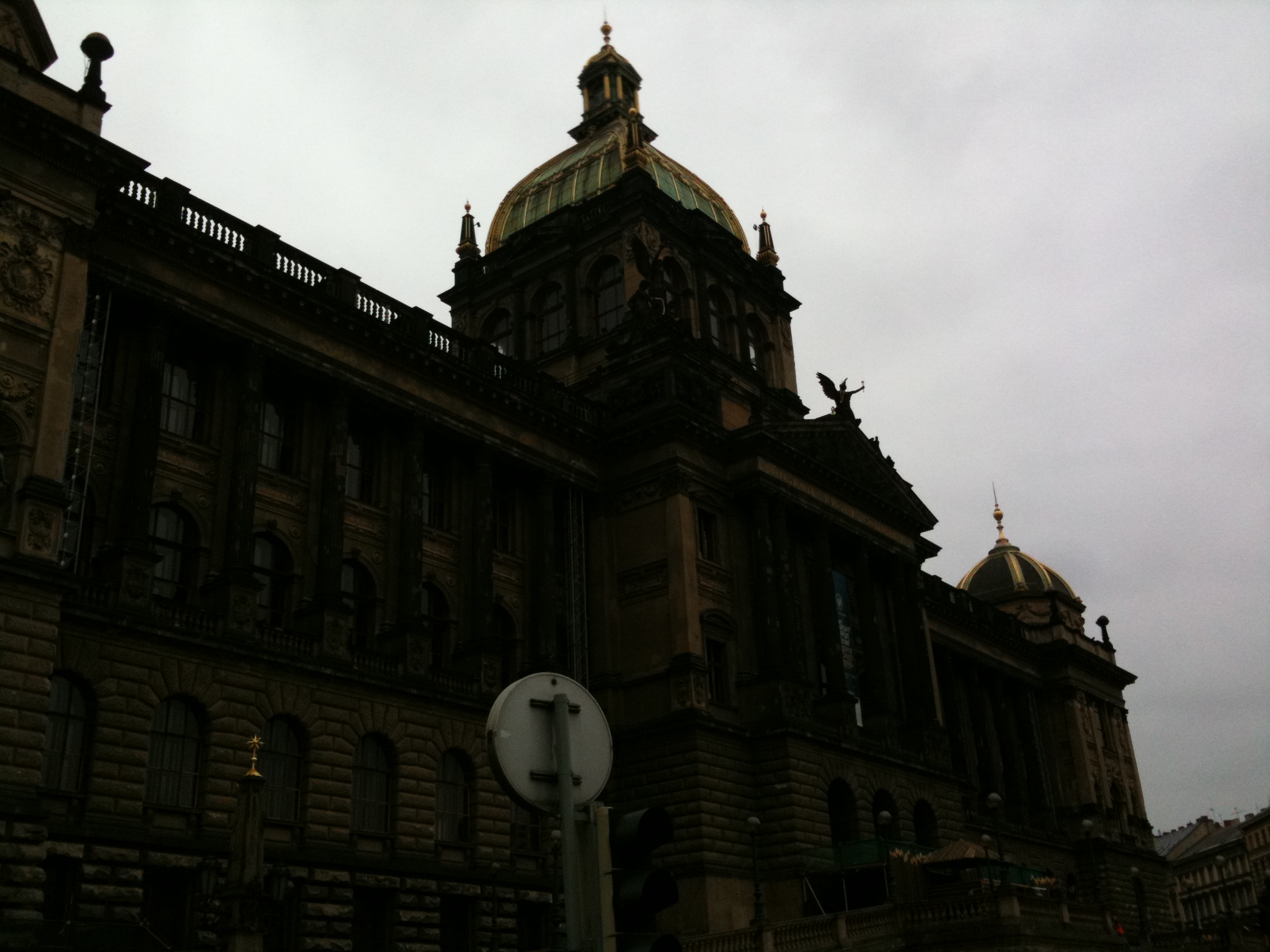
National Museum

So in the two hours I had free to explore I set out to revisit some of the half-memories of that stay. Most prominent was the National Museum (evocatively emblazoned with the inscription ‘Musei Regni Bohemiae’, standing sentinel over Wenceslas Square. As I stood on the steps of that building and looked north-east I spotted the twin arches of Hlavni station, dotted with statuary. A walk there revealed a real find. The station is a treasure trove if art nouveau, a gallery of mosaics, wrought iron and gabling with tracks running beneath it. The best part, shunned by the decision to build a six-lane motorway next to the former main entrance, is the original ticket hall. Stop by if you’re in town.

A great walk from Hlavni is to thread through back streets to the Charles Bridge, the Eiffel Tower of Prague, even if the reality is crowded with slightly underwhelmed day-trippers missing the point by taking pictures of themselves with the Vlatava – and no bridge – in the background. The highlights of this walk are too many to mention, just point yourself in the general direction and meander.

And that was that. Time to go, just a tiny taste of Prague. In 1995 I hopped on a train to Stuttgart, exiting via Hlavni’s hallowed tunnels, swapping to a service through Milan to Switzerland that is still the most beautiful rail journey of my life, and from there along the French Riviera to Cerbere – Port Bou, then finally an agonizingly slow and busy local service on to Barcelona. But Prague, well, it’s different.